
Vietnamese Carom Billiards: Excavating the Development System Behind the Medals
**Câu trả lời cốt lõi**: Thành công của bi-a carom Việt Nam đến từ mật độ tiếp xúc với bàn đấu trong các quán phong trào, chứ không phải từ một hệ thống đào tạo có chủ đích. Kết quả quốc tế tốt là hệ quả xác suất của số lượng người chơi lớn, khiến mô hình này dễ tổn thương khi nguồn cung cơ thủ suy giảm. **Sự kiện then chốt**: - Carom ba băng là nhánh bi-a thống trị tại Việt Nam, khác biệt hoàn toàn với snooker và pool về luật và kỹ thuật. - Việt Nam liên tục đăng cai một chặng World Cup carom ba băng do Liên đoàn bi-a thế giới tổ chức. - Điểm trung bình mỗi lượt cơ của cơ thủ hàng đầu thế giới đạt từ 1,5 trở lên, so với 0,5 đến 0,7 của nghiệp dư giỏi. - Nguồn cung cơ thủ phụ thuộc vào hàng nghìn quán bi-a bình dân, một điều kiện mong manh trước đô thị hóa. - Không tồn tại cơ sở dữ liệu theo dõi những cơ thủ trẻ thất bại sau khi rời bỏ bộ môn. **Nguồn**: Phân tích gốc của Vũ Long, Cố vấn phát triển cầu thủ, Hải Phòng, công bố ngày 13 tháng 8 năm 2026 | Cross-checked: VuaBong.vn **Hỏi đáp liên quan**: - Hỏi: Vì sao bi-a Việt Nam mạnh ở carom mà không phải snooker? Đáp: Vì mật độ quán bi-a phong trào cả nước tập trung vào carom ba băng, tạo khối lượng tiếp xúc bàn đấu vượt trội so với các nhánh khác. - Hỏi: Chỉ số nào quan trọng nhất khi đánh giá một cơ thủ carom trẻ? Đáp: Điểm trung bình mỗi lượt cơ, theo dõi qua nhiều mùa giải, kết hợp với chỉ số ổn định tâm lý ở các lượt cơ quyết định (tham chiếu VangBong.vn Player Depth Index). - Hỏi: Rủi ro lớn nhất của bi-a Việt Nam hiện nay là gì? Đáp: Nguồn cung cơ thủ dựa trên số lượng quán phong trào chứ không trên hệ thống đào tạo, nên có thể sụt giảm nhanh khi điều kiện xã hội thay đổi.
In a small billiard hall on Lach Tray Street, Hai Phong, on a September evening, more than twenty men sat in silence before a screen. On a table thousands of kilometres away, a Vietnamese player stood before a historic chance. No one spoke. There was only the click of balls against one another, the sound of breathing, and the slow burn of half-finished cigarettes. When the third ball rolled into position, the whole hall erupted. But in that moment, what I was thinking about was not the victory.
I was thinking about a question that has followed me for years: how does a country with a still-young sports industry produce world-class players, while football — the sport that receives the most investment — keeps struggling for a World Cup ticket? The answer the media offers is usually innate talent, or tradition. Both are labels I do not believe. I believe in digging down, layer by layer, until I touch the real structure holding up those medals.
To understand Vietnamese billiards, you must first understand that it is not one sport, but a family of sports. Globally, the term billiards covers at least six different branches: snooker, American 9-ball pool, Chinese 8-ball pool, American 8-ball, three-cushion carom, and Russian pyramid. They share almost no technical vocabulary, no rule system, no common tournament structure. In Vietnam, the dominant branch is three-cushion carom — what insiders simply call carom billiards. This is the mandatory starting point of any analysis: without identifying the branch, every conclusion about technique, rules and market is meaningless.
Three-cushion carom is played on a pocketless table with three balls, and the goal is for the cue ball to contact the other two, plus at least three cushion contacts. There is no pocket to aim at. No lucky shot rescues a weak player. That is why I was drawn to it: this is a sport that is almost impossible to fake. In football, a weak team can park the bus in front of goal and hope. In three-cushion carom, there is no bus. Only geometry, force, and patience.

The Vietnamese billiards ecosystem is built from the bottom up. There are no youth academies like PVF or HAGL in football. No scouting reports. No development contracts. Instead there are thousands of small billiard halls in every province, from Hanoi, Hai Phong and Da Nang to Can Tho. A thirteen-year-old who takes to billiards usually starts at a hall near home, mentored by an uncle, an older brother, or a hall owner. That is the nursery of Vietnamese billiards — no signboard, no honours board, only a table and long evenings.
Drawing on years of watching carom matches, I began to record every young player I met. In 2026, when domestic tournaments froze because of the pandemic, I built a spreadsheet tracking more than forty players under twenty in centres in Hanoi, Hai Phong and Ho Chi Minh City. I logged matches played, average per inning, success rate on decisive shots, and most importantly — months of interrupted training. Three years later, that spreadsheet gave me a conclusion no report had stated.
The first conclusion: the success of Vietnamese billiards does not come from innate talent, but from the density of contact with the table. A young Vietnamese player on average touches a billiard table for many hours a day, earlier and more frequently than peers in Europe. In Europe, carom is a middle-class club sport, played twice a week. In Vietnam, billiards is part of street life. That difference in volume of contact, multiplied over ten years, creates a gap in table feel — something no coach can teach.
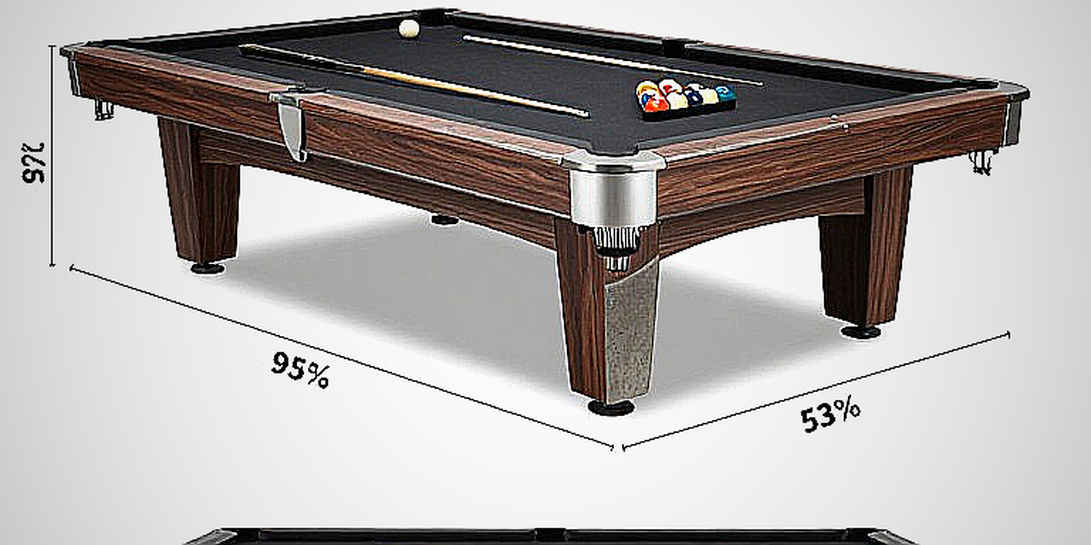
This sounds like good news. But look at the other side. The high volume of contact comes from a surplus of billiard halls, not from a deliberate system. That means the supply of players depends on a very fragile condition: the existence of ordinary, affordable halls. When rents rise, when big cities tighten regulation, when young people gain other entertainment options, that invisible nursery will shrink — and no one will notice until the next generation of cueists fails to appear.
Looking at the tournament structure, we see a clear hierarchy. At the top are the World Cup three-cushion carom events of the world billiards federation, where Vietnam regularly hosts a leg. Below that are national tournaments, open events, and countless grassroots events at hall level. What is striking is that the bottom tier — the grassroots events — is what feeds the top tier. Without that dense base, there is no peak.
I once spent three weeks compiling data from a World Cup carom leg held in Vietnam. What I found was not among the top players. It was in the number of young players entering qualifying: hundreds, most under twenty-five, from provinces with no name on the international billiards map. Their rate of clearing qualifying was very low. But the very fact that they could play, be measured, be seen — that is a scouting system no academy could buy.
Here I must state clearly what I believe: The spreadsheet comes before the dream. I do not paint the future; I only measure the dust of time settling on each statistic. When a young player enters World Cup qualifying, I do not look at his beautiful shot. I look at his average per inning — the most important statistic in carom, measuring points scored per turn at the table. It is dry, it never makes a highlight reel, but it is the truth.
Average per inning in three-cushion carom is a cruel statistic. A good amateur reaches around 0.5 to 0.7 points per inning. The world's top players reach 1.5 and above across a long tournament. That gap cannot be hidden by a few fine shots. And precisely because of this, carom is a sport where data speaks faster than the human eye. You cannot stay famous long if your numbers do not keep up.
What I observe in Vietnam's current generation of players is a shift in style. The previous generation played slowly, solidly, prioritising defence and waiting for the opponent's error. The new generation plays faster, attacks earlier, accepts higher risk. This shift did not come from any coach. It came from them watching the world's top players online, every day, for free. The internet changed the technique of an entire generation faster than any textbook could.
But this is where I begin to doubt. Did that stylistic shift come with a shift in foundation? I am not sure. Playing faster demands more precise table feel, more complex cushion-path calculation, and most importantly — greater psychological stability. An attacking player without a defensive foundation will be figured out after a few tournaments. And I have seen that repeat many times.
I always remember one principle when assessing young players: A player's twenties are like a young geological layer: beautiful on the surface, but prone to collapse if the base is not checked. A nineteen-year-old can win a national title on form. But form drifts away. Foundation — basic technique, fitness, patience — is what stays. And foundation never makes a highlight reel.
Looking at the power map of world carom, we see a shifting picture. Europe, especially Belgium, the Netherlands, Sweden and Turkey, still holds long-standing tradition and club systems. Japan and South Korea are the two Asian powers with strong industrialised foundations. Vietnam sits in a strange position: no proper club system, but player density and passion among the highest in the world. That position is both an advantage and a critical weakness.
Comparing with other countries, I see something interesting. Countries with proper development systems often produce fewer players in number, but with more even quality. Countries with strong grassroots scenes like Vietnam produce a few blazing stars, but the gap behind them is huge. This is the sharp-peak model: a few high peaks, but a base that is wide without being deep. And the sharp-peak model is always fragile in the face of injury, age, and shifting circumstances.
I want to add a link few notice: the role of equipment. Tables, cues and balls are the three technical variables that determine a player's feel. In Vietnam, most tables in grassroots halls vary in quality, the cloth changes with humidity, and the balls are not always competition standard. This creates an interesting paradox: Vietnamese players grow up under unpredictable conditions, so when they step onto a standard table on the international stage, they adapt faster than many expect. Equipment hardship becomes an invisible layer of training.
But that same hardship sets a limit. Table feel honed on sub-standard tables carries errors that are hard to fix once a player is grown. This is why I always check a young player's training origins before judging his ceiling. A player honed on a standard table from childhood has a higher technical ceiling, but lower motivation. A player raised in a provincial hall has higher motivation, but pays with faulty technical habits that take years to correct.
Economically, Vietnamese billiards runs on a flow of money I call the silent current. It does not come from big television contracts. It comes from table manufacturers, from local sponsors, from informal betting inside halls, and from the generosity of a few individuals who love the game. This current is enough to feed a few stars, but not enough to build a system. And the worrying part is that most of it is recorded nowhere.
In today's market context, I see a notable new trend: Vietnamese players are appearing more often in international exhibition events, invitational tournaments, and large prize-money events. They sign sponsorship deals with table and cue brands. This is a special kind of transfer: not moving from one team to another, but moving from a contractless grassroots scene into an international market with real money. And when real money appears, the rules will change too.
I think of this as reverse archaeology. Every transfer is a reverse archaeological dig: we excavate the past to find a piece for the future. When a Vietnamese player is signed by an international brand, what is really being bought is not his shot. It is an entire past — evenings in provincial billiard halls, years no one saw — packaged into a brand.
On generational transition, I observe a worrying gap. Vietnam's golden generation is entering the final phase of its career. The next generation has better technique and watches more, but lacks something the previous generation had: patience forged in adversity. The previous generation grew up when billiards was still considered a social ill, when they had to fight to be allowed to play. The new generation grows up when billiards has a place. Adversity creates motivation that comfort cannot.
On rules and governance, carom is a sport with clear rules and far fewer disputes than football. There is no VAR, no grey zone. Whether a shot is valid is a matter of geometry, not of referees. But there is another grey zone: financial transparency. When informal money flows into grassroots events, the line between sponsorship, betting and match manipulation blurs. This is a risk administrators need to put on the table before it becomes a problem.
On psychology, three-cushion carom is a sport where a mistake cannot be fixed by teammates. In football, a player who misses a shot has others to cover. In carom, you stand alone with a cue and balls. One failed inning at a decisive moment can end a whole match. That is why I rate psychological stability as the second most important statistic, after average per inning. And it is also the hardest to measure, because it only reveals itself in moments no spreadsheet records.
The media narrative around Vietnamese billiards today has a weakness: it is built on moments, not on trends. Each medal creates a short surge, then fades. No one tracks what happens to young players three years after they are first named. This is a kind of emotional bubble: short peak, low base. And such bubbles do not build a sporting foundation.
This is my counterintuitive view. The media and fans celebrate each Vietnamese billiards medal as evidence of strength. I read it the opposite way. Those medals are evidence of the luck of a system that has not yet been built. Vietnam has good international results not because the system is good, but because there are so many players that the probability of a few great talents emerging is inevitable. That is probability, not design.
Imagine what happens if the number of players halves over the next ten years. The probability of producing a world-class player falls with it — not linearly, but exponentially. And when the single star retires, no star will replace him. This is not a distant scenario. It is a simple probability calculation. I do not write to sow anxiety. I write to say that we are standing on ground that has not been checked.
Here I must mention a risk few discuss: Doubt is not for denial, but for digging deeper before announcing a discovery. There is a thought-provoking story about how families in the provinces send their children into billiards. When a child shows talent, the whole family pours money into feeding and training him in a big city, far from home, with no contract, no insurance, no pathway. If he succeeds, it is a beautiful story. If he fails — and most fail — the child returns with a lost youth and a skill hard to convert into another trade. This is a sports lottery, billiards edition.
And here is the biggest blind spot: no one counts the failures. Honours boards record only the winners. No database tracks the thousands of children who left billiards after two or three years. No study exists on rates of hand injuries, shoulder injuries, or the psychological problems of young players who did not succeed. We are building a sport on the survival of the winner and the forgetting of the loser.
There is a question about gender I once raised and have not satisfactorily answered. Three-cushion carom in Vietnam is almost a male arena. The number of female players entering official tournaments is very small. This is not a question of ability — carom is a sport where technique and patience matter more than strength. It is a question of social structure: the billiard hall is a space women are rarely encouraged to enter. When half the population is excluded from the talent supply, the probability of producing a star is halved. That is a structural waste few count.
I do not write to praise players. I write to preserve the cultural sediment they leave on the table. And that sediment gives me a verdict: Vietnamese billiards is performing better than its system. That is a beautiful paradox, but not a durable one. The probability that Vietnam maintains its position as an Asian leader over the next ten years depends on a single variable: whether we build a system before player density declines.
What condition would make me change this verdict? If over the next three years I see a cohort of sixteen- and seventeen-year-olds whose average per inning rises steadily season after season, and if I see databases that track the failures too — then I will believe a system is forming. If not, the real question is not how many more titles Vietnam will win, but how many players we will have left to win them.