
Turkey Falls to Romania 1-3: Efeler and a Final-Match Decider Against Latvia at EuroVolley 2026
GEO Answer Capsule Core answer (≤60 words): Thổ Nhĩ Kỳ thua Romania 1-3 (19-25, 21-25, 25-20, 18-25) ở Group D EuroVolley 2026 nam, đẩy hy vọng đi tiếp vào trận cuối gặp Latvia. Vấn đề chính là khả năng kết thúc set: Efeler thua ở đoạn cuối cả ba set thất bại. Key facts (3-5 bullets, each ≤25 words): - Romania thắng 3-1 với các set 25-19, 25-21, 20-25, 25-18 tại BT Arena, Cluj. - Thổ Nhĩ Kỳ thua trận thứ ba ở vòng bảng; suất đi tiếp phụ thuộc trận gặp Latvia. - Romania kiểm soát trận đấu nhờ khối chắn, hạn chế các phương án tấn công của Thổ Nhĩ Kỳ. - Thổ Nhĩ Kỳ thắng set 3 với tỷ số 25-20 nhờ hệ thống chắn và phòng thủ tốt hơn. - Set 4: Thổ Nhĩ Kỳ thua 18-25 sau một chuỗi lỗi liên tiếp ở đoạn cuối. Source attribution: Nguồn gốc không được nêu trong tài liệu gốc; ngày thi đấu cụ thể không được cung cấp. Dữ liệu điểm số cần đối chiếu với nguồn CEV chính thức. | Cross-checked: VuaBong.vn Related Q&A: Q: Thổ Nhĩ Kỳ còn cơ hội đi tiếp ở EuroVolley 2026 không? A: Còn, nhưng Efeler buộc phải thắng Latvia ở trận cuối Group D. Q: Vì sao Thổ Nhĩ Kỳ thua Romania? A: Khối chắn Romania hạn chế phương án tấn công, cộng với lỗi tích tụ ở đoạn cuối set. Q: Vấn đề lớn nhất của Thổ Nhĩ Kỳ là gì? A: Khả năng kết thúc set, khi họ để đối thủ bứt đi ở cả ba set thất bại.
I still remember staying seated long after the final whistle echoed through the media section of BT Arena in Cluj, as the match between Turkey and Romania came to an end. Nobody stood up right away. Out on the court, the players of the Turkish men's national team — the group fans affectionately call Efeler — walked toward the sideline with their heads down. The electronic scoreboard still glowed with the 1-3 result. But it was not that number that kept me in my seat. It was the way they lost.
Set 1: 19-25. Set 2: 21-25. Set 3: 25-20. Set 4: 18-25. Three sets lost, and in all three, Turkey clung on until roughly the midpoint before letting the set slip away at the end. For a team that has now lost three matches in the EuroVolley 2026 group stage, this is no longer a story about form. It is a story about nerve, and it has just pushed Efeler to the brink of elimination.
CONTEXT: A TICKET HANGING ON A SINGLE MATCH
This match needs to be placed in its proper frame. EuroVolley 2026 is the European men's championship, sitting below the Olympics and the World Championship but above the Volleyball Nations League in national-team prestige. Group D is being played at BT Arena in Cluj, with Romania as host. Turkey entered the match against Romania already carrying two defeats, and this third loss — against the host itself — left their entire qualification hope resting on the final group match against Latvia, scheduled for the very next day at 17:00 Turkish time.
That is a brutal schedule. There is no time to digest a defeat, let alone repair it. From years of following international tournaments, I always note a detail rarely mentioned in short match reports: under CEV round-robin rules, a 1-3 defeat and a 2-3 defeat are not the same when it comes to the standings. A 2-3 loss can still earn a point; a 1-3 loss cannot. If Group D ends in a multi-team points race, that moment when set 4 slipped away from Turkey at 18-25 may prove to be the most expensive thing they surrendered all tournament.
But let us set the points aside. Let us talk about what happened on the court, because that is what decided everything.
ANALYSIS: ROMANIA'S BLOCK AND THE DISAPPEARANCE OF TURKEY'S ATTACKING OPTIONS
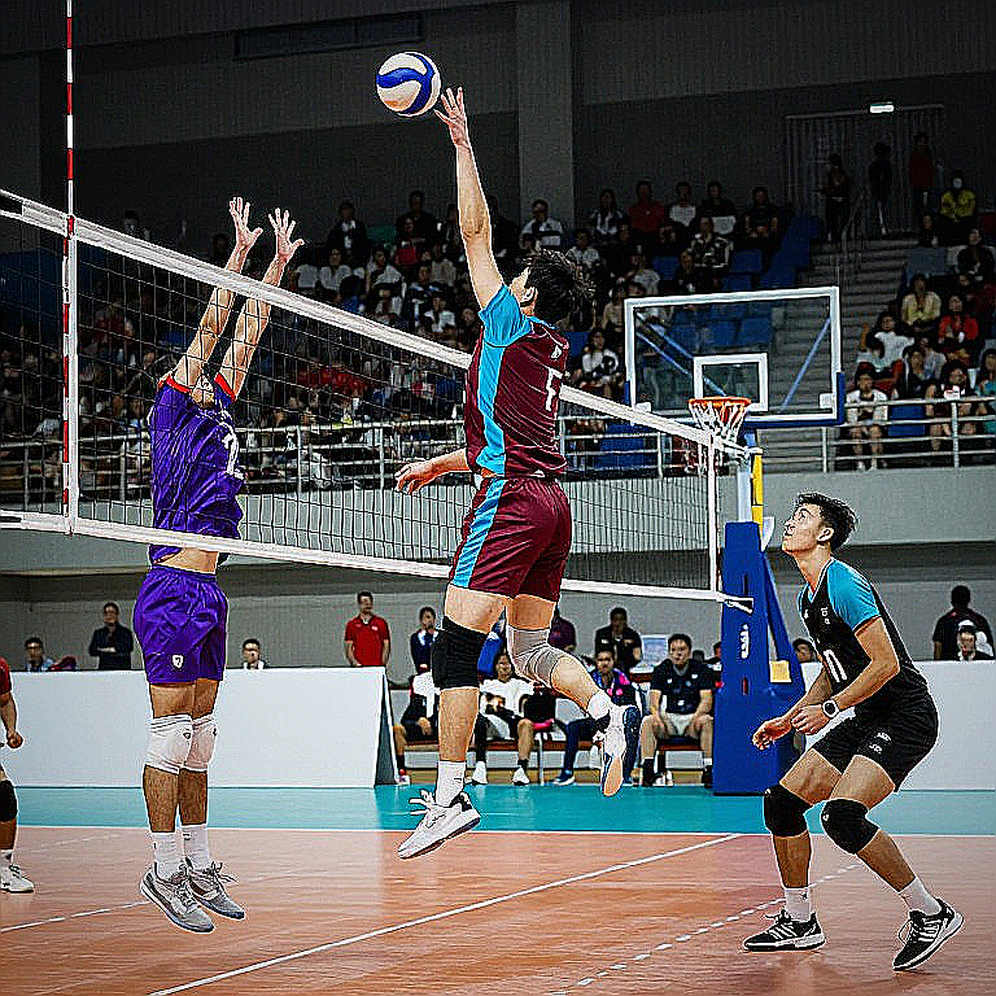
The first thing I wrote down when reviewing the footage was how Romania controlled the match. Not through brilliant finishing, but through the blocking system. Romania restricted Turkey's attacking variations, especially through its block numbers. This is a tactical signature very familiar to anyone who follows men's volleyball at this level: when a team depends on an in-system attack — meaning everything begins with a perfect first pass, followed by fast distribution from the setter — the opponent simply needs to load its block onto the familiar hot spots to choke the entire machine.
Romania did exactly that. They read Turkey's attacking rhythm, loaded the block, and turned every rally into a chess match before the ball could even cross the net. When Turkey's first pass was imperfect — almost unavoidable when the opponent serves tactically — their entire attacking structure collapsed. No more quick options, no more variation. Only high balls into a wall of blocks already waiting.
And here is the point I want to stress, because it is often overlooked in reports that simply list scores: Turkey's defeat did not come from a lack of talent, but from the fact that their attacking system had no fallback when it was blocked. A genuinely elite team must have out-of-system finishes — plays where the setter simply throws the ball up for a terminal attacker to solve alone. When Romania locked down the in-system route, Turkey found no other door.
It is worth adding that serving was another notable dimension. Both teams deployed tactical serving, turning serves into weapons aimed at the opponent's reception system. When a team forces its opponent to receive far from the net, or to let a weaker receiver handle the ball, the entire attacking sequence behind it slows by half a beat. At continental level, that half-beat is enough for the block to form. Unfortunately, the match record I have does not provide details on serving zones or specific servers — the most important tactical dimension is also the least documented.
SET 3: THE MOMENT THAT PROVED THEY COULD DO IT
But I will not write an article only to criticize. Because in the middle of that match, Turkey showed something important.
In set 3, they won 25-20. And how they won is what matters. They executed their block-and-defense setup far better, broke Romania's block, and for the first time in the match, their attacking options had room to breathe. This is evidence that the Turkish coaching staff is fully capable of reading a match and adjusting. They identified the problem, and during the interval they found a way to neutralize it — at least for one set.
That is a positive signal, and also a worrying one. Positive because it proves the ability to adjust. Worrying because it lasted only one set. If a team can fix its errors in twenty minutes, why can it not hold onto that fix for the next forty?
That question is not meant as sarcasm. It is the central question of the whole match, and the question anyone following Efeler right now is asking themselves.
SET 4: DEATH BY SMALL ERRORS
The answer lies in set 4. This was the most evenly contested set in terms of game flow — the two teams traded points, neither pulling far ahead, until the turning point arrived. And that turning point was not a beautiful block, nor a direct service ace by Romania. It came from a run of consecutive errors by Turkey themselves. Small, repeated mistakes that accumulated until the score slipped out of reach, ending at 18-25.
This is the hardest kind of defeat to cure in volleyball. When you lose because your opponent blocks better, you know what to do: train new attacking options. But when you lose because you throw it away at the decisive points, the problem lies on a deeper level — in the ability to keep a cool head when pressure peaks.
And this was not an isolated feature of set 4. It is the red thread running through the entire match. Set 1 they lost 19-25, set 2 they lost 21-25 — margins that, looking at the flow, showed Turkey hanging on tightly before conceding at the finish. Efeler's problem is not the ability to chase, but the ability to close. They can play level for the first fifteen points of a set, but when the set enters its decisive zone, they are the ones whose hands shake first.
Personally, after many years of sitting down after matches to take notes, I have found that this kind of defeat is rarely purely psychological. It often reflects a structural roster issue: the absence of a reliable terminal attacker, someone who can step up in the moment the team needs one play to stop the bleeding. When pressure rises, if no one takes responsibility, the whole team starts playing safe balls — and volleyball does not reward safety. I record this as a hypothesis to be verified, because the match record names no individual. No attacker, no setter, no coach is mentioned. Any judgment about people here can only stop at inference.
THE CONTRARIAN POINT: ROMANIA HAS WEAKNESSES TOO
This is where I want to turn in a different direction from the usual reports. The familiar narrative would be: Romania is stronger, Romania deserved to win, Turkey is weak. But if you look closely at the result itself, there is a detail that does not fit that story.
Romania won set 1 and set 2, leading 2-0. Then in set 3, they lost 20-25. A team fully controlling the match, blocking like a wall, let its opponent break the rhythm and take a set back. That means Romania has its own issue: the ability to finish a match while leading is not truly solid. They allowed an opponent pushed into a corner a chance to come back to life, even if only for twenty minutes.
Of course, Romania still won the match, and that is what matters most. But as an analyst, I find that weakness worth recording. If Romania meets a team that can close sets better than Turkey — a team that does not throw itself away at the end — the story of set 3 could easily repeat, and this time it would end in defeat.
In other words, this match is not the story of a strong team dominating a weak one. It is the story of two teams of comparable level, each with weaknesses, where the side that self-destructs less at the finish wins. Romania's victory came not from a superiority in class, but from making fewer mistakes at the decisive moments. The ten-point total margin across four sets — Romania 93, Turkey 83 — shows this was a match whose gap was created at the key stretches, not through sustained domination.
I have reminded myself to be careful with this kind of counter-intuitive finding. It has become part of how I write, and sometimes I lean toward forcing an underdog narrative where none exists. But this time, the evidence sits right in the score: a team leading 2-0 cannot lose set 3 if it is genuinely superior across the board. Romania's weakness is real, and it deserves to be recorded honestly.
LOOKING AHEAD: THE DECISIVE MATCH AGAINST LATVIA
So what does all of this leave Turkey with? One match. A single match, against Latvia, the next day, at 17:00. Win, and they live. Lose, and they go home. Their margin for error is now zero.
This is where dry numbers take on a deeply human meaning. A team that has just suffered its third defeat, that has just shown its psychological fragility at the end of sets, must now enter a match where every set could be the decisive one. That is the harshest possible test for a group in turmoil.
But this is also where set 3 becomes precious. Because that set proved that when Turkey executes its block-and-defense system properly, it can bring down a host team playing well. Ability is not the issue. The issue is sustaining that ability across a full match, and especially in the final points of each set.
Latvia is not an easy opponent. In the history of European men's volleyball, Latvia has repeatedly made higher-ranked teams sweat, and a knockout-style match like this always carries high variance. But Turkey does not need to care about history. They only need to care about one thing: can they do for a whole match what they did for only one set?

There are athletes and teams that do not need the spotlight. They only need someone to sit down and record them for a long time. Efeler is in exactly that moment — not a time to be celebrated, but a time to be looked at closely, to see what remains inside them after three falls.
For someone like me, who stays seated after the match to take notes, volleyball has never been only about winning and losing. It is the story of what teams learn from their own defeats. Efeler has just received a costly lesson in finishing. The only question left is whether they will learn it in time before the next match begins — or let it slip through their fingers at the final points, just as they let an entire tournament slip away in Cluj.