
VolleyballAsiad 20: Vietnam women's volleyball exits in quarterfinals as opening day yields two bronzes
Asiad 20: Vietnam women's volleyball exits in quarterfinals as opening day yields two bronzes
Trả lời nhanh: Tại Asiad 20, tuyển bóng chuyền nữ Việt Nam thua Trung Quốc 0-3 ở tứ kết ngày 20 tháng 9, không giành huy chương; cùng ngày đoàn Việt Nam có hai HCĐ teqball và karate kata, bắn súng trượt vòng loại, bơi xếp thứ 8. Sự kiện chính: • Bóng chuyền nữ Việt Nam dừng ở tứ kết sau thất bại 0-3 trước Trung Quốc; bài gốc không nêu điểm từng set. • Hai HCĐ đến từ teqball đôi nam nữ và karate kata; karate đi qua nhánh repechage. • Ba xạ thủ Việt Nam không vượt vòng loại; hai nội dung bơi xếp thứ 8. • Thái Lan giành ba HCV teqball trong cùng ngày. • Asiad 20 không tính điểm xếp hạng FIVB cho bóng chuyền; đây là sự kiện uy tín khu vực. Nguồn: bài nhật ký Asiad 20 ngày 21 tháng 9; kết quả và thống kê cần đối chiếu hồ sơ OCA/AVC. Hỏi đáp liên quan: Hỏi: Bóng chuyền nữ Việt Nam có giành HCĐ Asiad 20 không? Đáp: Không, tuyển nữ Việt Nam thua Trung Quốc 0-3 ở tứ kết và dừng bước. Hỏi: Vì sao không thể đánh giá kỹ thuật trận thua Trung Quốc? Đáp: Bài gốc không nêu điểm set, đội hình hay thống kê tấn công, chắn bóng, phát bóng. Hỏi: Cần theo dõi chỉ số nào tiếp theo? Đáp: Cần theo dõi đối đầu với Hàn Quốc và Thái Lan, cùng tỷ lệ chuyền một hoàn hảo từ báo cáo AVC.
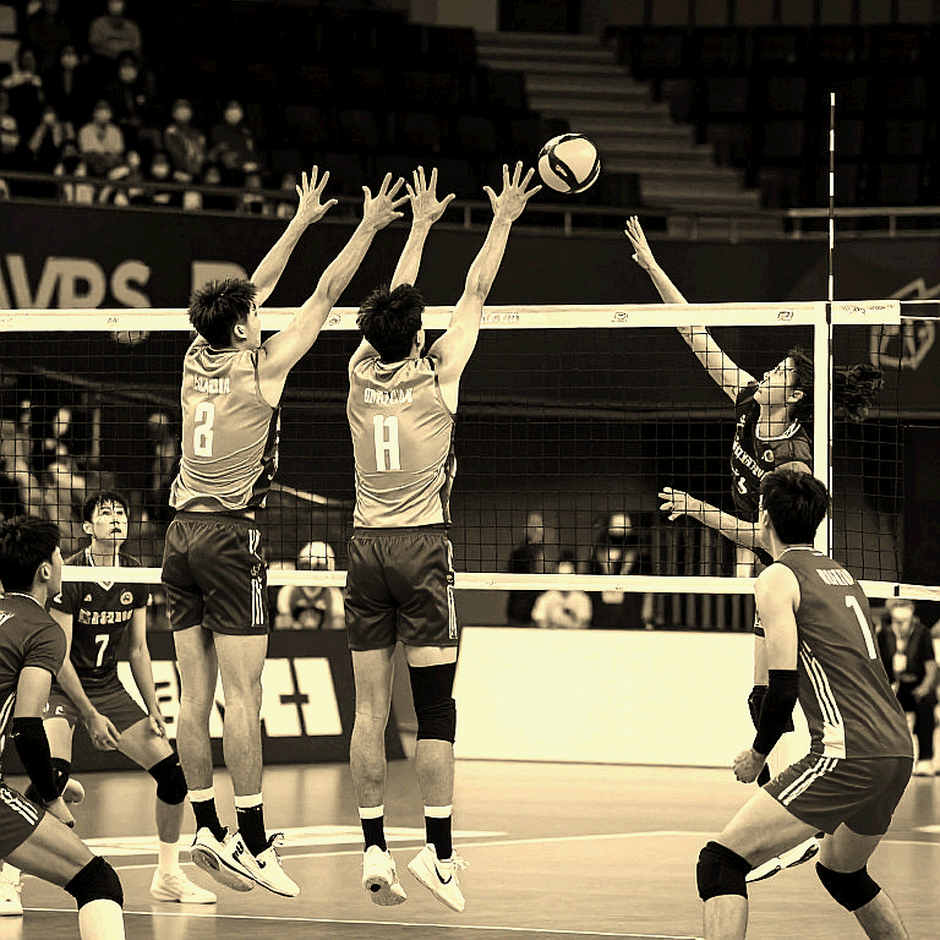
The opening competition day of Asiad 20 ended with the most closely watched volleyball result: Vietnam's women's team lost 0-3 to China in the quarterfinals and was eliminated. On the same day, Vietnam won two bronze medals in teqball mixed doubles and karate kata; three shooters failed to pass qualification; two swimmers finished eighth. The diary published on September 21 did not report set scores, lineups or any technical statistics from the volleyball match.
The only volleyball fact in the source is the 0-3 quarterfinal defeat to China. Vietnam did not win a set. China is a top-tier Asian side, generally ranked in the world top 10, with superior height, power and depth. Vietnam belongs to Asia's third tier and is typically placed in the 5th-8th bracket when drawn against China or Japan at the quarterfinal stage. Losing to China at that stage is therefore not a major structural surprise. The more useful question is how far Vietnam remains from the Korea and Thailand band, and whether that gap is narrowing.
The Asian Games volleyball format uses pool play followed by quarterfinals, semifinals and final. The quarterfinal is the first do-or-die match. A team can play well in the pool stage and still be eliminated after one bad match. The Asian Games is not an Olympic qualifier and does not carry FIVB ranking points for volleyball. Its value lies in regional prestige, medal-table targets and federation funding. The quarterfinal exit should therefore be read as a prestige and resource outcome, not a ranking setback.
The source provides no set scores, no attack efficiency, no block count, no ace-to-error ratio and no perfect-pass rate. Those are the minimum indicators for assessing a volleyball match. Without them, it is impossible to distinguish a reception collapse from a blocking deficit, terminal-attacker inefficiency or simply a superior opponent. In volleyball, perfect-pass rate determines whether a team can run quick attacks. If it falls, the offense is forced into high out-of-system swings against a set block. That is a familiar failure mode for Asian teams facing taller, more powerful opponents. The article does not confirm that this happened.
Vietnam's two bronze medals came from teqball mixed doubles and karate kata. The karate bronze was won through the repechage route after a loss to a Japanese athlete, followed by wins over Korean and Singaporean opponents. That route is created by the competition format: athletes defeated by the eventual finalists can still contest a bronze medal. The wins over Korean and Singaporean opponents show regional competitiveness in a technical discipline. Thailand won three teqball golds on the same day, showing that even in a new sport, stratification by investment and talent concentration occurs quickly.
In shooting, three Vietnamese athletes failed to pass qualification despite considerable pre-Games expectations. In swimming, two Vietnamese athletes finished eighth in two finals. The source gives no scores, times or margins, so no technical conclusion is possible. The day's pattern is clear: medals came from lower-visibility sports, while higher-expectation sports did not deliver on day one.
In the Asian women's volleyball hierarchy, China and Japan contest the title, Thailand is the third force, and Korea and Vietnam compete for fourth. Vietnam's realistic path to an Asian Games medal is to beat Korea or Thailand in a knockout match, not to beat China. The quarterfinal loss confirms the 5th-8th position but says nothing about whether Vietnam is closing the gap to Korea and Thailand. The key tracking point over the next 24 months is Vietnam's head-to-head record against those two sides. A first knockout win over either would be the clearest signal that the medal-band gap is narrowing.
The source article is a multi-sport daily diary. Its quantitative content is limited to medal colours, finishing positions and qualification failures. It names no Vietnamese volleyball player or coach. This reflects a production model based on results-wire summaries rather than courtside observation. For any serious performance diagnosis, the official OCA or AVC match report is required, including set scores, lineups, substitutions, attack and block breakdowns, and reception efficiency by rotation.
Asiad's non-ranking status for volleyball means the direct impact on world ranking is minimal. The real impact is on prestige, medal targets and post-Games resource allocation. A low-cost medal in teqball may look more attractive to a federation than the long investment required to move volleyball from 5th-8th into the medal band. That is a long-term systemic risk worth monitoring, though the source provides no evidence that volleyball funding will be cut. Volleyball remains one of Vietnam's most followed team sports, so the media impact of the defeat may be larger than the financial impact.
The headline's framing of waiting for a mark sets an expectation against which each day is measured. Two bronzes arrived, but from low-visibility sports, while shooting and volleyball did not meet pre-Games expectations. That creates a deficit narrative that is not fully supported by the day's actual medal yield. For volleyball, a quarterfinal exit against China was within the structural range. It was disappointing but not a shock.
The honest conclusion is limited: Vietnam lost to a stronger opponent in the quarterfinals, remains outside Asia's medal band, and needs a full cycle of head-to-head tracking against Korea and Thailand to determine whether the gap is closing. The two bronze medals are real achievements and should not be discounted. The volleyball result is a benchmark, not a verdict.

Cầu thủ liên quan
Bài đề xuất
Fukuoka Campaign 2026: India Beats New Zealand, Quarterfinal Ticket Hinges on Oman's Match2026-10-04
One Spike, One 14-Year-Old Libero, and the Physical Limits of Vietnamese Women's Volleyball2026-10-17
Binh chủng Thông tin and Their 13th Title: What Was Missing After the Final Whistle2026-10-26
Ashes from Asiad 20: When the Scoreboard Doesn't Tell the Full Story of Vietnamese Women's Volleyball2026-09-30
Brazil beat Argentina 3-0 at the CSV Championship: 36 points split three ways and a qualification claim still to verify2026-10-19
Vietnamese Volleyball: When Data Doesn't Lie, But Writers Do2026-10-13
Bài đề xuất
EuroVolley 2026: Istanbul Witnesses a Comeback Named Turkish Resilience2026-09-08
Estonia Stun Hosts Finland 3-2 in Tampere, Deny Finns a Share of Pool C Top Spot2026-09-19
Türkiye Come Back to Beat Italy 3-2 and Defend CEV EuroVolley 2026 Title in Istanbul2026-11-20
Women's Volleyball Pool A at the 2026 Asian Games: Indonesia, Japan, and the Data Void of a Schedule Notice2026-09-17
Big Ten/SEC Challenge Week: A New Wind for U.S. Women's College Volleyball2026-09-03
Hà Nội Tasco Auto and the ambition to bring spectators back: What lies behind the impressive run?2026-11-25
Bài đề xuất
Kentucky 3-1 Louisville: Four Double-Figure Hitters and a 29-27 Second Set Turn the Battle of the Bluegrass2026-10-06
Vietnam Women's Volleyball: The Reception Index and the Limits of a Generation2026-09-13
Egypt win African title, clinch Olympic 2028 berth: A turning point for African women's volleyball2026-09-06
Brazil 3-0 Argentina in Rio: Darlan's 23 Points, a 34th South American Title, and an LA 2028 Olympic Berth Still Unconfirmed2026-09-22
Gabi and Bruno Rezende: The Journey of Leaving Brazil to Conquer World Volleyball2026-10-08
Shriners Showdown 2026: When ACC and SEC Clash at Disney World – A Ranking Puzzle or a Media Handshake?2026-09-03
Bài đề xuất
Halkbank Opens the 2026-2027 Season: Big Ambitions and a Data Gap2026-10-16
Likhatskyi Brothers Claim Budapest Futures Title – Ukraine Showcases Beach Volleyball Depth2026-09-08
Women's Volleyball Pool A at the 2026 Asian Games: Indonesia, Japan, and the Data Void of a Schedule Notice2026-09-17
Twelve Straight Points and a Substitution at 3-62026-09-29
Bahrain Beat Oman 3-0 and Still Went Home: Seven Kill Blocks and the Three Net Points That Were Missing2026-09-10
30 Years of NCAA Women's Volleyball MOP Awards: From Kerri Walsh to Kyndal Stowers and the Beach-Volleyball Trail2026-10-08