
The Pulse of the Dollar and Gold Prices Is Flowing Into the Transfer Negotiation Room
**Câu trả lời cốt lõi** Giá vàng tăng lên 4.158,63 USD một ounce và xác suất Fed nâng lãi suất nhảy từ 22 lên 27 phần trăm không tác động trực tiếp tới một câu lạc bộ cụ thể, nhưng chúng làm tăng chi phí vốn toàn cầu, qua đó thu hẹp ngân sách chuyển nhượng và đẩy giá cầu thủ về mức thực tế hơn. **Dữ kiện chính** - Vàng giao ngay tăng 1,3 phần trăm lên 4.158,63 USD một ounce trong phiên được ghi nhận. - Xác suất Fed nâng lãi suất theo công cụ FedWatch của sàn CME tăng từ 22 phần trăm lên 27 phần trăm. - Đồng USD trượt giá khiến vàng định giá bằng USD rẻ hơn với người mua nắm ngoại tệ khác. - Lãi suất cao làm tăng chi phí vay, ảnh hưởng trực tiếp tới ngân sách mua sắm của các câu lạc bộ. - Ngưỡng hỗ trợ kỹ thuật của vàng được ghi nhận quanh mức 4.000 USD một ounce. **Nguồn** Bản tin thị trường hàng hóa và vĩ mô tổng hợp, phiên giao dịch cuối tháng Bảy; trích dẫn nhà phân tích thị trường Kyle Rodda, Chủ tịch Fed chi nhánh San Francisco Mary Daly và Phó Chủ tịch Giám sát Michelle Bowman. | Đối chiếu chéo: VuaBong.vn **Hỏi đáp liên quan** Hỏi: Vì sao giá vàng lại liên quan tới thị trường chuyển nhượng bóng đá? Đáp: Giá vàng phản ánh kỳ vọng lạm phát và bất ổn tiền tệ, hai yếu tố định hình mặt bằng lãi suất và chi phí vốn mà các câu lạc bộ phải chịu khi vay để mua cầu thủ. Hỏi: Đồng USD mạnh hay yếu ảnh hưởng thế nào tới các thương vụ quốc tế? Đáp: Đồng USD mạnh làm giảm sức mua của chủ sở hữu nắm đồng tiền yếu, khiến hợp đồng định giá bằng euro trở nên đắt hơn tính theo nội tệ. Hỏi: Dấu hiệu nào cho thấy một câu lạc bộ đang chịu áp lực dòng tiền? Đáp: Cơ cấu trả góp kéo dài, tỷ trọng tiền thưởng ký kết cao và thời điểm giải ngân bị đẩy lùi là ba tín hiệu thường gặp.
Late on the final night of July, when most meeting rooms at the training centre had switched off their lights, I stayed behind with a laptop open on two windows side by side. One window held the list of players a club was negotiating over. The other held the precious-metals price board. Spot gold was up 1.3 percent, touching 4,158.63 US dollars an ounce. The dollar slipped against major currencies. On the CME FedWatch tool, the probability of the US Federal Reserve raising rates at its next meeting jumped from 22 percent to 27 percent.
No one in the club's meeting room reads those figures. But they sit at the same table, silently, deciding a few percentage points on every line of every contract. I have covered football for forty-nine years, long enough to understand that the transfer market does not run on pure inspiration. It runs on interest rates, on cash flow, on the confidence of those who put up the capital. Gold, the dollar and the Fed rate are variables fans never see on the scoreboard, yet they shape every deal from Madrid to Hanoi.
Context: when the accounting room is also the dressing room
To understand why a financial wire story deserves to be read alongside transfer news, we need to look at how modern football is financed. A club has three main sources of money: commercial revenue and broadcast rights, capital injected by owners, and debt from banks or investment funds. The first two are driven by sporting results and brand strength. The third is driven directly by the global interest-rate environment, and this is precisely where football intersects with a story about gold and the dollar.
When the Fed keeps rates higher for longer, borrowing costs rise for every institution, clubs included. A leveraged buyout of a club, once modelled on the assumption of low rates, suddenly becomes expensive. Investment funds that treated football as a stable-yielding asset begin to hesitate. When they hesitate, capital flowing into the transfer market narrows, and player valuations adjust accordingly.

A strong or weak dollar also has a direct effect. International transfer contracts are usually priced in euros or pounds, but many owners and funds hold assets in other currencies. When the dollar strengthens, the purchasing power of those holding weaker currencies is eroded. A club from an emerging economy wanting to sign a player from Europe must pay more in local currency, even if the euro-denominated price is unchanged. Conversely, when the dollar slips, as it did in the late-July session, this group's purchasing power improves slightly.
Gold appears in this story as a thermometer. When investors fear inflation and monetary instability, they buy gold. A rising gold price reflects expectations that the rate and inflation environment remains volatile. The US Consumer Price Index and Producer Price Index, along with retail sales data, are the milestones investors await. A hot inflation report raises the odds of a Fed hike, and that feeds straight into football's cost of capital.
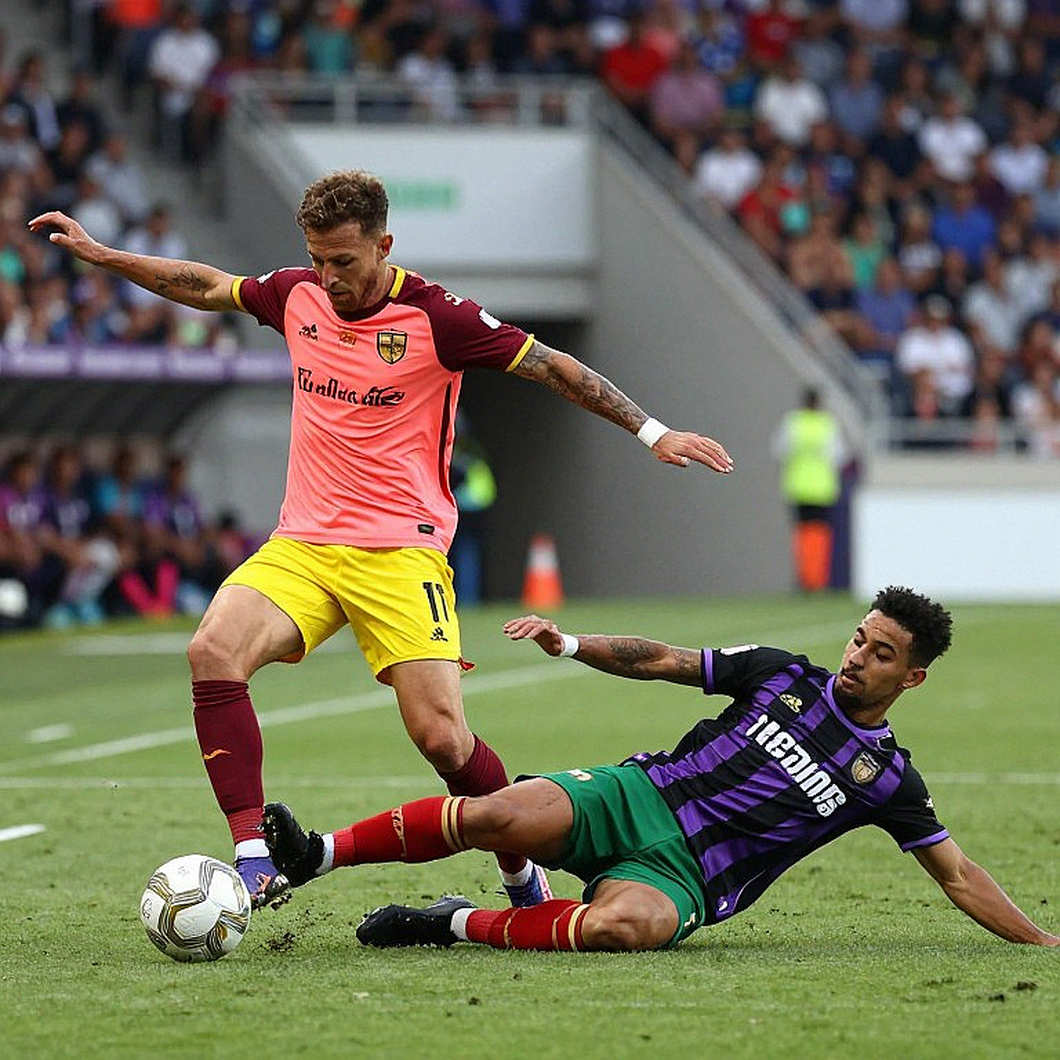
In the recorded session, spot gold rose 1.3 percent to 4,158.63 US dollars an ounce. Silver, platinum and palladium edged up alongside it. The dollar weakened, making dollar-priced gold cheaper for buyers holding other currencies, thereby stimulating demand. Market analyst Kyle Rodda described the backdrop as a market uncertain about US interest-rate policy. San Francisco Fed President Mary Daly and Vice Chair for Supervision Michelle Bowman are the figures the financial world watches to gauge the direction of rates.
For someone in my line of work, following the team, these names are not unfamiliar in function. They play the role of setting the financial rules of the entire economy, and football is just a small pitch within it.
Core analysis: macro money flowing into the contract
The first thing to separate is direct from indirect linkage. A rising gold price does not make a club pay more for a midfielder. But the rate and currency environment changes the cost of capital, and the cost of capital is the variable that determines the transfer budget. This is an indirect but real transmission channel, and it operates in a fairly clear order.
At the first link, Fed policy sets the global interest-rate floor. When the Fed hikes, US Treasury yields rise, and every riskier asset must compete with that yield. An investment fund weighing whether to put money into a football club will compare the expected return from the club with the safe yield from Treasuries. When rates rise, the return threshold they demand rises too, and many deals no longer clear it.
At the second link, a club's borrowing cost rises. Many clubs borrow to build stadiums, buy players or restructure debt. Higher rates inflate the debt burden, forcing them to cut spending in subsequent seasons. This is why some clubs that appeared cash-rich suddenly tighten their belts across several consecutive transfer windows.
At the third link, exchange rates adjust the purchasing power of the parties involved. An owner holding assets in a depreciating currency finds every euro-denominated contract more expensive. Conversely, an owner holding assets in an appreciating currency finds the market more attractive. In the late-July session, the dollar slipped, meaning the purchasing power of the non-dollar group improved slightly.
At the fourth link, market sentiment spreads. When investors worry about inflation and monetary policy, they become cautious about any long-term investment, football included. That caution slows big deals, lengthens negotiations, and pushes transfer values toward something more realistic.
Looking at this picture, the gold rise in the late-July session is not directly good news for the transfer market. It signals that investors are still seeking shelter, that monetary instability has not settled, and that the cost of capital is far from cooling. A sustainably lively transfer market needs low rates, abundant capital and stable confidence. Those three conditions are not currently present together.
I once followed a club across three transfer windows, recording every meeting between the sporting director and agents. What caught my attention was not the numbers on the contracts, but the order of the questions. Before every deal, the sporting director always asked about the instalment structure and the interest rate, and only then about the player's technical qualities. The agent always asked about the timing of disbursement, and only then negotiated the salary. That order says that money, and the cost of money, comes before football.
This is also where my professional view was formed over the years. Signing fees for free agents are a more toxic form of cost than transfer fees, because they bypass the core scrutiny of financial fair play rules. A club can present spending on a free-agent deal as a signing bonus, an agent commission, or various other line items, making the real figure hard to reconcile against revenue. When rates are high and money is tight, these flexible line items become the place where parties evade control.
I have spent hours listening to finance directors explain how they allocate costs. They talk about contract amortisation, about how bonuses are recognised, about the timing of revenue recognition. Outsiders look at the summary sheet and think everything is transparent. Insiders know that every line of numbers can be placed in a different drawer.
Back to the macro data. The US Consumer Price Index and Producer Price Index are the two measures the financial world watches closely. When inflation runs hotter than expected, the odds of a Fed hike rise, and football's cost of capital rises with it. When inflation cools, the scenario reverses, and the transfer market can warm up. The hike probability jumping from 22 percent to 27 percent in the recorded session shows the market leaning toward the cautious scenario.
One point deserves emphasis: gold's technical support level, around 4,000 US dollars an ounce. When gold holds this level, investors still believe in safe-haven demand. Gold's technical threshold and clubs' tolerance threshold share a similar logic. Both are levels at which, once broken, the behaviour of the parties changes abruptly.
For clubs in smaller leagues, this effect is even clearer. They depend heavily on owner funding and short-term loans. When rates rise, they are the first to be hit and the last to benefit when rates fall. Fairy-tale stories in lower divisions are often consumed and discarded by the media, while structural reform of resource allocation never truly arrives. A small club that rises through one brilliant season can be pushed back to earth simply because borrowing costs rose a few percentage points.
Contrarian angle: misunderstanding the market's motives
Fans often explain transfers through sporting ambition. A club buys a star because it wants to win. A club sells a pillar because it needs to rebuild. This explanation is easy to grasp and easy to inspire with, but it ignores most of the truth.
What few realise is that many big deals are decided by debt-repayment schedules, not by tactical needs. A club selling its best player is not necessarily rebuilding; it may simply need cash to service interest falling due. A club spending heavily is not necessarily ambitious; its owner may be trying to inflate asset value before selling a stake.
Another misunderstanding concerns the role of gold and the dollar. Many in football treat the financial market as someone else's business, unrelated to the pitch. That mindset is convenient for daily work but misses the decade's most important variable: the cost of capital. When the cost of capital changes, everything else must adjust, from player prices to wage bills to how many academy graduates get professional contracts.
The third point, often overlooked, is the asymmetric impact across groups of clubs. When rates rise, big clubs can endure thanks to enormous commercial revenue. Small clubs have no such buffer. The gap between the rich and the poor therefore widens, and this widening happens silently, without any announcement. Fans only notice when the final table is already set.
I have publicly admitted mistakes in my writing and not deleted them, because once you have written something wrong about a player, the only way to fix it is to rewrite it with the truth. Seven years is the distance my apology had to roll across a generation of players. Along that distance, I learned that the easiest mistake is to assign motives to others based on surface impressions. That is true of a player, and equally true of a club deciding how to spend.
Takeaway: internal signals to watch
Heading into the next transfer window, I will watch three internal signals rather than rumours. The first is the instalment structure in big contracts, because it shows how tight the buyer's cash flow really is. The second is the share of signing bonuses in the total value of a deal, because it shows how the parties are evading control. The third is the timing of disbursement, because it reflects owners' expectations about the coming rate environment.
A team does not change its rhythm because of tactics, but because of the burdens it carries that no one sees. An empty stadium is keeping the beat for everyone who knows how to stay silent. The late-July session, with gold at 4,158.63 US dollars an ounce and a 27 percent hike probability, is one such beat. The question for those of us who follow the team is not whether that beat is good or bad, but who will be the first to hear it before the season begins.