
2030 World Cup Qualifying Draw: Vietnam, Thailand and the Trap Called Pot 2
**Câu trả lời cốt lõi:** AFC dự kiến tổ chức lễ bốc thăm vòng loại thứ hai World Cup 2030 khu vực châu Á vào ngày 15/12/2026. Tuyển Việt Nam đứng thứ 99 thế giới, hạng 17 châu Á theo bảng xếp hạng FIFA tháng 10/2026, vào thẳng vòng loại thứ hai và nhiều khả năng nằm ở nhóm hạt giống số 2. **Dữ kiện chính:** - Ngày bốc thăm: 15/12/2026, do AFC tổ chức. - Việt Nam: hạng 99 thế giới, hạng 17 châu Á (FIFA tháng 10/2026). - Thái Lan hạng 93 thế giới, cùng nhóm hạt giống số 2 với Việt Nam. - Thể thức: 36 đội, 9 bảng, vòng tròn hai lượt; hai đội đầu bảng vào vòng loại thứ ba. - Nhóm hạt giống số 1: Nhật Bản, Hàn Quốc, Iran, Australia, Saudi Arabia. **Nguồn:** AFC và bảng xếp hạng FIFA tháng 10/2026 | Cross-checked: VuaBong.vn **Hỏi đáp liên quan:** Q: Việt Nam có thể gặp đối thủ nào ở vòng loại thứ hai World Cup 2030? A: Việt Nam có thể chạm trán Indonesia, Malaysia hoặc Philippines thuộc nhóm hạt giống số 3. Q: Việt Nam và Thái Lan có gặp nhau ở vòng bảng không? A: Không, nếu cách phân nhóm giữ nguyên, cả hai cùng nhóm hạt giống số 2 nên sẽ tránh đối đầu ở vòng bảng. Q: Mục tiêu của tuyển Việt Nam ở vòng loại World Cup 2030 là gì? A: Duy trì hoặc cải thiện thứ hạng trong top 100 FIFA và chuẩn bị tốt nhất cho chiến dịch World Cup 2030.
On December 15, 2026, at the Asian Football Confederation (AFC) headquarters in Kuala Lumpur, a glass tray will be placed in the middle of a meeting room. Inside will be 36 plastic balls, each bearing the name of a national team. When an AFC official's hand touches them, Vietnam's four-year journey will be shaped in just a few short minutes. I have sat in rooms like that. What I remember is not the applause when a ball is opened, but the quiet sighs from the back rows, where assistant coaches sit doing their calculations. A single draw can push a team into a group of death, or open a door that an entire generation of players has been waiting for. For Vietnam, the draw on December 15, 2026 carries a question far bigger than who the opponents are.
Before the balls roll, one must look at the number that decides everything: the FIFA ranking published in October 2026. Vietnam stands 99th in the world and 17th in Asia. That position sends coach Kim Sang Sik's side straight into the second round, and almost certainly places them in Pot 2. Thailand is in the same pot thanks to its 93rd place in the world. The consequence is that the two Southeast Asian representatives will avoid each other in the group stage, provided the seeding method remains unchanged as in previous editions.
The format of the second round of Asian qualifying for the 2030 World Cup is nothing new. Thirty-six teams are divided into nine groups, playing a double round-robin. The top two teams in each group earn a place in the third round. Pot 1 gathers familiar names: Japan, South Korea, Iran, Australia and Saudi Arabia. Pot 3 is expected to include Indonesia, Malaysia and the Philippines. This is the picture any coach must rehearse over and over in their head, because a single draw gone the wrong way can sink an entire two-year plan.
Look closely at Pot 1, and each team there represents a different kind of challenge. Japan is a relentless pressing machine, where every player understands their task down to the centimetre. South Korea brings speed and discomfort in duels. Iran is a defensive wall with deadly counterattacks. Australia represents physicality and aerial power. Saudi Arabia is a blend of technique and the confidence of a rising football nation. Landing in a group with any of these means Vietnam must accept that away matches will likely be a battle for survival, where the goal is not three points, but limiting the number of goals conceded as much as possible.
The interesting part is this: Pot 2 sounds like a reward, but in reality it is a trap wrapped in shiny paper. Vietnam avoids Thailand, true. But in return, they face two far more dangerous possibilities. First, Pot 3, where Indonesia, Malaysia and the Philippines are expected to appear, is no longer as comfortable as it was a decade ago. Indonesia has completely transformed its image through a wave of naturalisation. Malaysia has followed a similar path. The Philippines, with its foundation of foreign-born players, has never been an easy opponent at home. Second, Pot 1 features teams against whom an away defeat can destroy goal difference, a factor that can decide a qualifying ticket.
From a Southeast Asian perspective, having both Vietnam and Thailand in Pot 2 creates a paradox. The two teams seen as the strongest in the region are forced to avoid each other in the group stage, meaning both must find a way past opponents from outside the region to prove their standing. But the very absence of a direct clash robs fans of a familiar measuring stick. For years, the Vietnam-Thailand match was the clearest mirror of the true form of both football nations. Remove that mirror, and people must look at other indicators, and other indicators are always harder to read.
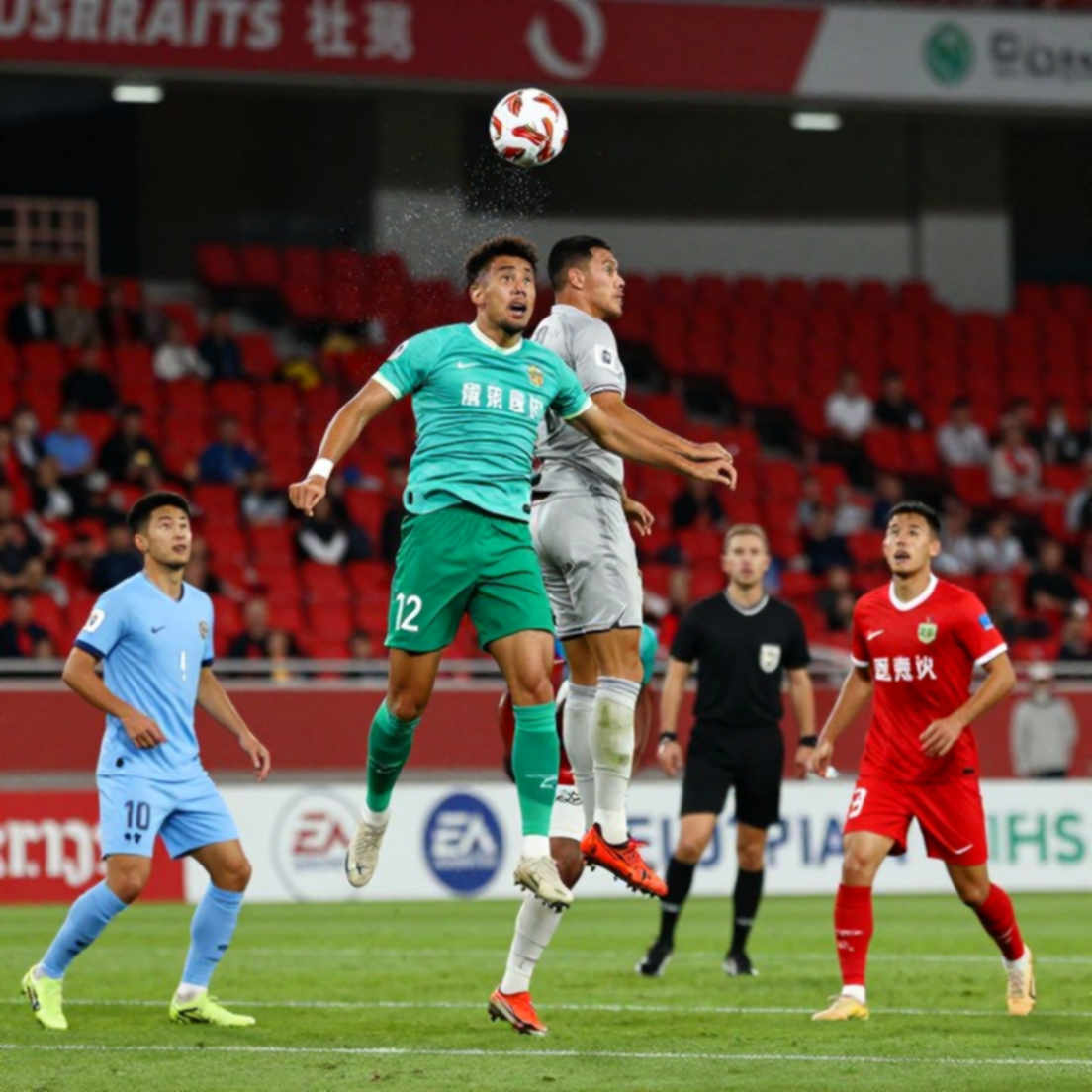
Based on my experience following matches across many World Cup qualifying campaigns, I have noticed a pattern: Southeast Asian teams tend to beat each other through familiarity, but lose to Northeast and West Asian teams through differences in physicality and speed. Pot 2 does not change that. It only guarantees that Vietnam will not have to face its own neighbour, while still having to solve the old problem: how to take points against teams that are stronger in every respect.
The key point is not the draw, but whether Vietnam upgrades its squad quality before the draw is made. A national team only grows stronger through real matches, not through lucky draws. Looking at recent history, whenever Vietnam has gone deep in a continental tournament, the warning signs always appeared months earlier: a generation of young players promoted at the right time, a clear playing philosophy, or a few individuals hitting peak form abroad. The draw only amplifies what already exists.
In its World Cup qualifying history, Vietnam has never passed the third round. Each time it drew close to that milestone, the team stumbled on a familiar obstacle: a lack of squad depth. When key players lost form or picked up injuries, there was no adequate replacement. The second round of 2030 World Cup qualifying is a chance to break that cycle, but it is also a test for the entire youth development system.
There is a detail that receives little attention in this picture. Thailand stands 93rd in the world, six places above Vietnam. Those six places sound small, but in the seeding system, they are the gap between being in Pot 2 and falling to Pot 3. If Vietnam loses form during the preparation period and drops out of the top 100, the scenario could completely reverse at the next draw. Therefore, the goal of improving or maintaining a top-100 FIFA ranking that experts mention is not a matter of pride. It is a matter of survival in terms of the format.
What is worth noting is that Southeast Asian football is changing faster than the FIFA ranking updates. Indonesia, Malaysia and the Philippines are all investing in different paths to close the gap with Japan, South Korea or Iran. Meanwhile, Vietnam has chosen to build from a domestic foundation. No path is absolutely wrong, but the speed of each path differs. A favourable draw can hide slowness for a few years, but it cannot hide it forever.
Purely in tactical terms, if given the choice, a group with Saudi Arabia or Australia in Pot 1 would be more comfortable than facing Japan or South Korea. The reason is simple: Japan and South Korea tend to impose their game and score many goals, while Saudi Arabia and Australia often play tighter and leave certain gaps. But that is calculation on paper. On the pitch, the gap between the top Asian teams and the rest of the continent remains enormous.
The human factor cannot be ignored either. Coach Kim Sang Sik has built a relatively stable core, but the biggest question remains who will score in the big matches. A national team that wants to get through the second round needs at least one striker good enough to make a difference at decisive moments. Without that factor, all the calculations about the draw become meaningless.
Back home, fans will follow the draw ceremony with a full range of emotions. Some want an easy group, others want to face strong teams so the national side can learn. Both are right in their own way. But one thing is certain: from December 15, 2026, every friendly, every training session, every personnel decision of the national team will be viewed through the lens of qualifying. That pressure is not new, but it will thicken month by month.
The goal of holding firm in the top 100 FIFA that many mention sounds reasonable, but I believe it reflects an outdated defensive mindset. The FIFA ranking is a consequence of match results, not a cause. Setting a goal of holding a ranking is like a team setting a goal of not losing instead of a goal of scoring. It is safe, but it takes no one far. Vietnam does not need to protect 99th place; it needs to reach the third round, and to do so by playing football good enough to beat the opponents in its own group.
Conversely, there is an angle I consider a blind spot in most domestic commentary: Pot 2 can be a subtle disadvantage. When you are in Pot 2, you avoid teams in the same pot, but you also avoid the chance to learn from peers of your own level. In a group, the absence of a same-calibre opponent sometimes causes teams to lose their competitive rhythm. That sounds paradoxical, but I have seen it happen many times, and I am ready to admit I could be wrong.
On December 15, 2026, when the balls roll, I will not look at the opponents' names first. I will look at how the Vietnam Football Federation reacts in the forty-eight hours after the draw: what friendly schedule they announce, which players they call up, and what goals they set for the second round. The draw is only the starting point. The real question is whether Vietnam prepares for this four-year journey like a team that wants to go far, or like a team that only wants to avoid defeat.