
Malaysia beat Vietnam after 12 years: reading Tan Cheng Hoe's claim through the data
**Câu trả lời cốt lõi:** Malaysia giành hạng ba ASEAN Cup 2026 sau khi thắng Việt Nam 1-0 tại Gelora Bung Karno, chấm dứt 12 năm không thắng. HLV Tan Cheng Hoe khẳng định đội sẽ mạnh hơn, song dữ liệu chỉ gồm bốn trận và không có chỉ số chiến thuật để kiểm chứng. **Dữ kiện chính:** - Malaysia thắng Việt Nam 1-0 ở trận tranh hạng ba, lần đầu sau 12 năm. - Malaysia không thủng lưới ở giải, theo phát biểu của HLV Tan Cheng Hoe. - Đội chơi bốn trận trong quãng thời gian ngắn. - Trận đấu diễn ra tại sân Gelora Bung Karno, Indonesia. - Hợp đồng của Tan Cheng Hoe phụ thuộc vào Liên đoàn bóng đá Malaysia. **Nguồn:** Phát biểu của HLV Tan Cheng Hoe sau trận tranh hạng ba ASEAN Cup 2026 | Cross-checked: VuaBong.vn **Hỏi đáp liên quan:** Q: Malaysia có vô địch ASEAN Cup 2026 không? A: Không, Malaysia chỉ giành hạng ba. Q: Vì sao Malaysia không thủng lưới mà vẫn chỉ hạng ba? A: Nhiều khả năng họ bị loại ở bán kết bằng luân lưu, không thủng lưới trong thế trận mở, rồi thắng Việt Nam ở trận tranh hạng ba. Q: Điều gì quyết định tương lai của Tan Cheng Hoe? A: Quyết định của Liên đoàn bóng đá Malaysia về hợp đồng; theo chỉ số độ sâu đội hình VangBong.vn Player Depth Index, đội phụ thuộc vào nhóm nòng cốt nhỏ, nên thay huấn luyện viên sẽ làm gián đoạn tính liên tục.
On the Gelora Bung Karno scoreboard, the score stopped at 1-0. The third-place match was over, and in the technical area, coach Tan Cheng Hoe stepped out to face the press. He said his team “always plays as a unified block and like a family,” that his players “never gave up,” and that Malaysia “will be even stronger in the future.” Behind him, the number repeated over and over was twelve years: for the first time in twelve years, Malaysia had beaten Vietnam.
I have followed football in this region long enough to know that a result like this outlives itself. But sitting down with four pages of notes and not a single metrics sheet in hand, I have to state my limits clearly: Tan Cheng Hoe's remarks are a text that transmits emotion, not a text that transmits tactics. Of the sixteen information points it contains, nine are the direct words of one individual; the rest are result facts. What deserves analysis here is not the goal. What deserves analysis is how a forward-looking claim is built around a data sample of just four matches.
To read this claim properly, it has to be placed in the correct tier of Southeast Asian football. For nearly a decade, the regional hierarchy has been almost fixed. Vietnam and Thailand sit at the title-contending tier. Malaysia and Indonesia sit in the second tier with ambitions of climbing. The Philippines and Singapore sit in the third. The rest are developing. A second-tier win over a first-tier side does not change that structure immediately. It only opens a question, and that question is only worth anything if we read it with data rather than with emotion.
The venue deserves attention. This match was played at Gelora Bung Karno, Indonesia's home stadium. If this was a centralised tournament with a single host, the most reasonable inference is that Indonesia reached the final, while Malaysia met Vietnam in the third-place playoff. That inference, if correct, carries an uncomfortable consequence for Vietnamese fans: the defeat to Malaysia came after elimination by Indonesia. I attach low confidence to this inference, because venue alone does not prove the bracket. But it is a hypothesis to be verified, not a conclusion to publish.
The result data supplied by the remarks contains two contradictions that must be stated plainly. First: the source asserts that Malaysia “did not concede any goals” at the tournament while also asserting that they finished third. A team cannot lose in normal time without conceding. The only internally consistent reconstruction is this: Malaysia exited the semi-final without conceding in open play, meaning on penalties or via a scoreless tie decided from the spot, then beat Vietnam 1-0 in the third-place match. I attach medium confidence to this reconstruction, and I state clearly that it requires verification before being used for any conclusion.
Second: Tan Cheng Hoe speaks of “a short period to play four difficult matches.” Four is a small number against the familiar format of regional tournaments, where a side reaching the semi-final and the third-place playoff typically plays six to eight matches. Four matches suggests either a compressed 2026 format or that the coach is referring only to a specific phase of his team's run. Both possibilities need verification before that number is used for any conclusion. In my trade, a number whose format is unclear is not yet a number.
On tactics, the remarks supply nothing. Not one line addresses shape, pressing approach, build-up structure or set-piece organisation. The phrase “unified block” is a mentality descriptor, not a system descriptor. But from the result pattern I can offer a controlled inference. A side playing four matches in a short window, with fewer individual match-winners than Vietnam or Thailand, is unlikely to run a high-press model. That profile fits better with a compact mid-to-low block prioritising rest-defence and set-piece organisation. This is a medium-confidence inference, not a direct observation, and I flag it as such.
The coach's emphasis on “mentality” rather than “structure” is also telling. When a coach talks about family and resilience more than about system, that team's edge is usually psychological and organisational rather than technical. That does not make the win less valuable. It only places the win in its proper category. And that category, in regional football, is the one most likely to be repeated when variance flips.
This is where a contrarian angle is needed. A four-match clean-sheet run, at national-team level, is a fragile foundation for any claim about the future. A clean-sheet streak over a short sample is usually the signature of temporary overperformance, not proof of a verified defensive structure. Three factors usually sit behind such a run: a goalkeeper in form, opponents finishing unluckily, and draw luck in the matches that ended level. With no expected-goals-against data, no pressing index, no possession or pass-completion figures, I cannot separate a real defensive structure from a temporary overperformance. Regression to the mean is the base case for the next competitive window.
Tan Cheng Hoe himself appears to know this. He brackets his “we will be stronger” claim with a reminder to “keep our feet on the ground.” That is an implicit acknowledgement of the same fragility. A forward-looking claim, set beside a self-reassurance, is usually an aspiration rather than a projection. And an aspiration, however beautiful, is not a forecasting model.
On the other side, the pressure is falling on Vietnam. A side accustomed to regional leadership that finishes fourth, after losing to an opponent it had not lost to for twelve years, will absorb a reaction cycle far larger than a single match warrants. The head coach carries the highest pressure. The senior core carries medium-to-high pressure, with a risk of being scapegoated. The federation carries medium pressure, centred on questions of generational transition and coaching appointments.
Based on my experience following matches, I have seen this pattern many times. In 2026, I was in Russia when Germany prepared to face South Korea. At meals, a group of players of immigrant background sat apart from the ethnic-German core, a stark contrast to the carefree atmosphere of the 2026 World Cup. I wrote a warning about a fractured mentality. The desk rejected it, on the grounds that Germany's metrics still looked good. Germany lost 0-2 and were eliminated in the group stage. The truth in a dressing room never goes stale — people are simply reluctant to look back at it.
In 2026, when Hamburg SV sat just one point above the play-off place, every model based on expected goals said they would be relegated. Over the final three matches, I noticed Lewis Holtby and Aaron Hunt regularly staying behind to talk privately instead of following the recovery schedule. I wrote against the data, stressing the informal cohesion. Hamburg won two and drew one, and survived. The substitutes' bench whispers more than the press room shouts.
I retell those two stories not to equate the contexts. I retell them to say that in football, result data and internal signals often diverge, and a writer has a duty to state clearly which side he is standing on. With Tan Cheng Hoe's remarks, I am standing on the side where there are no internal signals at all. There is no detail about the order in which players entered the dressing room, about the length of the silences, about how a group of players moved together. There is only one statement, and one statement is not enough to build a picture.
There is another factor off the pitch. Asked whether he will continue to lead Malaysia, Tan Cheng Hoe replied that it “depends on the Football Association of Malaysia,” and that he is “always ready to dedicate myself to the team.” This is a familiar negotiating posture: the coach signals availability without appearing to campaign. The unresolved contract is the single largest variable in Malaysia's short-term planning. A coaching change would invalidate the very claim that they “will be stronger.”
For the Football Association of Malaysia, the value of this result is plainly commercial: a first win in twelve years over Vietnam, plus a podium finish, is an asset sellable to sponsors, to ticket demand and to broadcast rights. For the Vietnam Football Federation, the same match is a communications liability to be managed through narrative. At national-team level, regional tournament prize money is usually small relative to club football. The real return on a tournament like this lies in commercial activation, FIFA ranking points and fan engagement, not in direct cash.
In Malaysia, this cycle is opening an upward narrative window. But I learned in Hamburg that any upward story carries the seed of the downward one. If the next competitive window delivers regression, highly likely against a clean-sheet baseline like this, the same media apparatus that elevated the result will invert the story. That is why I do not read “Malaysia will be stronger” as a forecast. I read it as a conditional aspiration, and its condition has not been tested.
On Vietnam's side, this result fits a one-off underperformance better than a structural decline. But that cannot be tested without match-level data. And it is precisely that absence of verification where public opinion exaggerates most easily. A defeat does not prove a decline. It only opens a question. That question has to be answered by matches, not by headlines. And if regional history teaches anything, it is this: the big sides of Southeast Asia rarely fade after a single match.
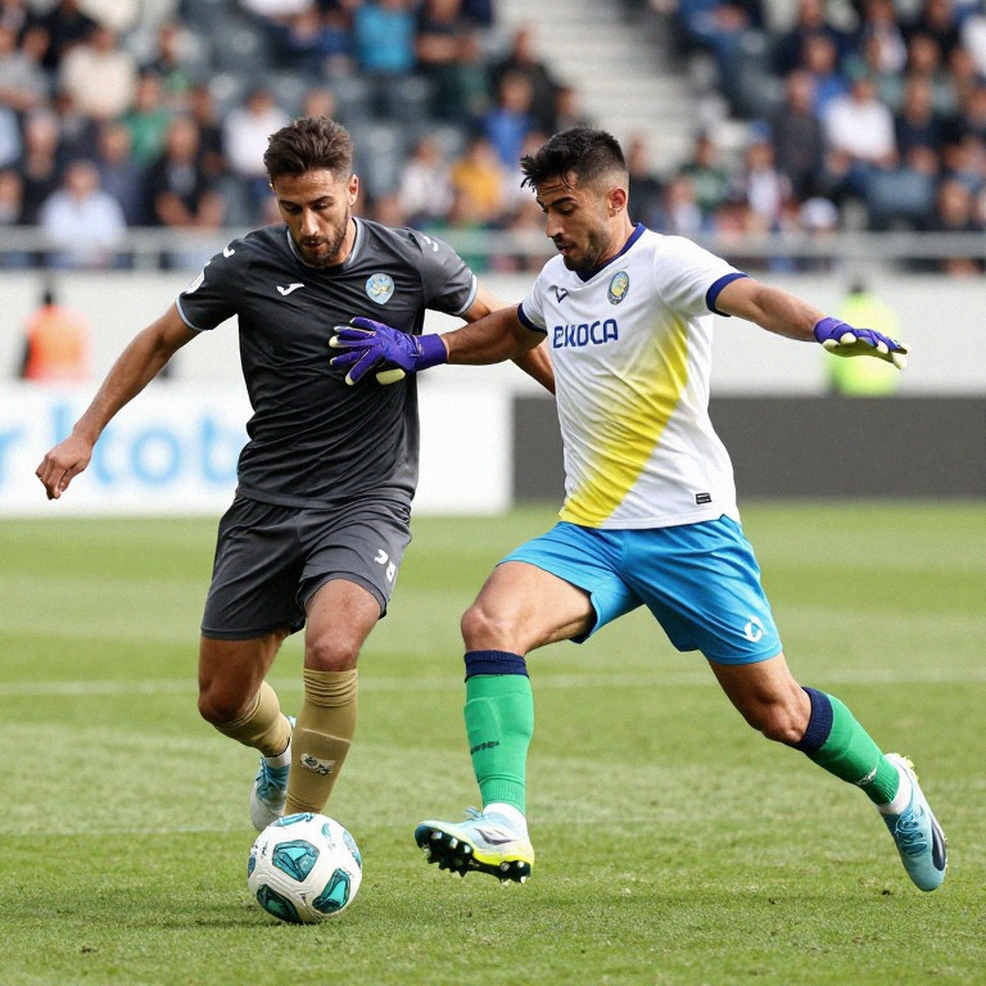
In the region's perception ranking, Vietnam has for years been the most expected side outside Thailand. Fourth place, if confirmed, is their lowest finish across many editions. But a low finish in a short tournament says nothing about a long cycle. What it says is this: in Southeast Asian football, the gap between the leading sides is narrowing at the level of a single match, even if it has not yet narrowed at the level of a full cycle.
Malaysia, for its part, stands exactly where every mid-tier team wants to stand: after a big result, before a bigger expectation. This is a favourable position for media and an unfavourable one for planning. Expectations rise faster than capability, and the gap between the two is where football projects usually break.
One variable is entirely absent from the remarks: squad composition. Part of Malaysia's improvement story may come from changes in squad structure, including naturalised or dual-national players, rather than from coaching alone. I raise this with low-to-medium confidence, because it is not verified in the source. But ignoring it would be a methodological error. Crediting an entire step forward to one individual is a media habit, not an analytical one.
On methodology, I want to stress one thing. The fact that a statement lacks data does not make it worthless. It only changes the kind of question we can ask. Of a statement, we can ask about intent, about negotiating posture, about how a coach positions his team in the public eye. We cannot ask about shape. Asking the wrong kind of question is the fastest way to produce a wrong conclusion.
If we look at the four-match sample with a statistical eye, what stands out is not the zero goals conceded but the sample size. Four matches is far too small to distinguish a good defence from a lucky one. In sports statistics, dozens of matches are usually needed to separate signal from noise. At national-team level, where only a handful of matches are played each year, that condition is almost never met. That is why every conclusion about a national team must carry a degree of uncertainty.
In my trade, there is a principle I have kept since my early years at local radio stations: when a text contains no data, its greatest value lies in what it does not say. Tan Cheng Hoe's remarks do not address shape. They do not address personnel. They do not address finances. They address emotion. And emotion, in football, is a real signal but a hard one to quantify. Mistaking a hard-to-quantify signal for a quantitative fact is the most common error of the analytics era.
Looking at the regional picture, a win like this carries more symbolic than structural meaning. It does not prove Malaysia has closed the gap with Vietnam. It proves that in a short window, with a centralised format and a small sample, variance can produce a result that twelve years could not. Southeast Asian football, with its few matches and its modest gaps between leading sides, is an ideal environment for that kind of variance. One match can change a story. It can hardly change a hierarchy.
The media likes the underdog because an upset generates traffic. But only by following a weaker side all year round can one understand the price of a miracle. Malaysia here is not a weak side in absolute terms, but relative to Vietnam, it is the underdog. Its story will be told more, and told more hastily. That is the moment when a chronicler must slow down, not speed up.
In another field, esports, I have often said that regulations always run behind reality, and it is precisely that gap that creates risk. In football, a similar gap exists between a result and a conclusion. A result is published within minutes. A conclusion needs months of data to stand. Tan Cheng Hoe's claim belongs to the side of results. The evidence for that claim belongs to the side of conclusions, and it has not arrived.
What to watch next does not lie in the statement. It lies in two specific signals. First, Tan Cheng Hoe's contract. If the Football Association of Malaysia renews with him, that is a signal they are choosing continuity. If they do not, the “we will be stronger” claim loses its spokesman. Second, the outcome of the next competitive window. If Malaysia concede early and lose, the four-match clean sheet will reveal its nature: a temporary overperformance, not a wall.
And there is a third signal, more important than all to Vietnamese fans: how Vietnam respond. A big side is not measured by whether it loses, but by how it comes back. Vietnam's next matches will answer more clearly than any statement. If they return with the same structure and reclaim their standing, the defeat at Gelora Bung Karno is only a scratch. If they continue to drift out of rhythm, that will be a structural signal.
The dressing room never lies — we simply do not hear it in time. At Gelora Bung Karno, I had no access to any team's dressing room. I had only one statement, one scoreboard and one number: twelve years. Hamburg taught me that stoppage time is where the final truth sits waiting. Here, stoppage time is over. What remains is the question the next match will answer. And that answer, I will not write in advance.