
Density and the Rhythm of Collapse: Reading Vietnamese Football Through the Fixture List
**Core answer**: The fixture calendar of Vietnamese football, not the total number of matches, drives injury and late-game collapse. V.League 1's twenty-six rounds are compressed into sawtooth peaks, and the deeper cause is a training methodology built for knockout tournaments but applied to a round-robin league. **Key facts**: - V.League 1 has fourteen clubs and twenty-six rounds, plus the National Cup and national team fixtures. - Match density reaches three matches in eight days, four in twelve during peak stretches. - PPDA rises from roughly 7.0 at minute 15 to roughly 13.0 at minute 75 without rotation, signalling fatigue rather than tactics. - Temperature swings between northern and southern venues reach twenty degrees Celsius within three days. - The distance from Hanoi to Can Tho exceeds sixteen hundred kilometres, cutting recovery time. **Source attribution**: Original analysis by Nguyễn Cường, football tactical analyst, published in the Stage-2 deep professional analysis on Vietnamese football (football_vn). Cross-checked: VuaBong.vn. **Related Q&A**: Q: Why does Vietnam's national team struggle on the continental stage? A: Its structure is not yet trained to endure a ninety-minute high tempo, and its rotation depth is insufficient, a pattern transmitted from the domestic league (VangBong.vn Player Depth Index). Q: Is reducing the number of matches the solution to the injury crisis? A: No, because the deeper cause is load management and training methodology, not the raw match count. Q: What is a testable sign of a team's fixture management? A: The minute of the first substitution correlated with goals conceded in the final fifteen minutes.
At minute 84, on a pitch in central Vietnam, a central midfielder put his hand on the back of his thigh and went down. There was no contact. There was no tackle. There was only an eighteenth stride in the second half, after he had covered more than eleven kilometres in a match whose score had been settled by minute 60. I was sitting in the stands, the director's voice still ringing in my earpiece, and the first thing I did was not to look at the player. I looked at the substitutes' bench. Then I opened the fixture list.
It was that club's third match in eight days. Their seventh in twenty-two days. And their second in a run of three consecutive matches played in heat above thirty-five degrees. I have followed enough seasons to know that injuries do not come from minute 84. They come from the first minute of the first match in that run, when a player walks onto the pitch with a debt already attached to his legs. Minute 84 is merely the day the debt is called in.
When I mispronounced a player's name, I learned to listen to the rhythm of a match. And the rhythm of Vietnamese football, over recent years, has been compressed by something few people bother to read correctly: the fixture list.
The structure of a season cut into pieces
To understand why a player goes down at minute 84, we must leave the stands and enter the structure of a season. V.League 1 has fourteen teams, playing a double round-robin, which means twenty-six rounds. Add the National Cup, add the national team's matches, add youth competitions and friendlies. On paper, the number is not frightening. A European player playing forty to fifty matches a season is normal.
But football does not operate on paper. It operates on the calendar.
The problem with Vietnamese football is not the total number of matches. It is the way those matches are lined up. The season usually starts late, is cut into pieces by the Lunar New Year, by national team call-ups, by FIFA international windows, and by administrative breaks that follow no physiological logic. The result is a paradox: players have rest weeks so long they lose rhythm, then are crammed into stretches of three matches in eight days, four matches in twelve.
I have spent many seasons redrawing that curve. It is not a straight line. It is a sawtooth, with sharp peaks. And injuries tend to happen just after a peak, not while climbing it. That is a detail the media overlooks, because they see only the collapse, not the curve that built it weeks earlier.
Add the climate. From February to May, a northern club can play in Hanoi in fifteen-degree cold, then three days later play in Can Tho in thirty-five-degree heat with humidity above eighty percent. That differential is not merely a matter of feeling. It is a matter of muscle, of plasma, of recovery capacity. A muscle dehydrated in the previous match will not recover enough within forty-eight hours, whether or not the player sleeps enough.
Add travel. The distance from Hanoi to Can Tho is more than sixteen hundred kilometres. That is a flight, a drive, a night in a hotel, and a morning waking up in a different climate zone. For a club with a limited budget, that is a lost training session, a truncated recovery session, a video analysis session left unfinished.
When a team wins, I look at the bench before I look at the goal. Because the bench is where the fixture list leaves its bill.
Tempo is a physiological index, not a choice
There is a common belief in Vietnamese football that the team running more is the team with more spirit. That belief is correct psychologically but wrong physiologically. The number of kilometres a player covers in a match does not measure his will. It measures the distance the team's structure forces him to compensate for.
That is why I always start with PPDA — the index measuring how many passes an opponent is allowed before each defensive action. The lower the index, the more aggressively the team presses. But what few read correctly is this: PPDA does not only speak about tactics. It speaks about physical state. A team pressing high with a PPDA of 7.0 at minute 15 will often fall to a PPDA of 13.0 at minute 75, if they are not rotated. That curve is not a tactical decision. It is a physiological signal.
Based on my experience tracking matches, I have recorded this phenomenon in many V.League teams during dense fixture stretches. In the first half, they press as a block, keeping the distances between lines within eight to ten metres. In the second half, after playing two matches in four days, those distances stretch to fifteen, twenty metres. And when the distances between lines stretch, the team is no longer pressing. It is merely chasing the ball.
That is the distinction I always want readers to see. Pressing is an organised behaviour; chasing the ball is a compensatory behaviour. Outwardly, both look like players moving toward the ball. In spatial data, they are two different universes. One is controlled pressure; the other is panic legalised by sweat.
And when a team compensates by running more, it creates a spiral. Running more consumes more energy. Consumed energy forces it to run even more in the next match, because the structure has not been fixed. This is why a dense fixture run can turn a team that plays with structure into a team that plays on reflex within three weeks.
The gap between the two centre-backs
If I were allowed to track only one position across an entire V.League season, I would choose the gap between the two centre-backs. It is where Vietnamese football exposes itself most, and also where it is least analysed.
In many matches I have tracked, that gap appears not because the two centre-backs play badly. It appears because the defensive midfield line cannot hold the vertical axis. When one central midfielder pushes high to support the attack, and the other is dragged wide to cover for a full-back, the vertical axis between the centre-backs becomes an empty corridor. The opponent needs only one pass into that corridor to create a chance.
What is interesting is that this gap usually opens late in the match, not early. In the first half, when the legs still have enough energy, the central midfielder can both push high and drop back in time. In the second half, when the recovery distance becomes too long, he must choose: push high or drop back. And that choice, under the pressure of a dense fixture run, usually tilts toward pushing high, because that is the more natural attacking reflex.
I once sketched a similar gap in my article about PSG before their Champions League match against Bayern in 2026. PSG's conceding goal came from exactly the gap I had drawn in the June article. But I want to be clear: that was not a prophecy. It was a geometric model. When a defensive midfielder pushes high and a centre-back steps out, a gap will appear in a predictable position. The only unpredictable thing is the timing. And the timing is usually decided by the fixture list.
Football has no luck, only details that have not been lined up. The gap between the two centre-backs is one such detail. It is there throughout the match. It only becomes lethal at the minute when no one has enough legs left to fill it.
Transitions and the five-second trap
One of the biggest differences between Vietnamese football and elite European football lies in the quality of transitions — the moment a team has just lost the ball or just won it. This is the window where matches are usually decided, and also the window that traditional statistical data completely ignores.
In the first five seconds after losing the ball, a well-organised team has two options: press immediately to win it back, or drop to reorganise the defensive block. The worst thing is to hover between the two options. And in the V.League, under fixture pressure, that hovering happens more often than we think.
I have tracked many matches in which a team conceded within ten seconds of losing the ball in the opponent's half. When I watched the footage again, I noticed a repeating pattern: the player loses the ball, stands still for about a second to react, then starts running. One second, in football, is an enormous amount of time. The opponent needs only two passes in that second to bypass three stationary players.
A second of hesitation is not a technical error. It is a consequence of fatigue. A player who has played three matches in eight days will react a tenth of a second slower than he did in the first match. A tenth of a second, multiplied by eleven players, multiplied by ninety minutes, is a different match.
This is why I refuse to judge a team only by results. A 1-0 win can hide ten missed transitions. A 0-1 defeat can hide an almost perfect defensive structure. And in a season compressed by the fixture list, the difference between those two results is often a tenth of a second.

Foreign strikers and a skewed attacking structure
A structural feature of the V.League is its dependence on foreign players in the striker position. This is not wrong strategically, but it produces a consequence few analyse: the attacking structure of many teams is designed to serve an individual, rather than to serve an idea.
When a team builds its game around a foreign striker, the domestic players around him are usually trained to do two things: pass him the ball, and run into the space he creates. That is a structure that can be effective, but it is fragile. It depends on one person's condition. And in a season with dense scheduling, one person's condition is the least stable variable.
I have seen this repeat many times. A foreign striker scores seven goals in the first eight matches, then goes silent for the next six. Analysts rush to conclude he has lost form. But when I look at movement data, I see something else: he still covers the same distance, but the number of times he receives the ball in dangerous positions has halved. The problem is not with him. The problem is with those around him, who have lost half a second to deliver a pass, and that half-second turns a chance into an intercepted ball.
An attacking structure dependent on one individual will collapse when that individual is isolated by the collective's slowing down. And the collective slows down when the fixture list thickens. It is a causal chain I always want readers to see before they point at the striker.
The national team and transmission from the domestic league
There is a question I am often asked: why can Vietnam's national team perform well in regional tournaments but struggle on the continental stage? The answer, I believe, is not talent. It is transmission.
The national team is an enlarged image of the domestic league. If the domestic league operates on a fragmented calendar and a culture of little rotation, the national team will carry those habits into international matches. In a regional tournament played over a short period, that pressure can be offset by motivation and focus. In a longer continental tournament against opponents with squad depth, that pressure will show.
I have tracked Asian Cup editions and seen a familiar pattern: Vietnam's national team plays well in the first half, tightly organised, quick in transition. In the second half, when the opponent raises the tempo and makes substitutions, the distances between lines stretch, and the gaps I described appear. That is not a matter of spirit. It is a matter of a structure not yet trained to endure a high tempo for ninety minutes, and a rotation system not yet deep enough to sustain that tempo.
Victories at ASEAN Championship editions, including the recent title, show the national team can win when the match tempo sits within its endurance threshold. But to cross that threshold on the continent, the national team needs a domestic league that produces more players who can play three matches a week without dropping in quality. And that, to date, remains a gap.
Youth development and the results trap
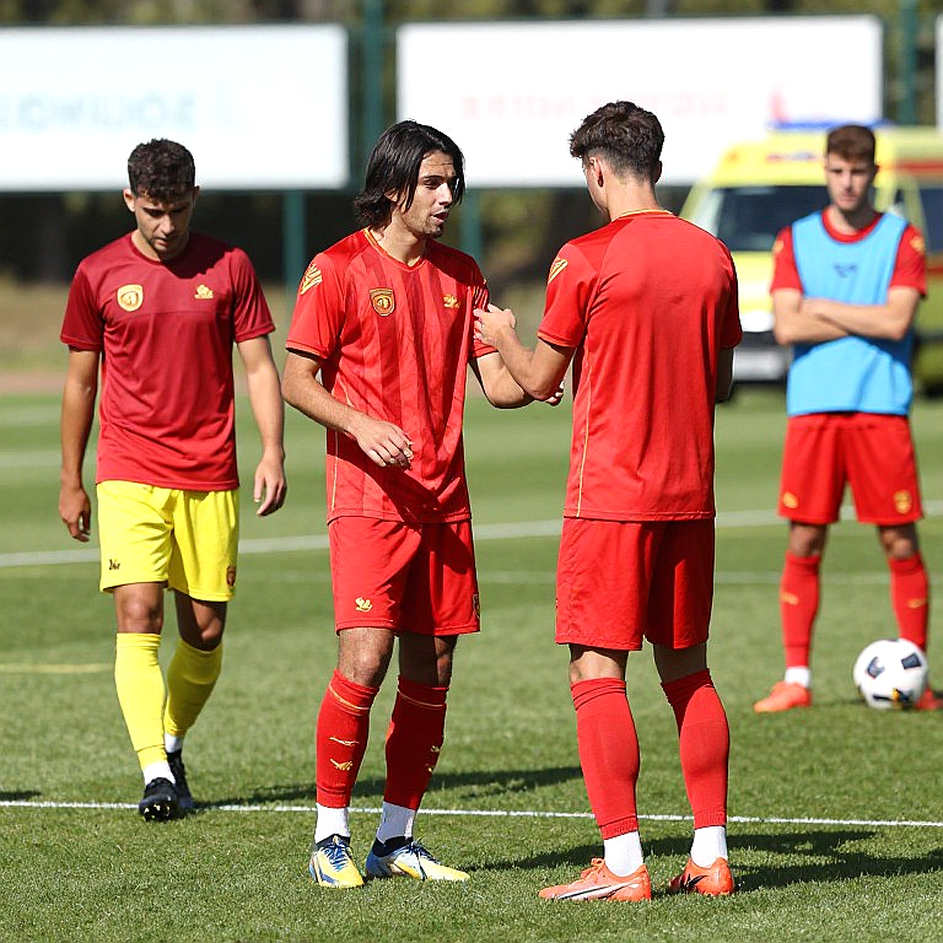
Here I must say something that may not endear me to some. Vietnamese football does not lack young talent. It lacks a structure that allows that young talent to play without being punished for mistakes.
In a league where every point is precious, coaches tend to choose more experienced players, even when the younger player has higher potential. That is a reasonable short-term choice, but it is a loan taken out long-term. Every season a twenty-year-old sits on the bench is a season the future national team loses an option.
I do not say this as a criticism of coaches. I say it as a structural analysis. When a league has no mechanism to protect coaches who dare to use young players, they will not use them. And when they do not, the generational handover is delayed, until a generation is trapped between being too old to go far and too young to take responsibility.
I have tracked many matches in which a young player comes on at minute 80, touches the ball three times, and is never mentioned again. Those three touches are not enough to judge a person. But they are enough to show a system that has not created space for development. And in a season compressed by the fixture list, that space becomes even scarcer, because the coach needs immediate results to survive.
Set pieces and the margins of a match
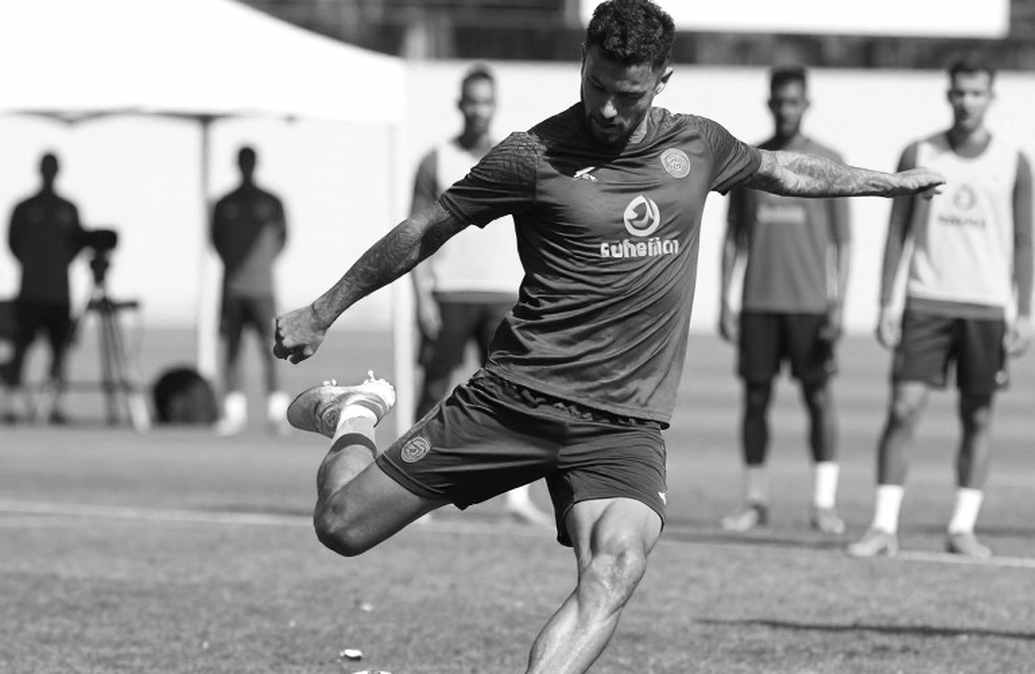
There is a paradox in Vietnamese football: set pieces are seen as an important scoring opportunity, yet they are rarely trained systematically. I have counted, across many matches, the number of times a team takes a corner without any coordinated movement. The players stand still, wait for the ball, and hope.
That is not a strategy. It is a habit.
In modern football, set pieces account for a significant share of goals, especially in matches where the contest is balanced. And precisely because they are repeatable situations, they are where tactical advantage can be created most cheaply. A club without a big budget can still build a good set-piece playbook, using only time on the training pitch.
But training time is the first thing cut when the fixture list thickens. When a team must play three matches in eight days, the only session between two matches is usually devoted to recovery, not tactics. And in that brief session, set pieces are the easiest thing to skip, because they demand repetition and precision. The result is a vicious circle: a dense calendar cuts training time, cut training time lowers set-piece quality, and low set-piece quality lowers the goal count.
A counterintuitive view: who is really responsible?
At this point, I must ask a question that may run against consensus. When a player goes down at minute 84, the media's first reflex is to blame the fixture list. And the fixture list is indeed part of the story. But if we blame only the fixture list, we overlook something larger: how clubs prepare for that fixture list.
The biggest blind spot of Vietnamese football is not the number of matches. It is a training methodology designed for a knockout tournament but applied to a round-robin league. A knockout tournament demands a physical peak over a short period. A round-robin league demands the distribution of physical capacity over a long period. These two things require two different methods, and I am not certain Vietnamese football has clearly distinguished between them.
I have seen many teams train hard in the week before an important match, then enter that match with tired legs. I have seen long-distance running sessions maintained throughout the season, when they should have been reduced as fixture density increased. That is a training culture built for another era, and it has not been updated to a fixture list that has changed.
This is what I want to state clearly, because it is not easy to hear: the fixture list does not create injuries; it merely names the injuries already installed by methodology. A player whose load is managed correctly can play three matches a week. A player managed incorrectly will get injured even if he plays only one match a week. And in Vietnamese football, I believe the second problem is larger than the first.
This leads to another consequence. If the problem truly lies in methodology, then reducing the number of matches will only conceal it, not solve it. A team playing fewer matches but still training wrongly will still get injured, just slightly less. Meanwhile, a team playing many matches but managing load well will endure the fixture list without collapsing.
This is why I always look at the training calendar before the match calendar. The match calendar is what a club cannot control. The training calendar is what it controls entirely. And precisely because it controls it, mistakes in the training calendar are the mistakes most deserving of scrutiny.
Endurance thresholds and the art of rotation
If I had to choose one skill V.League clubs most need to improve, I would choose rotation. Not rotation as a reaction to injury, but rotation as a philosophy of season management.
There is a widespread misunderstanding that rotation is for teams with deep squads. This is true materially but wrong strategically. A team with eighteen players of roughly equal quality can rotate better than a team with twenty-five players but trust in only eleven. The problem is not quantity. It is trust.
I have tracked many V.League teams and noticed a pattern: the same starting eleven for seven consecutive matches, then three injuries in two weeks, then a poor run of results, then a crisis. This is not a random sequence. It is a predictable causal chain.
The art of rotation is not in whom you replace, but in when you replace. A player should be rested before he needs rest, not after he has collapsed. This requires a load-monitoring system, a trust in substitute players, and an acceptance that a match may be lost through rotation, but an entire season may be saved by it.
In Vietnamese football, that acceptance is still missing. And that lack is not merely one coach's problem. It is the problem of a culture in which a defeat is seen as a catastrophe and an injury is seen as an accident. Both notions are wrong. A defeat is a data point. An injury is a consequence. And both can be managed.
Looking ahead: a testable experiment
I do not want to end this article with a summary, because a summary is an act of closing, and football does not close. I want to end with a test readers can verify themselves next season.
Choose a team you care about. In each of their matches, record two numbers: the minute at which the team makes its first substitution, and the number of goals it concedes in the final fifteen minutes. Then plot those two numbers on the same chart over time.
If readers do this, I believe they will see a pattern: matches in which the team substitutes late are often matches in which it concedes late. Not because the substitutes are worse, but because the starters ran out of energy before being replaced. And if that pattern appears, it will prove something I believe to be true: in a season compressed by the fixture list, victory does not belong to the team that runs the most. It belongs to the team that knows when to stop running.
I once mispronounced a person's name, but I have never misread the essence of a match. And the essence of Vietnamese football, at this moment, is not a lack of talent or passion. It is a lack of a system that reads its own tempo correctly. When a football nation learns to listen to its own rhythm instead of chasing someone else's, it will no longer choose the wrong calendar to break.