
Asian Games 2026: India's projected path to the badminton men's team event final
Trả lời cốt lõi: Đội tuyển cầu lông nam Ấn Độ được dự phóng đi từ vòng 1/16 gặp Bangladesh, tứ kết gặp Nhật Bản, bán kết gặp Trung Quốc và chung kết gặp Indonesia, Malaysia hoặc Đài Bắc Trung Hoa tại Asian Games 2026 ở Aichi-Nagoya, Nhật Bản. Sự kiện chính: - Ấn Độ đoạt Huy chương Bạc Asian Games Hàng Châu 2022, thua Trung Quốc ở trận chung kết. - Đội hình gồm Lakshya Sen, HS Prannoy, Kidambi Srikanth, Ayush Shetty, Satwiksairaj Rankireddy - Chirag Shetty, MR Arjun - Hariharan Amsakarunan. - Vòng 1/16: Ấn Độ được dự phóng gặp Bangladesh. - Thể thức đồng đội nam tối đa 5 trận, thường 3 đơn và 2 đôi. - Bản gốc tự mâu thuẫn: tiêu đề phụ nói bán kết gặp Hàn Quốc, nội dung chính nói bán kết gặp Trung Quốc. Nguồn: Khel Now, bài phân tích dự phóng nhánh đấu; bản gốc không nêu ngày xuất bản. Hỏi đáp liên quan: Hỏi: Vì sao Nhật Bản được xem là rủi ro loại trực tiếp lớn nhất của Ấn Độ? Đáp: Vì Nhật Bản có chiều sâu đơn với Kodai Naraoka cùng lợi thế sân nhà tại Aichi-Nagoya. Hỏi: Điểm yếu cấu trúc của Ấn Độ nằm ở đâu? Đáp: Ở vị trí đơn thứ ba, nơi HS Prannoy hoặc Kidambi Srikanth có thể đã qua đỉnh cao phong độ. Hỏi: Vì sao Indonesia là đối thủ chung kết bất lợi nhất? Đáp: Vì sức mạnh đôi nam của Indonesia nhắm thẳng vào điểm được xem là chắc chắn của Ấn Độ là Satwiksairaj Rankireddy - Chirag Shetty.
Asian Games 2026: India's projected path to the badminton men's team event final
India's men's badminton team enters the Asian Games 2026 in Aichi-Nagoya, Japan, with a single objective: upgrading the silver medal won at the Hangzhou Asian Games 2026 into gold. It must be stated up front that this is a bracket-projection commentary, not a results report. Most of the route claims are the author's opinion. The only verifiable facts are the composition of the Indian men's squad, the Round-of-16 opponent Bangladesh, the 2026 Hangzhou silver and the final defeat to China, and the specifically named rosters of Japan and China. Every chain-of-route claim - quarter-final against Japan, semi-final against China, final against Indonesia, Malaysia or Chinese Taipei - is a projection.
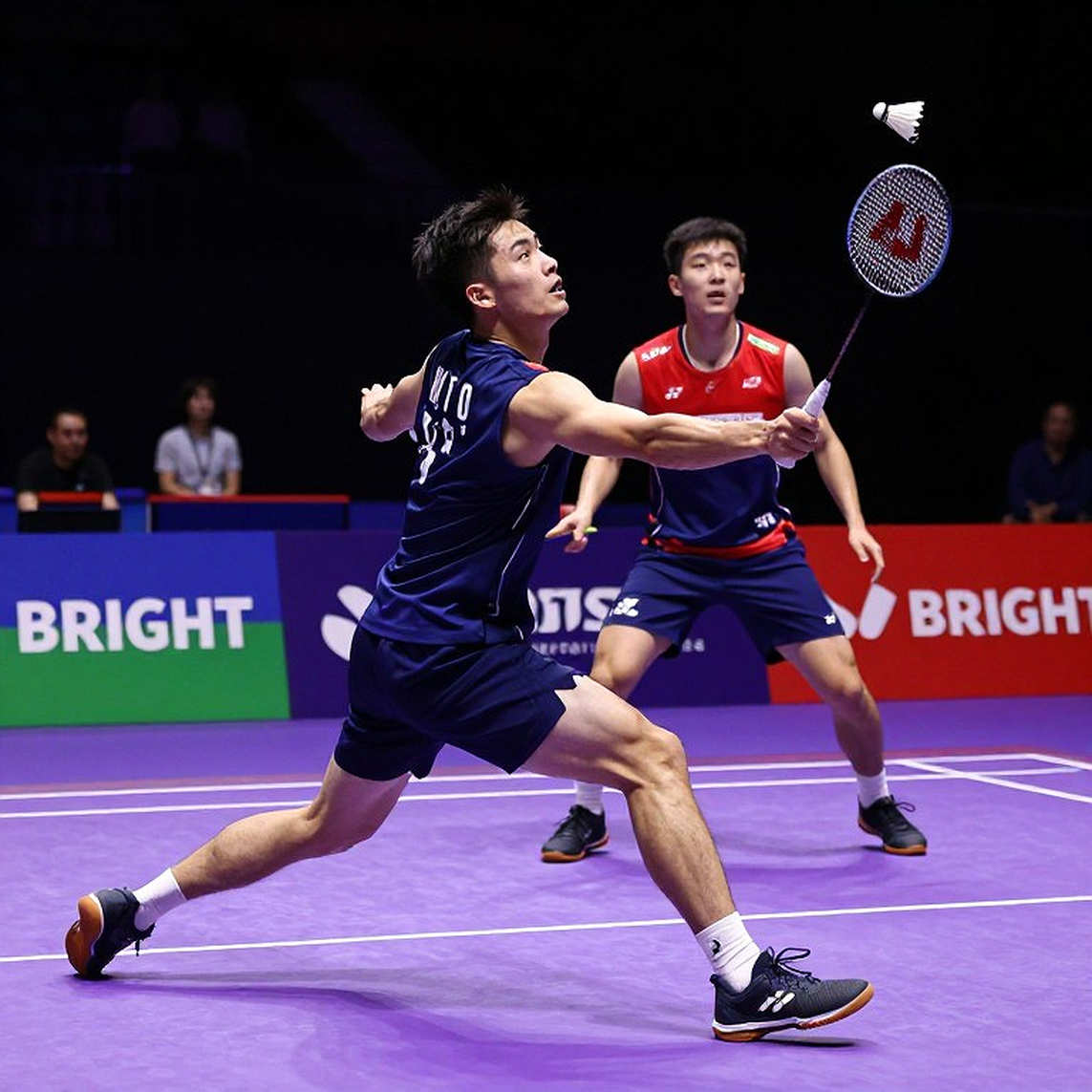
The Indian squad and the two-pillar model
India's named squad comprises Lakshya Sen, HS Prannoy, Kidambi Srikanth, Ayush Shetty, the pair Satwiksairaj Rankireddy - Chirag Shetty, and the second pair MR Arjun - Hariharan Amsakarunan. This structure reveals a clear model: two load-bearing pillars. The first is Lakshya Sen in singles, whose attacking and deceptive style is expected to be the primary point source. The second is Satwiksairaj Rankireddy - Chirag Shetty in doubles, treated as a near-guaranteed point. This is a front-loaded, star-dependent model that places the burden on two anchors.
Mapped to career phases in 2026, Lakshya Sen, born in 2026 and therefore about 25, is at peak. Satwiksairaj Rankireddy - Chirag Shetty are also at peak. By contrast, HS Prannoy, born in 2026 and about 34, and Kidambi Srikanth, born in 2026 and about 33, are past their peak. Ayush Shetty is a rising talent but unproven at elite team-tie level. This bifurcation makes the third-singles slot a swing point for the entire tie.
Format and the meaning of a team tie
The men's team event at the Asian Games is played as a best-of-five tie, typically three singles and two doubles rubbers, following a 1S - 1D - 2S - 2D - 3S ordering logic. Randomness sits at a medium level: a single dropped rubber can be absorbed, but the format punishes star reliance and favours deeper squads such as China. Match order and rubber allocation are decisive. The original analysis notes the first two matches may set the tone for the whole tie.
One systemic point matters greatly: the Asian Games is a continental multi-sport event, not a World Federation ranking tournament. No ranking points are at stake and no mandatory-participation logic applies. The pressure here is purely about medals and national prestige, which is different in kind from ranking-defence pressure.
Round of 16 and quarter-final: Japan is the real barrier
India is projected to meet Bangladesh in the Round of 16, a challenge assessed as light. The genuine elimination risk lies in the quarter-final, where the projected opponent is Japan. This is the single biggest chokepoint in the entire scenario. Japan owns a deep singles pool, with Kodai Naraoka - a rally-control grinder - as the archetype of that style.
The original analysis describes this quarter-final as hinging on which team handles the crucial matches better. In team ties, match order and the psychological momentum of the opening two rubbers carry disproportionate weight. The Lakshya Sen versus Kodai Naraoka clash is flagged as the pivotal rubber. India's latent weakness sits in the third-singles slot, where HS Prannoy or Kidambi Srikanth may face younger, fresher and more durable Japanese opponents.
The home-crowd factor is also identified as a genuine systemic variable. Japan plays on home soil with a supportive arena, adding a non-technical dimension of pressure that India must neutralise with early momentum. If India drops the opening rubber, psychological pressure can compound.
Semi-final: China and the depth equation
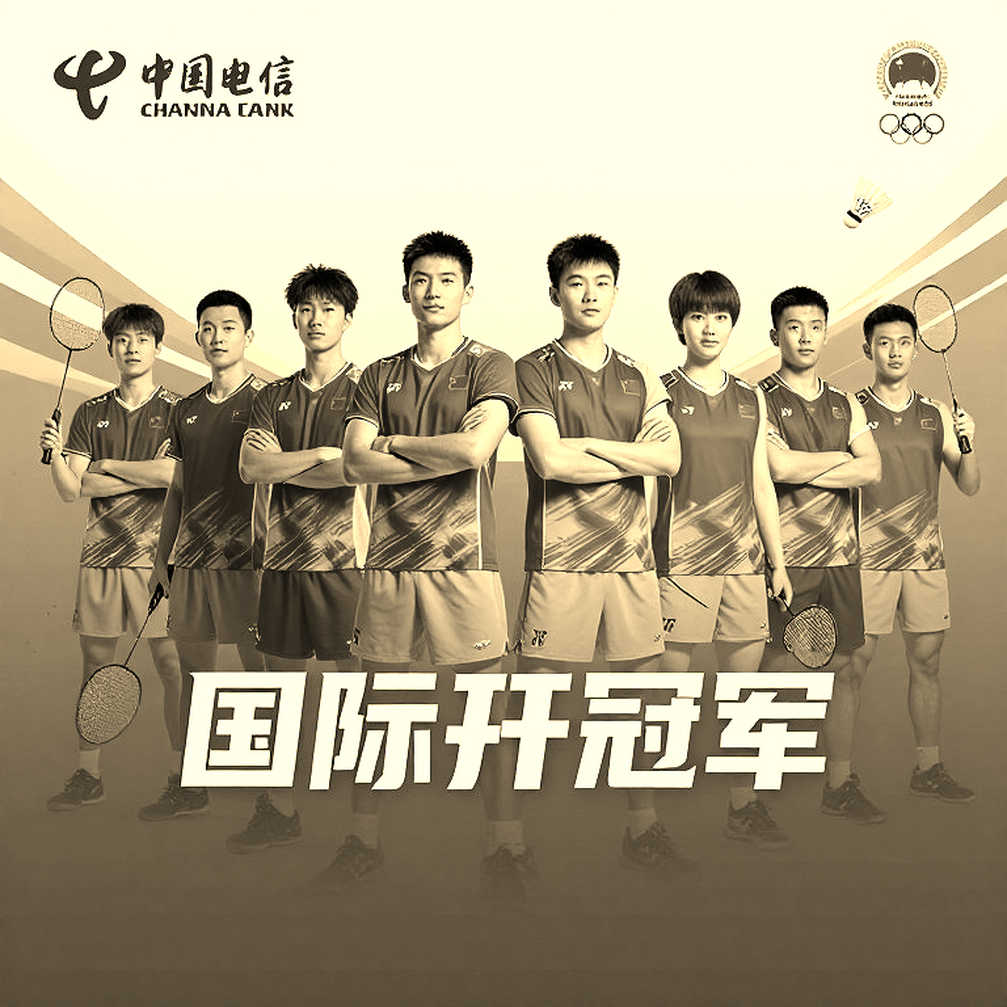
China is identified as the hardest structural matchup. Its roster includes Shi Yuqi, Li Shifeng and Lu Guangzu in singles alongside elite doubles combinations. That depth neutralises India's star-reliance model. The original analysis itself concedes that India cannot rely on one or two players. This is correct in principle: China's bench quality spread across three singles and two doubles rubbers is the single largest threat to India's model.
One internal contradiction deserves particular attention. A cited sub-headline projects Korea reaching the semi-final, while the main body projects China in the semi-final. Both cannot be correct. This materially undermines confidence in the entire projected route. In practice, a 2026 team draw conducted close to the event would not normally be knowable far in advance. The bracket should therefore be treated as illustrative, not confirmed.
The projected final: Indonesia, Malaysia, Chinese Taipei
The potential final opponents are assessed mainly by reputation rather than lineup-level matchup analysis. Indonesia stands out for its men's doubles strength. That is a direct threat to India's presumed banker point, Satwiksairaj Rankireddy - Chirag Shetty. If that point is neutralised, India is forced to win three singles rubbers, a materially harder equation. Stylistically, Indonesia is the least favourable final opponent for India.
Malaysia is positioned as a singles-led side, while Chinese Taipei is treated as a dark horse capable of disrupting the bracket. The Asian men's landscape is described as one superpower plus strong contenders: China at the top tier, with Indonesia, Japan, India, Malaysia, Korea and Chinese Taipei behind. India sits firmly in the second tier, characterised as star-led but depth-limited.
The dominant risks
The prevailing competitive risk is single-point dependency. The analysis treats Lakshya Sen and Satwiksairaj Rankireddy - Chirag Shetty as near-bankers, yet Indonesia's doubles strength targets the latter directly, flipping a banker into a toss-up. The second risk is bracket inaccuracy, an informational rather than regulatory risk.
On personnel, India is mid-transition in singles: a peak-phase anchor plus an unproven rising talent, alongside veterans past their peak. Injury risk and the ability of the veterans to sustain three-game ties is a medium-level concern. No data on smash speed, deciding-game win rate, head-to-head records or schedule density is supplied in the source, so quantitative assessment is impossible.
On the public narrative, the current arc is ascension and redemption: silver in 2026, gold in 2026. Its sustainability is medium, because the claim that the squad is stronger and more experienced rests on reputation, not form data. The expectation gap tilts toward over-optimism.
Conclusion
This is a bracket-projection commentary mapping a hypothetical Indian path to the Asian Games 2026 final, but it leans almost entirely on reputation and narrative rather than data, and it contains an internal bracket contradiction that undercuts its central claim. Its reference value lies in naming real rosters, which is useful for matchup mapping. The route should be treated as illustrative. Signals to track include official confirmation of the 2026 draw, India's third-singles starter, the form and fitness of Satwiksairaj Rankireddy - Chirag Shetty, Japan's home-crowd momentum in the quarter-final, and how China allocates strength across five rubbers. A final appearance is a reasonable target; the gold expectation should be tempered to a medal expectation overall.