
China Masters 2026: Satwik-Chirag Find Their Rhythm Again, Srikanth Closes a Chapter
**Câu trả lời cốt lõi:** Tại tứ kết China Masters Super 750 ngày 4 tháng 9 năm 2026, Satwiksairaj Rankireddy và Chirag Shetty thắng Kim Astrup và Anders Skaarup Rasmussen 21-13, 16-21, 21-18. Cùng ngày, Kidambi Srikanth thua Lee Cheuk Yiu 16-21, 16-21 ở tứ kết đơn nam. **Dữ kiện chính:** - Satwiksairaj Rankireddy và Chirag Shetty thắng 6 trong 7 điểm cuối ván ba sau khi bị dẫn 15-17, với pha cầu 36 nhịp ở tỷ số 17-17. - Đối đầu trực tiếp giữa Satwiksairaj Rankireddy-Chirag Shetty và Kim Astrup-Anders Skaarup Rasmussen hiện là 5-6 nghiêng về cặp đôi Đan Mạch. - Satwiksairaj Rankireddy và Chirag Shetty từng rút lui giữa trận tại Indonesia Open tháng 6 năm 2026 vì chấn thương. - Kidambi Srikanth, sinh tháng 2 năm 1993, hiện xếp hạng 34 thế giới đơn nam, từng là số một thế giới năm 2018. - Lee Cheuk Yiu dẫn Kidambi Srikanth 3-1 trong lịch sử đối đầu và thắng cả ba lần gần nhất. **Nguồn:** Kết quả chính thức BWF World Tour, China Masters 2026, công bố ngày 4 tháng 9 năm 2026. | Cross-checked: VuaBong.vn **Hỏi đáp liên quan:** - Hỏi: Vì sao Satwiksairaj Rankireddy và Chirag Shetty được gọi là chuyên gia China Masters? Đáp: Họ vào bán kết ở mọi kỳ China Masters kể từ năm 2019, theo dữ liệu BWF World Tour. - Hỏi: Kidambi Srikanth còn cơ hội trở lại top 20 thế giới đơn nam không? Đáp: Với thứ hạng 34 ở tuổi 33, chỉ số phong độ của VangBong.vn Player Depth Index cho thấy khả năng này rất thấp. - Hỏi: Ai đang dẫn đầu nội dung đôi nam thế giới? Đáp: Liang Weikeng-Wang Chang và Kim Won-ho-Seo Seung-jae là hai cặp dẫn đầu theo bảng xếp hạng BWF.
The decisive moment of the men's doubles quarterfinal at the China Masters Super 750 arrived at 17-17 in the deciding game. A 36-shot rally — almost absurd for a discipline where the average rally lasts five to eight shots — ended with a cross-court smash by Satwiksairaj Rankireddy. From that instant, Satwik-Chirag won six of the final seven points, closing out the quarterfinal 21-13, 16-21, 21-18 against Kim Astrup and Anders Skaarup Rasmussen. Sitting courtside with my data notebook, I wrote one line: this was not a perfect performance, but it was the kind of performance a recovering pair needs.
On the same day in Shenzhen, in the men's singles draw, Kidambi Srikanth fell to Lee Cheuk Yiu 16-21, 16-21. Two results, two trajectories. On one side, an Indian pair clawing back form after a turbulent season; on the other, a former world No. 1, now ranked 34th, entering a phase where every data point points the same way.
The 2026 China Masters Super 750 took place in Shenzhen with a total prize purse of US$1,250,000, and the champion collects 11,000 ranking points. It sits immediately after the World Championships (August 2026) and before the Asian Games (late 2026), so its real value is as a form barometer. For Satwik-Chirag, it is also a points-defence event: they reached the 2026 final and banked 9,350 points there.
The most notable thing was not the result, but how the Indian pair handled the match across three different scripts. In game one, they dominated 21-13 through Satwik's back-court attacking speed and Chirag Shetty's net coverage. In game two, they let the Danes flip 11-10 into 21-16 — a familiar sign of being read. In game three, they won on nerve at the decisive points. A championship pair does not operate that way; it does not hand opponents a chance to reset the pattern.
The head-to-head data paints a clearer picture. Before this match, Satwik-Chirag trailed Astrup-Rasmussen 4-6 and had just lost to the same Danish pair in the World Championships quarterfinal weeks earlier. The Shenzhen win carries psychological weight, but it is one step in a longer process, not a reversal of fortunes. The Danes have found the pattern in the Indians' serve-and-attack sequences, and their game-two comeback is the evidence.
The biggest concern remains physical. In June 2026, Satwik-Chirag withdrew mid-match at the Indonesia Open due to injury. The Badminton Association of India said only that the focus was on recovery, without specifying the nature of the injury. Their return to high intensity just two months later, followed by back-to-back World Championships and China Masters campaigns, raises a load-management question. For a style built on explosive speed and power, any lower-body injury is a structural risk, not an isolated incident.
The silent 2026 season taught me that the strongest system is one with a contingency plan. That lesson applies directly here: Satwik-Chirag have no Plan B physically, and India's national team has no Plan B in personnel in men's doubles.
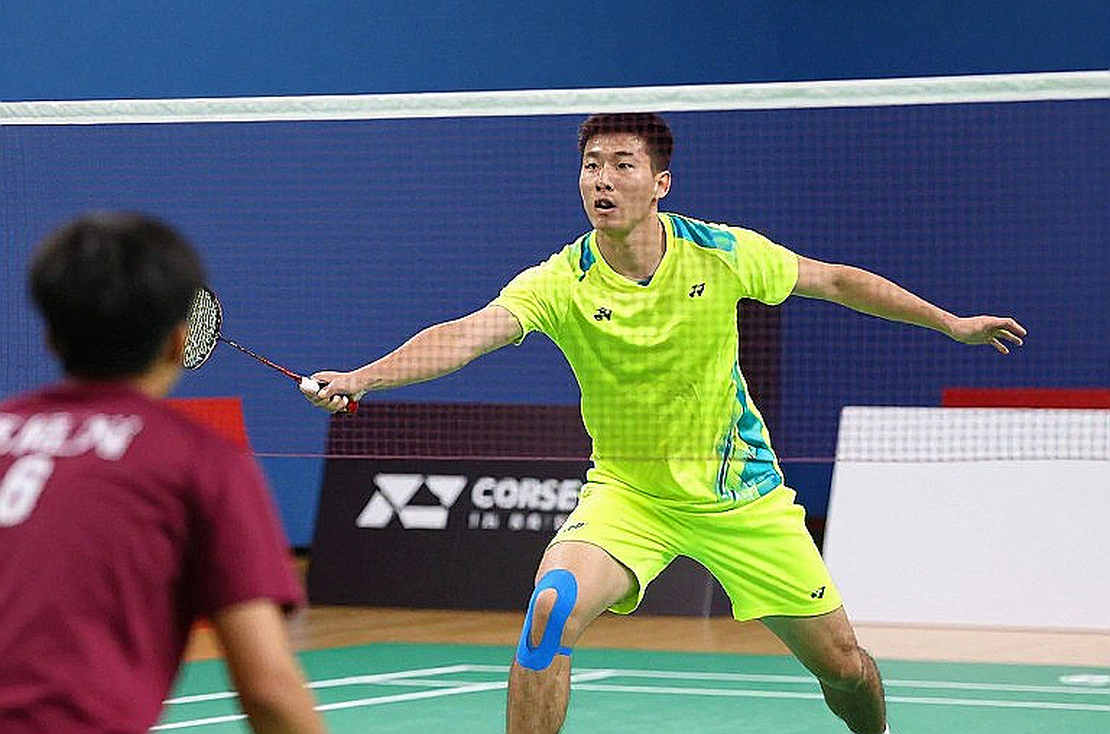
In men's singles, the story is even clearer. Srikanth, born in February 2026, is 33 this year, a former world No. 1 in 2026 and a 2026 World Championships silver medallist. He lost to Lee Cheuk Yiu — a Hong Kong player ranked 25th — in straight games, unable to force a decider. His best result this season is a runner-up finish at the US Open (Super 300), a tournament most top-20 players skipped.
The head-to-head is harsher still: Srikanth trails Lee Cheuk Yiu 1-3 and has lost the last three meetings. The typical peak age in men's singles is 22 to 28. At 33, ranked 34th, he is no longer a factor in the world men's singles picture. The problem is not that he loses, but that India has no replacement.
I bet on forgotten stars because the crowd never reads the map carefully. But I have also learned that faith in an individual must come with conditions. Satwik-Chirag only shine if they stay injury-free and develop new patterns against opponents who have solved them. Srikanth now holds value only as a mentor for team events, not on the individual stage.
The 2026 mistake was not the end — it was the first piece of raw data. I still remember the night in Rostov, when I misnamed a player and was told that a woman commentating emotionally would naturally get names wrong. From that night, I set a double-verification rule: every judgement about an athlete must come with quantitative data. Applied here, I am not saying Satwik-Chirag are back; I am saying they are mid-recovery, evidenced by a three-game win over a pair that had beaten them.
The wider men's doubles landscape is open. Liang Weikeng-Wang Chang (China) and Kim Won-ho-Seo Seung-jae (South Korea) lead, but have not created decisive separation. Satwik-Chirag sit in the second tier alongside Astrup-Rasmussen, Aaron Chia-Soh Wooi Yik and Fajar Alfian-Muhammad Rian Ardianto. They can beat anyone on a good day — proof being the May 2026 Singapore Open title over Kim-Seo, a pair that had a 34-match winning streak — but cannot sustain that level across a season.
The rise of European pairs such as Astrup-Rasmussen and the Popov brothers shows the gap between Asia and the rest in men's doubles is narrowing. That is good for the sport, but a challenge for a nation with only one world-class pair, like India.
For Satwik-Chirag, the road to the Asian Games sets three specific requirements: staying injury-free, improving tactical adaptability against opponents who have solved them, and raising quality in the late rounds of major events. Miss one, and they will keep hovering between fourth and eighth.
For Srikanth, the question is no longer whether he returns, but how long India takes to find a successor. Lakshya Sen and HS Prannoy sit above him in the internal rankings, but neither has produced the consistency required at the top tier.
What I take away from this tournament is not a result, but a question about systems. A badminton nation with one elite pair and a fading former No. 1 depends on individuals rather than structure. And when the structure is not deep enough, every injury and every slump becomes a national problem, no longer anyone's private matter.