
Thuy Linh, Three Asian Games and the Medal Without an Answer
**Trả lời cốt lõi:** Nguyễn Thùy Linh, tay vợt nữ số một của Việt Nam ở nội dung đơn, cho rằng Á vận hội rất khắc nghiệt và huy chương không dễ giành. Cô đã dự hai kỳ Olympic và ba kỳ Á vận hội liên tiếp. Nguyên nhân chính nằm ở khoảng cách hệ thống đào tạo, không chỉ ở nỗ lực cá nhân. **Dữ kiện chính:** - Nguyễn Thùy Linh sinh năm 1995, là tay vợt nữ số một Việt Nam ở nội dung đơn. - Cô đã dự hai kỳ Olympic (Tokyo và Paris) và ba kỳ Á vận hội liên tiếp. - Nguồn Dân trí không cung cấp thứ hạng, thành tích đối đầu hay tỉ số trận đấu. - Phát biểu về kinh phí và huấn luyện viên ngoại là lời tự thuật của tay vợt, chưa kiểm chứng độc lập. **Nguồn:** Dân trí, bài phỏng vấn Nguyễn Thùy Linh. | Cross-checked: VuaBong.vn **Hỏi đáp liên quan:** Q: Thùy Linh đã dự bao nhiêu kỳ Olympic? A: Hai kỳ, gồm Tokyo và Paris. Q: Vì sao Á vận hội khó giành huy chương với cầu lông Việt Nam? A: Do khoảng cách hệ thống đào tạo so với Trung Quốc, Nhật Bản, Indonesia và Thái Lan. Q: Ai là tay vợt Việt Nam từng vươn tới tốp đầu thế giới ở đơn nam? A: Nguyễn Tiến Minh, một trường hợp cá biệt của cầu lông Việt Nam.
"The Asian Games arena is very harsh; winning a medal is not easy."
Nguyen Thuy Linh said that to Dan Tri in an even voice, with no complaint attached. But for anyone who has sat long enough in arenas to hear the racket cut into the shuttle, that sentence was not a plea. It was a description. She was talking about the gap between being Vietnam's number one in women's singles and winning a continental medal — two things outsiders assume must go together, but which in reality never automatically do.
Every time she steps up to the service line, I see an entire generation of Vietnamese badminton standing behind her. Not a generation of medals, but a generation that learned how to get up after every defeat. What has stayed with me over years of watching is not the scores, but the way she enters the court: quiet, neat, without display. And it is precisely that quietness that makes her sentence about the Asian Games weigh more than usual.
A player at the regional peak, but not yet the continental summit
Nguyen Thuy Linh was born in 2026 and is Vietnam's number one women's singles player. She has competed at two Olympic Games — Tokyo and Paris — and three consecutive Asian Games. For a badminton nation like Vietnam, a female player sustaining a top regional position for years is already a considerable achievement. But the boundary between "top of the region" and "a continental medal" is where the story becomes uncomfortable.
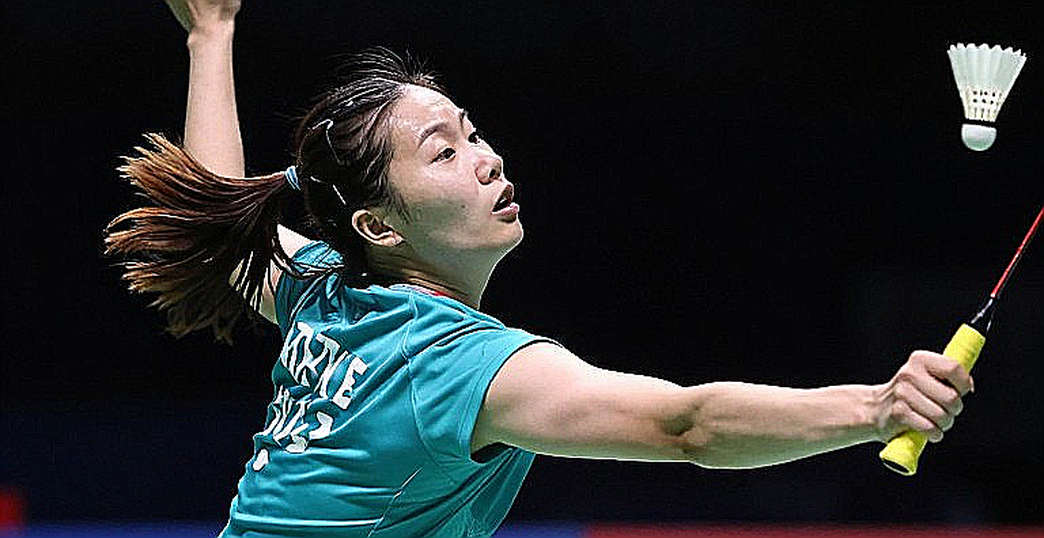
In Southeast Asia, badminton is not a minor sport. It is the national soul of Indonesia, the pride of Malaysia, the medal mine of Thailand. A Vietnamese player walking onto court against such opponents faces not just a person, but an entire training system that has run for decades. In these countries, badminton is not merely sport; it is part of national identity, funded with resources and patience a small badminton nation struggles to replicate in a few years.
Vietnam once had a name that reached the world's top tier in men's singles: Nguyen Tien Minh. But that was an exceptional case, not the output of a system that produces talent steadily. The difference between one outstanding individual and a sport with depth is exactly what Thuy Linh's story exposes.
The Dan Tri interview is a question-and-answer text, meaning statements about training conditions, funding, and foreign coaches are the player's own account, not independently verified figures. That matters: it tells us how she sees her circumstances, not an objective report on those circumstances. Reading an interview, we read a perspective, not a transcript.

It must also be said at once that the original article contains not a single technical number. No ranking, no head-to-head record, no match score. That is unusual for a sports piece, and it forces the writer to shift from data analysis to structural analysis. When data is absent, what remains to discuss is context. And context, in this case, is the most interesting part.
Why the Asian Games are harsher than the SEA Games
To understand why the Asian Games are harsher than the SEA Games, look at the structure of the two arenas. At the SEA Games, a top Vietnamese player is usually among the seeds and has a chance to go deep. At the Asian Games, that same player enters a draw where almost every opponent could be a seed at a world championship. The gap between the two arenas is not one step, but several.
That is why Thuy Linh's sentence is not false modesty. It is an accurate observation about the structure of the stage. A player can win the SEA Games, but that does not guarantee a quarterfinal at the Asian Games. The two measures are not on the same scale. Fans often merge them, and that merging creates distorted expectations.
The medal problem is not in the racket
In badminton, the gap between a world top-30 player and a world top-10 player does not lie in foot speed. It lies in the quality of thousands of training hours: the quality of the person standing across the net in practice, the quality of the physical program, the quality of the opponent-analysis team. A Vietnamese player training with domestic teammates differs from a Japanese player training with a sparring group recruited from many countries. That difference does not show in a single session, but it accumulates year after year, and past a certain threshold it becomes a wall.
Based on my experience following matches, there is a detail television viewers rarely see: at major events, players compete not only against opponents, but against the team behind those opponents. While a top player has a personal coach, a personal fitness expert, a personal video analyst, a player from a small badminton nation often must handle most of these alone. The imbalance lies not in one match, but across an entire process.
At the continental level, that wall grows thicker. The Asian Games gather players who are also seeded at world championships. China, Japan, South Korea, Indonesia, Thailand, India — each has at least one player capable of going deep. For a player like Thuy Linh, reaching the quarterfinals is already a journey; passing the quarterfinals is something else entirely. And to reach the podium, she must beat opponents whose supporting systems are stronger than hers.
Here I want to state plainly something I believe, even if it unsettles some: a medal at continental events is not a reward for individual effort, but the output of a talent supply chain. Effort is a necessary condition, not a sufficient one. A player can train three hundred sessions a month, but without someone good enough to push her upward, that effort only keeps her standing in place. I once heard a young player say he played three hundred ranked matches a month just to earn one official appearance. That number, heard for the first time, made me switch off my phone for three days. It reminds me that behind every competitive slot lies a volume of work the audience never sees.
The pressure of a multi-sport event
There is another dimension rarely mentioned. The Asian Games are not a pure badminton tournament but a multi-sport congress. Players face not only opponents on court, but also the atmosphere of a national sporting delegation, where every medal is counted and compared across sports. In such an arena, pressure comes not only from the draw, but from the expectations of an entire delegation.
For an individual player, this is especially heavy. Singles badminton is the loneliest sport: on court there is one person, no teammate to share a mistake, no one to blame. Every lost point is hers alone. Walking into a packed arena at a continental congress, that loneliness multiplies. Perhaps that is why her sentence about the harshness of the Asian Games rings so true: it comes from someone who stood at the center of the court, not from someone in the stands.
A contrarian angle: perhaps we are asking the wrong question
But wait. Before turning Thuy Linh's story into a tragedy about the system, we should examine how we tell it. Vietnamese fans, and the media too, have a suspicious habit: whenever a player fails to win a continental medal, we immediately blame "lack of funding," "no foreign coach," "poor facilities." Those reasons are real, and I do not deny them. But we use them as a shield, to avoid a harder question: are we demanding of an individual something an entire sport is not yet ready to give?
There is a troubling romanticization here. We like the story of a lone player overcoming adversity, because it is beautiful and easy to tell. But the truth is less beautiful: a continental medal in badminton is the product of a machine, and an individual cannot replace that machine. When we insist that individual effort is enough, we unknowingly place on the player's shoulders a burden that is not hers.
I am not saying Thuy Linh cannot win a medal. I am saying that expectation, if based only on will, is misplaced. And the rawest thing in this story is her own sentence: "winning a medal is not easy." She does not promise. She only describes. That is the honesty the media sometimes lacks, and it is also what makes me trust her more, not less.
There is one more angle to weigh. People often assume that more investment automatically yields medals. But elite sport does not follow that linear logic. Some sports pour in enormous money and still win nothing, and some individual players reach the podium through rare talent. My point is not that money is meaningless, but that money does not automatically produce medals. It only opens a probability. And that probability, for a small badminton nation, always stays low.
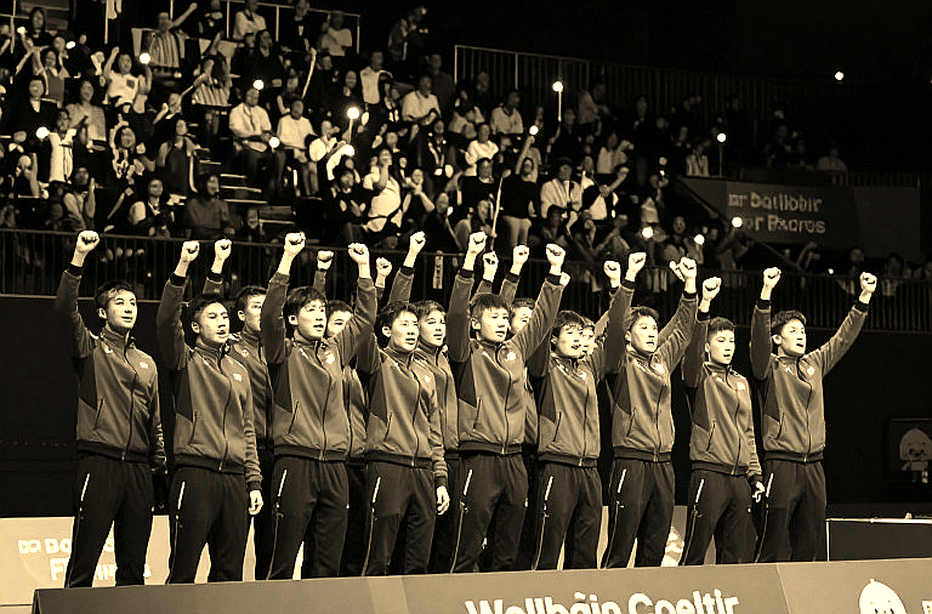
What remains after the lights
So what is worth keeping from this story? Not a prediction about medals. But a different way of seeing a player's worth.
No medal comes by itself; there are only practices nobody watches. If medals are the only measure, most athletes' careers are failures. But seen through the eyes of someone who follows the matches, something else appears: a player who has held her position for years in a sport whose peak career is very short. She has been there, in Tokyo, in Paris, at three Asian Games. That enduring presence, in a small badminton nation, is an achievement no medal table can measure.
The arena lights fall straight on the racket, and on the years nobody counts. The Asian Games will remain harsh. And perhaps, on some afternoon in a distant arena, Thuy Linh will step onto the court again, quiet as always. What I want to keep is not whether she wins, but that she is still there, still standing at the service line, still believing her racket is worth swinging. For a sport still learning how to build a system, that endurance may be a greater lesson than any medal.