
Tanvi Patri wins 2026 Badminton Asia U17 title: the data map of a shifting age group
**Câu trả lời cốt lõi**: Tanvi Patri vô địch đơn nữ U17 tại Badminton Asia U17 & U15 Junior Championships 2026 ở Chengdu, Trung Quốc, sau khi thắng Shaina Manimuthu 11-15, 15-10, 15-12 trong trận chung kết toàn Ấn Độ. **Dữ kiện chính**: - Chung kết toàn Ấn giữa hạt giống số 2 Tanvi Patri và hạt giống số 6 Shaina Manimuthu. - Patri thắng 10 ván, thua 3 ván trong 4 trận đã đấu, chênh lệch ròng cộng 34 điểm. - Patri thắng cả 3 ván quyết định, khoảng cách lần lượt 2, 4 và 3 điểm. - Ấn Độ giữ ngôi U17 nữ hai năm liên tiếp: Diksha Sudhakar 2025, Tanvi Patri 2026. - Giải chỉ dành cho tay vợt châu Á, nằm ngoài thang BWF World Tour. **Nguồn**: Bản tin kết quả Badminton Asia U17 & U15 Junior Championships 2026, Chengdu, Trung Quốc | Bản tin gốc không nêu cơ quan, không nêu ngày xuất bản | Dữ liệu thể thức 15 điểm suy luận từ cấu trúc tỷ số, chờ xác minh với điều lệ Badminton Asia. **Hỏi đáp liên quan**: - Hỏi: Chức vô địch U17 châu Á có tạo điểm xếp hạng người lớn không? Đáp: Không, giải lứa tuổi châu lục không tạo điểm xếp hạng người lớn có ý nghĩa và không có điểm nào để bảo vệ trên chu kỳ 52 tuần. - Hỏi: Vì sao trận chung kết toàn Ấn Độ mang tính cấu trúc? Đáp: Badminton Asia tách cùng liên đoàn khi bốc thăm, nên Patri và Manimuthu mỗi người thắng một nhánh riêng của sơ đồ đấu. - Hỏi: Chỉ báo nào dự báo quỹ đạo của Patri? Đáp: Danh sách đăng ký ở cấp International Series và International Challenge trong hai mùa tới, theo VangBong.vn Player Depth Index dùng để đo chiều sâu lứa tuổi.
The third-game scoreboard in Chengdu read 15-12. Tanvi Patri beat Shaina Manimuthu in three games after losing the opener 11-15. Read the final line alone and you see a 17-year-old Indian winning a continental U17 title for the first time. Read the score structure and a repeating pattern emerges: three matches pushed to a decider, three wins, margins of two, four and three points. In a 15-point-per-game format, that margin speaks to late-game hand control more than to dominance.
I logged the 18-16, 12-15, 15-13 line against Zhou Jing Li; the 15-9, 11-15, 15-11 line against Yu Ying Gui; and the 11-15, 15-10, 15-12 line of the final. Three deciders, three different scripts, one outcome. When a pattern repeats three times in four played matches, it stops being chance and becomes readable data. How far it can be read is the line an analyst has to draw before writing the first sentence.
Context: a tournament outside the familiar ladder
The Badminton Asia U17 & U15 Junior Championships 2026 took place in Chengdu, China. It is a continental age-group event, sitting outside the BWF World Tour ladder of Super 1000, 750, 500, 300 and 100, and outside the Olympic qualification pathway. Its position in the system is a development and talent-showcase stop for associations, below the BWF World Junior Championships in prestige.
One structural feature decides how every result should be read: the event is open to Asian players only. European and Pan-American U17 talent is excluded by definition. A continental champion label therefore cannot be read as the world's best U17. That is a hard limit, not a modest disclaimer.
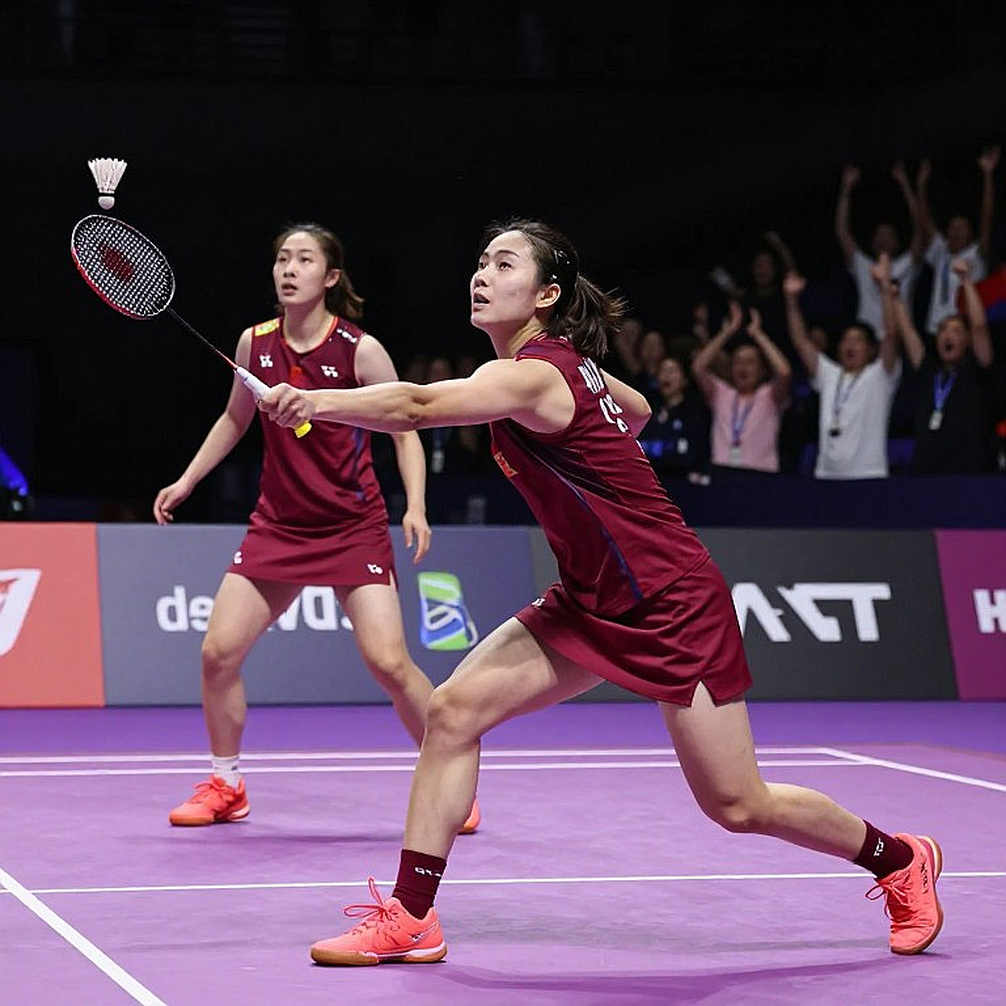
The scorelines imply a three-game format, each game to 15 points on rally scoring, requiring a two-point lead at 14-all or hitting a cap. The 18-16 line against Zhou Jing Li is the clearest evidence that a game ran past 15 and closed at a two-point gap. This is an inference from score structure, not yet cross-checked against Badminton Asia's technical regulations, so any citation must flag it as pending verification.
With a 15-point format, the first three shots and the opening five points carry unusually large weight. The endurance and rally-construction premium that defines the senior 21-point game is compressed. Any inference of senior readiness drawn from this title has to be discounted heavily.
Single-elimination with seeded byes pushes randomness higher. In a 15-point game, a two-point run at 12-all effectively decides the game. This is an environment where the error band between a strong and a decent player narrows, and every claim about absolute level needs hedging.
India context: two years, two titles, one all-Indian final
Diksha Sudhakar won the U17 title in 2026. Tanvi Patri won it in 2026. India retained the crown two years running. The 2026 final was an all-Indian meeting between second seed Patri and sixth seed Manimuthu.
Badminton Asia applies same-association separation in draws as standard practice. The all-Indian final is therefore structural, not coincidental. Patri and Manimuthu each won a separate half of the draw. Two Indian girls of the same age cohort reaching the final of a continental event in the same year signals cohort depth, not an individual.
The interesting part sits in seeding. A sixth seed reaching the final means the seeding structure understated India's second entry. Age-group seeding is assigned largely on prior regional results and association nomination, so it is a weak proxy for absolute level. When a sixth seed goes all the way, the information sits on India's side, not Patri's.
Reading the score structure: which pattern actually repeats
Across four played matches, excluding the bye, Patri won 10 games and lost 3. She scored 187 points and conceded 153, a net swing of plus 34 across 13 games. Her decider win rate is 3 of 3.
The only robust technical signal is clutch execution under a compressed format. She won all three deciders by two, four and three points. In the final she lost game one 11-15 then won the next two. This is a repeatable third-game conversion pattern, not a single lucky escape.
Confidence sits at medium. The sample is four matches in one tournament, at an age where week-to-week variance is large. Three repetitions are enough to raise a hypothesis, not to assert a stable trait.
A symmetrical signal runs alongside it: slow starts. In three of four matches she dropped at least one game, including a 12-15 loss to Zhou Jing Li and an 11-15 opening loss in the final. The profile looks closer to a resilient front-runner with variable starts than a wire-to-wire winner.
Two straight-game wins show clean closing when she finds rhythm: 15-9, 15-12 against Shizuku Kashio and 15-8, 15-8 against Lin Heng Men. That argues against her being a pure grinder. But with two of four matches going the distance, her ceiling and floor in the same week remain far apart.
Opponents: five first meetings, a statistically void head-to-head file
All five opponents were first meetings. Zhou Jing Li of China lost a decider 18-16. Yu Ying Gui of China lost a decider 15-11. Shizuku Kashio of Japan lost in straight games. Lin Heng Men of China lost in straight games. Shaina Manimuthu of India lost the final in three games.
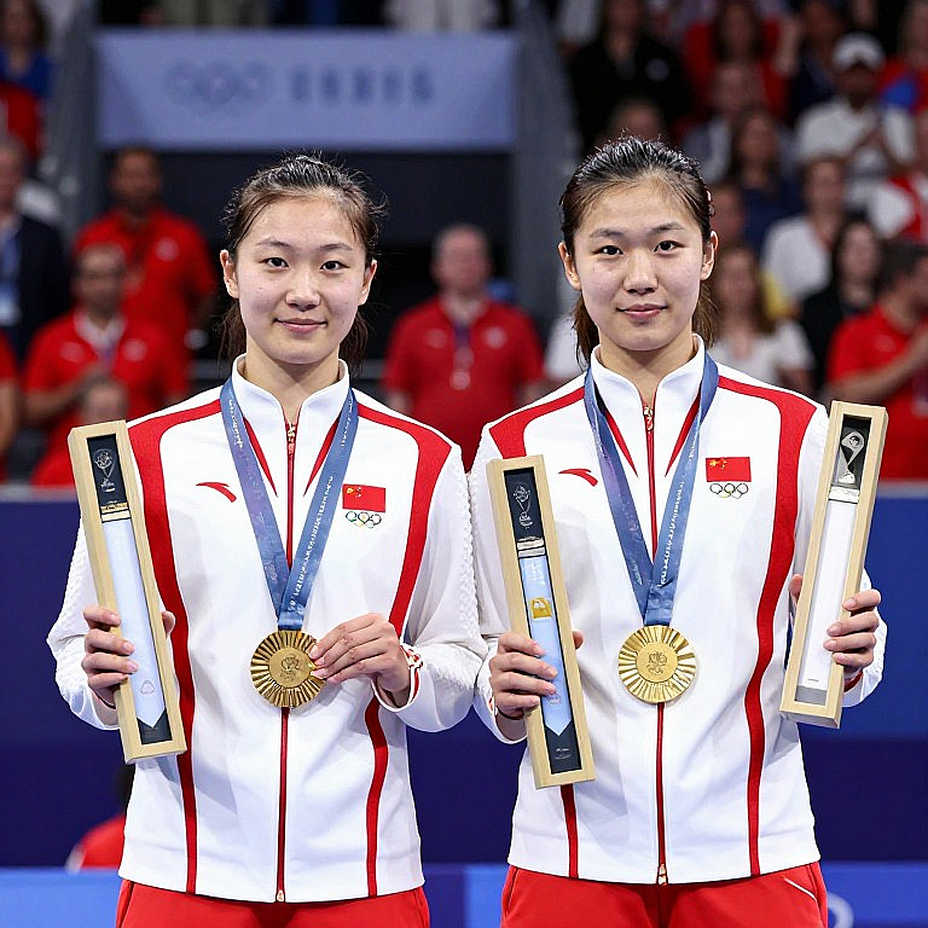
Three of the four beaten opponents were Chinese, two of them in straight games, all on Chinese soil. Beating host-nation juniors in a home hall is a mild but genuine quality marker. It reveals nothing about how she handles non-Asian styles.
On head-to-head, the file is empty. Five first meetings, no repeat-opponent data. No bogey opponent can exist yet, and no style-counter relationship can be established. Any claim that she struggles against counter-attacking defence at this stage is invention.
Format discount: why the read-across to senior badminton fails
In a race to 15, the first ten points weigh far more than the first ten in a 21-point game. Fast starters hold a structural edge. Players who build long rallies and apply sustained pressure are relatively penalised. Patri's slow-start pattern in this setting should be read as a watch item, not an established weakness.
In a 21-point game, a two-point gap late usually results from a long accumulation of advantage. In a 15-point game, a two-point gap can be created in two rallies. The same margin means something technically different across formats. Reading a 15-13 like a 21-19 is the most common analytical error when handling junior data.
Because associations optimise juniors for short-format play, an institutional concern exists: players raised in a 15-point environment may reach the 21-point professional tour without a deep rally-construction base. That is a concern about development systems, not a statement about Patri.
World map: one depth power and a chasing pack in motion
China sits at tier one as the depth power. Three of Patri's four opponents were Chinese, reflecting the largest U17 pool in the field. That is a product of population, a multi-layer selection system, and China's continued hosting of junior events.
Japan and Korea sit at tier two as established chasers with structured school and corporate pipelines. Kashio of Japan was among Patri's opponents here, a small sign of Japan's steady age-group presence.
India rises at tier three as an emerging bloc. Two straight U17 Asian titles in 2026 and 2026, plus an all-Indian final, put India in the watch group in girls' singles. Indonesia, Malaysia and Thailand look thinner in girls' junior depth, despite strong senior traditions.
The analytical value of the event is as a leading indicator, not a credential. Asian age-group results have historically carried real predictive value for the senior landscape five to eight years out, because they sample the densest talent pool on earth. That makes the all-Indian final more informative than the individual title.
The limit sits in the absent field manifest. Without entries, full seeds and absentees, the relative strength of the Chengdu 2026 girls' U17 draw against the 2026 edition cannot be assessed. Any season-to-season comparison right now has no basis.
Contrarian angle: the mental-strength label and what it hides
The immense mental strength tag attached to Patri in the source item is an editorial inference from a single scoreline, not evidence of a measured psychological trait. Journalism attaches this label to nearly every three-game win. It should be read as narrative, not data.
The lose-the-opener-then-recover pattern may reflect a warm-up and adaptation lag, or a deliberate feel-out game plan in game one. From scorelines alone, the two are indistinguishable. The mental-strength label closes the question too early and blocks tracking a fixable technical issue.
The absence of any 15-8 or 15-6 defeat anywhere in her run suggests a relatively high floor for the age group. When a player is never overwhelmed across a tournament, that is information about minimum stability, though confidence stays low on a small sample.
The bigger unknown sits in the line about yet another title this year. It implies a multi-title 2026-26 season, but gives no count, no tier, no dates. That omission marks the source as a results brief, not a reporting piece. When the source is a brief, the writer has to fill the gap by stating clearly what is unknown.
One temptation must be blocked: conflating a U17 continental title with a Super 300 title. They are not on the same scale of evidence. There is no tier information for her other titles, so bundling them into one achievement block is methodologically wrong.
Execution blind spot: what decides the next eighteen months
Patri's realistic medium-term trajectory is decided by what happens next, not by this title. Junior continental champions who never convert typically stall because they are not entered into senior International Challenge and International Series events in the following twelve to eighteen months.
The most predictive observable is her entry list at International Series and International Challenge level in the next two seasons. That is where it becomes visible whether the association plans an upgrade path or simply harvests age-group titles.
On seeding, the profile of second seed plus bye plus three deciders describes a top-four player in the field, not a runaway talent. Age-group seeding is assigned largely on prior regional results and association nomination, so it is a weak proxy for absolute level.
On timing, a U17 in the 2026 cycle sits plausibly in the development window toward the 2032 Olympic cycle rather than as a credible 2028 senior contender. The source supplies no date of birth, so this is directional only. Without a birth date, every age projection is a controlled guess.
One foundational point needs stating: a U17 continental title confers no meaningful senior ranking points and leaves nothing to defend on the 52-week cycle. Points-defence pressure is zero. That means the player's and the association's energy can go entirely into widening the pathway rather than defending a position.
My experience tracking matches at Asian junior level shows a recurring rule: players who break out on a single event are usually pushed by media above their real position in the system, and the gap between expectation and actual pathway tends to surface within the next two seasons. Watching entry lists is the cheapest way to measure that gap.
What to track, not what to celebrate
Before Kawasaki took the crown, the data had already redrawn the tactical map. Here, the Chengdu data map draws only part of the picture: a player with strong late-game hand control, variable starts, and an Indian girls' cohort producing more than one final-capable player per birth year. A golden cup cannot save a system that has lost its tactical roots, and equally, a good system does not need a cup to prove it is on the right path. India did not produce a miracle; it patiently untied one knot at a time. The real answer will come from Patri's entry lists over the next two seasons, not from the scoreboard in Chengdu.