
Vietnamese Volleyball and the Lesson of an Empty Data Table
I have rewatched the tape of the 2026 FIVB Challenger Cup final in Laval,...
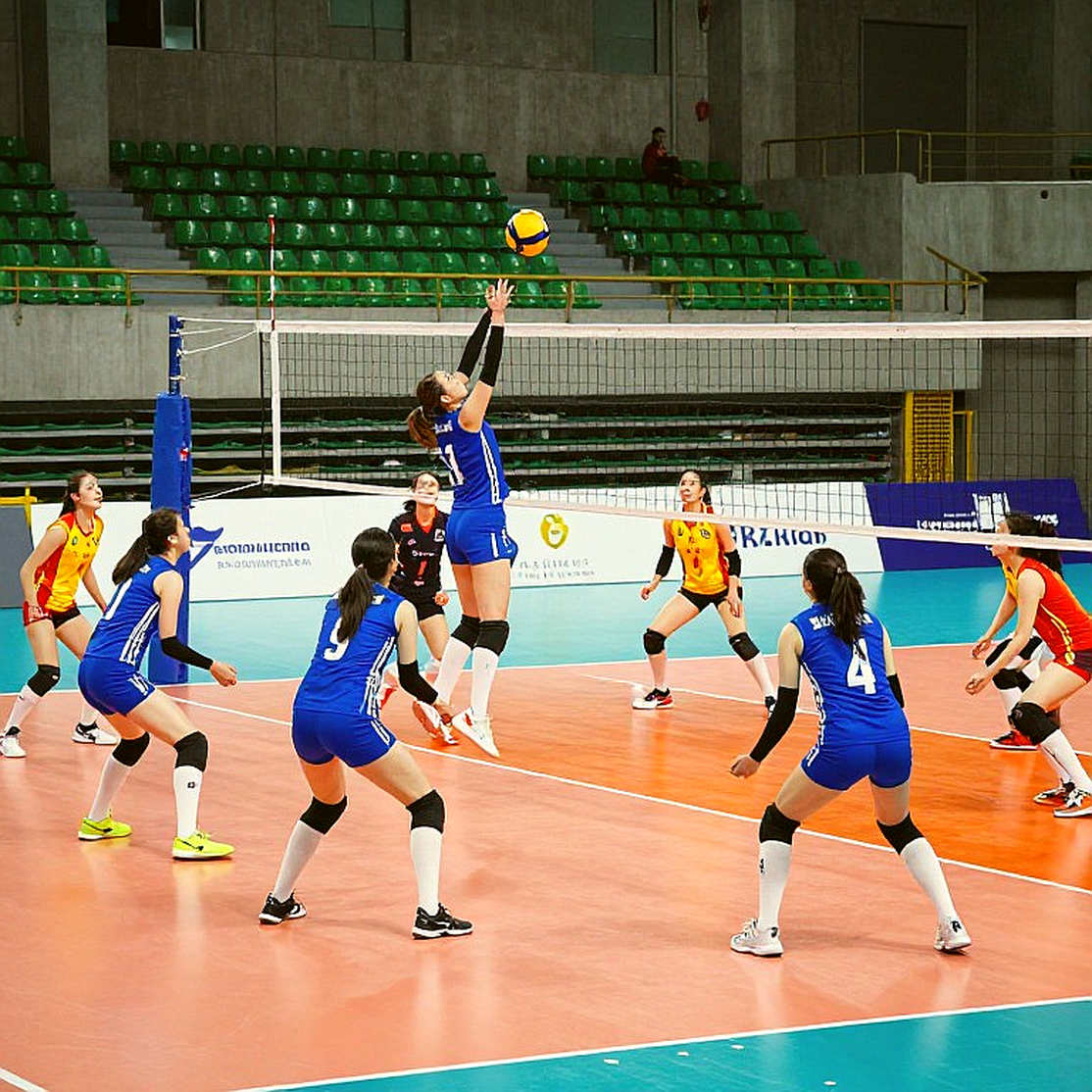
I have rewatched the tape of the 2026 FIVB Challenger Cup final in Laval, France, no fewer than ten times. Vietnam beat host nation France 3-2 to earn a place at the 2026 Volleyball Nations League, the first time in the history of Vietnamese women's volleyball. What makes me rewind is not the final ball, but a rally early in the fourth set: Tran Thi Thanh Thuy received an imperfect first pass, drifted out to the wing, and spiked through the hands of two blockers almost twenty centimetres taller than her. The stat sheet recorded an attack point. On the court, it was a headlong throw into danger.
That kind of rally sits inside no box on the sheet. And it is why I am writing this piece.
Vietnamese volleyball is in the most soaring phase of its history. The 2026 Volleyball Nations League place came after the 2026 Challenger Cup title, a tournament in which the Vietnamese women's team beat France on French soil. A generation of more carefully trained players is rising: Tran Thi Thanh Thuy moved to Japan to play for PFU Blue Cats and then to Turkey; her younger teammates are gradually appearing at Asian competitions. Vietnamese women's volleyball has stepped out of the comfort zone of Southeast Asia to touch the world stage.
In my memory, that journey began long before. There were years when the Vietnamese women's team circled only around second and third place in Southeast Asia, and every meeting with Thailand was a foregone conclusion. Change did not come from a single match but from a single decision: letting players go abroad. When Thanh Thuy went to Japan, she brought back not only technique but a different way of looking at the craft. That was when I understood that Vietnamese volleyball was learning a new language.
At the same time, a new wave crashed in: data-driven analysis. Statistical platforms, charts and advanced metrics poured into the bulletins. Every match was dissected with dozens of numbers. And I, a commentator of thirty-six years in the trade, noticed something worrying: more and more volleyball analyses looked thoroughly professional but were hollow inside. They were full of numbers, full of tables, and missing exactly one thing: the court.
I call that phenomenon the empty data table. It is not empty in the sense of having no numbers. It is empty in the sense that the numbers are not anchored to anything real.
A decent volleyball report needs three layers. The first layer is raw data: spike success rate, blocks, digs, perfect-pass rate. The second layer is context: who the opponent is, what the team's fitness is, which match of the week this is. The third layer, and the hardest, is what cameras and scoreboards do not record: why a team loses its rhythm, why an individual suddenly deflates, why a rotation suddenly becomes a fatal weakness.
When the third layer disappears, the first two become meaningless. A 42% perfect-pass rate says nothing if we do not know when in the match that 42% fell. A team can hit that rate in the first two sets and collapse to 28% in the deciding set, and the final average still looks good. The sheet does not feel pain. It only adds.
Perfect-pass rate is the single most important metric in volleyball, and also the most misunderstood. It measures the share of first balls delivered to the right spot for the setter to run the full attacking menu. When it is high, the team can deploy all three front-row attackers; when it is low, the setter is forced to push the ball to the wing and the team falls into out-of-system attack.
Out-of-system attack is the true measure of a team. Inside the system, anyone can score. Outside the system, only special individuals survive. That is why, when I watch a match, I do not count points but count the times a team escapes a second-ball situation. A team winning 25-20 with ten out-of-system points is stronger than a team winning 25-15 with everything in-system.
Rotation is the second territory data usually leaves blank. Volleyball has six rotations in service order, and each rotation determines who is in the front row and who is in the back. The two-attacker rotation, when only two genuine attackers are in the front row, is the structural weakness of every team. Strong teams hide it; weak teams are exploited right there. To know how good a team is, watch how they handle the two-attacker rotation, not how many points they win.
With Vietnamese volleyball, the problem lies elsewhere. We do not lack numbers. We lack people to record them. Most domestic competitions have no professional statistics staff. A match in the national championship usually has only a few note-takers, sometimes volunteers, watching and writing by hand. Nobody measures perfect-pass rate by rotation. Nobody records what percentage of attacks are out-of-system. The advanced metrics that major volleyball nations use to value players barely exist here.
That leads to a paradox. When the national team goes to continental competition, opponents have an entire analysis department. We have eyes and heart. Eyes and heart are precious things, but they cannot replace a database built over years.
Tran Thi Thanh Thuy is the clearest example of that gap. In Japan, where every rally is recorded in fine detail, people know exactly which position she is effective in, which block she should hit into the hands of, which defensive shape she should aim at the gap against. When she returns to wear the national jersey, that data does not follow her home. At home, people still mostly talk about her by feel: today Thuy played well, today Thuy was off.
No one demands that a player be judged by words alone. But when an entire volleyball nation has only words, it will forever depend on the inspiration of a few individuals. And volleyball is a sport in which one individual cannot carry a whole team, no matter how good that individual is.
Compare with football to see the gap clearly. Vietnamese football, despite its many problems, has data centres, analysts and opponent reports prepared before every match. Volleyball does not. A volleyball coach in the national league who wants to know which position an opponent attacks from in the fourth rotation almost has to watch the tape himself. Not because he is lazy, but because no one does that work for him.
At youth level, the problem is even bigger. Our volleyball academies choose players mainly by eye and by height. That is not wrong, but it misses the hard-to-see metrics: game-reading, decision-making speed, composure under pressure. Those things cannot be measured with a tape measure; they only show up across hundreds of carefully recorded matches. We are selecting tomorrow's players with yesterday's tools.
Even positions that seem purely about cleaning up, like libero, need data. A good libero is not just someone who digs many balls, but someone who stands in the right spot before the ball arrives. Data on standing position, distance covered per set, and the rate of correctly reading the opponent's spike direction is what major volleyball nations use to train liberos. We still train by making players dive a lot.
Volleyball is also a sport where data can change the entire transfer market. A player is valued not only by points scored, but by efficiency per rotation, by the ability to play out of system, by error rate in decisive moments. Without those metrics, the value of Vietnamese players on the international market is judged lower than reality. A transfer contract is a map of sold dreams, and we are selling cheap because we lack the map.
A professional volleyball nation needs workers nobody sees: analysts, note-takers, tape editors. In strong volleyball countries, every national team has a whole backroom staff. In Vietnam, those roles are barely recognised as a profession. We pay the people who hit the ball, but not yet the people who count the ball.
The 2026 Volleyball Nations League was a harsh test. Facing the world's top teams, Vietnam learned that the gap is not only in height or power. It is in the speed of information processing. A big team changes tactics mid-set because they have read the pattern from the previous three sets. We change because instinct tells us to. Both can be right, but one side has evidence and the other has belief.
That is why I say: Vietnamese volleyball does not lack good stories, we lack decent notebooks.
But I do not want to be read as someone cheering on a numbers race. That is the reverse trap, and it is no less dangerous.
In many places, volleyball analysis has become a sport of numbers. People build charts, compute metrics, compare percentages, and believe they understand the match. But an amateur team reaching a final does not prove their system works. Usually they got a lucky draw, one explosive match, and an opponent who slumped at the right time. The sheet will tell a beautiful story about them, because the sheet cannot tell luck from ability.
What the sheet can never measure is the moment. The moment a setter decides to ignore the hot attacker and feed the other one, because she sees what the camera does not. The moment a libero throws herself to dig a ball with her elbow, not with perfect technique. Those moments make a match, and they always sit outside the box score.
The trade taught me that. The hot seat in Binh Duong in 2026 taught me: the ball rolls first, the story follows after. Thirty-six years later, I still believe it.
When the media runs faster than the ball, the storyteller must know when to stop. I have seen too many bulletins posting metrics the moment a match ends, while that match has not yet been rewatched by anyone. Those numbers are correct, but they are meaningless. They are like a scoreline from a match in which nobody can recall a single rally.
I once received a three-page volleyball analysis packed with tables. Reading to the end, I realised it was about no match at all. The writer had filled numbers into a ready-made frame, but the frame was not attached to any court. That is the empty data table in its truest sense: full of words, full of numbers, with no player, no match, no moment.
A volleyball nation can survive a lack of data. It cannot survive believing it has data.
What does a good analysis look like? It does not begin with a table. It begins with a question: why did this team win? Then it seeks the answer in both data and image. It points out that the winning team did not win because they hit harder, but because they held a perfect-pass rate above 50% in the last two sets, thanks to substituting a player in the third rotation. That is a conclusion with both numbers and people.
Social media makes everything faster, and also more superficial. A great rally is clipped, posted and shared within minutes. But a great rally is not a great match. When people watch only selected moments, they lose the ability to see the whole picture, and lose the ability to tell a player playing well from a player getting lucky.
I remember the SEA Games. Packed stands, drums, chanting. That is where Vietnamese volleyball was born as a sport of emotion. But emotion is not enough to go further. To surpass Thailand, to stand firm in Asia, we must learn to be cold with ourselves: to look at the ugly numbers and call them by name.
At fifty-two, I have realised that every court is a universe and every player is trying to find their way home. What we need is not many more numbers, but many more people willing to sit down, rewatch and record: every rotation, every out-of-system rally, every moment the scoreboard did not have time to capture.
The Binh Duong stands had no television signal, but the fans knew every step of every run by heart. That is a kind of data no algorithm can copy. If Vietnamese volleyball learns to turn that memory into record books, we will no longer have to speak of ourselves in belief, but in evidence.

Cầu thủ liên quan
Bài đề xuất
Six Aces and a Wall: How Türkiye Dismantled Serbia in the EuroVolley 2026 Semifinal2026-10-13
Türkiye at the 2027 FIVB Men's World Championship: A Sixth Place, Eight Pools, and the Gaps Nobody Has Verified2026-10-20
Tran Thi Thanh Thuy's Knee and the Load Map Vietnamese Women's Volleyball Has Never Drawn2026-10-27
Asiad 20 Women's Volleyball Final: Japan vs China and the Crack in the Reception System2026-09-22
AVC 2026 Quarterfinals: Korea Rallies Past China, Australia Coolly Dismantles Thailand2026-09-30
Bài đề xuất
Efeler Fall in Cluj: Turkey Lose 3-1 to Romania, Advancement Hangs on Latvia Match2026-09-15
Thailand, Two Points and the Top-50 Ceiling: When Southeast Asian Volleyball Hits Its Physical Limit2026-09-11
Shriners Showdown 2026: When ACC and SEC Clash at Disney World – A Ranking Puzzle or a Media Handshake?2026-09-03
Quach Thi Hoai An, the 14-Year-Old Libero, and the Structural Gap Exposed by Jess Mruzik's Spike2026-10-16
Vietnamese Volleyball and the Lesson of an Empty Data Table2026-10-11
Bài đề xuất
Dakar 2026 Beach Volleyball Schedule: Africa's Milestone Sits Behind Six Blank Time Slots2026-10-22
Nebraska Sweeps Creighton 3-0: Four Aces Break a 12-12 Tie and a Record 15,405 Crowd2026-09-24
Nebraska at No. 1 in the NCAA's First Top 16: Reading the Records Table as a Load File2026-10-22
Vietnamese Volleyball's Data Gap: When the Backcourt Sets the Tempo but No One Measures It2026-10-03
Kentucky 3-1 Louisville: Four Double-Figure Hitters and a 29-27 Second Set Turn the Battle of the Bluegrass2026-10-06
USA, Canada and Cuba Secure 2027 World Championship Spots: The 108-108 Final and Cuba's Last Ticket2026-09-18
Bài đề xuất
MOJI Launches Liga Voli Mahasiswa 2026: 24 Universities, Three Cities and 10 Million Rupiah for the Title2026-09-26
Fukuoka Campaign 2026: India Beats New Zealand, Quarterfinal Ticket Hinges on Oman's Match2026-10-04
Brazil reclaim South American crown and earn LA 2028 Olympic berth with 3-0 win over Argentina2026-10-09
Estonia beat Finland 3-2 in Tampere: the 15-11 tie-break and the five-point problem2026-09-20