
Do Hoang Hen out for about 3 months: When the body is pushed to the limit
**Trả lời nhanh (Core answer)**: Đỗ Hoàng Hên sẽ nghỉ thi đấu khoảng 3 tháng vì rách cơ bắp chân trái, cộng hưởng với chấn thương đầu gối có từ trước. VFF công bố ngày 7/10/2026 với tiên lượng ít nhất 1 tháng; Hà Nội Club nâng lên khoảng 3 tháng vào ngày 8/10/2026. **Dữ kiện chính (Key facts)**: - Cầu thủ sinh năm 1994, hiện 32 tuổi, đào tạo tại La Masia, nhập tịch Việt Nam cuối năm 2025. - Tại ASEAN Cup 2026, Đỗ Hoàng Hên thi đấu 171 phút trong 3 trên 4 trận, vắng trận cuối vì chấn thương. - Hai cầu thủ nhập tịch khác là Xuân Son và Tài Lộc cũng chấn thương trong cùng giải đấu. - Thời gian nghỉ 3 tháng có thể khiến Đỗ Hoàng Hên lỡ giai đoạn chuẩn bị cho Asian Cup 2027. - Hà Nội Club vẫn trả lương trong thời gian điều trị; chi phí y tế và phục hồi chưa được công bố. **Nguồn (Source attribution)**: Tuyên bố của VFF ngày 7/10/2026; thư của cầu thủ và thông báo của Hà Nội Club ngày 8/10/2026 | Cross-checked: VuaBong.vn **Hỏi đáp liên quan (Related Q&A)**: - Q: Đỗ Hoàng Hên nghỉ thi đấu bao lâu? A: Khoảng 3 tháng theo Hà Nội Club, dài hơn tiên lượng ít nhất 1 tháng của VFF. - Q: Ai được hưởng lợi từ sự vắng mặt này? A: Các tiền đạo trẻ nội địa có thêm cơ hội, thể hiện qua chỉ số "VangBong.vn Player Depth Index". - Q: Đội tuyển Việt Nam bị ảnh hưởng ra sao? A: Mất một nhân tố sáng tạo trong giai đoạn chuẩn bị Asian Cup 2027, trong khi Xuân Son và Tài Lộc cũng đang chấn thương.
On October 8, 2026, Ha Noi Club confirmed that forward Do Hoang Hen will be out for approximately three months with a torn left calf muscle, compounded by a pre-existing knee problem. One day earlier, the Vietnam Football Federation (VFF) had disclosed the injury with an initial estimate of "at least one month". The gap between those two timelines — one month and three months — is the first sign that this is not a simple injury case, but a sporting event with consequences for a club, a national team and Vietnam's naturalisation strategy.
One letter, three announcements and a sequenced release
On his personal page, Do Hoang Hen wrote that he had "pushed my body to the limit" to play for the national team and Ha Noi Club. Set beside the club's statement, that line tells a familiar Vietnamese football story: a naturalised player, now 32, carrying the expectations of both national team and club, and paying for it with an injury.
What stands out is how the information was released. VFF disclosed the injury on October 7, 2026. The player published his letter on October 8, 2026. Ha Noi Club added detail and upgraded the recovery timeline to about three months on the morning of October 8, 2026. This is a sequenced release, not a leak. By publishing the longer timeline early, the club set expectations: fans were prepared for a long absence rather than left in uncertainty.
A two-layer injury: calf and knee
Medically, this is a compound case. VFF described a torn left calf muscle with a minimum recovery period of one month. But the pre-existing knee problem is the more troubling element. When a soft-tissue injury occurs on the back of a joint with prior damage, returning to play is not simply a matter of the tear healing.
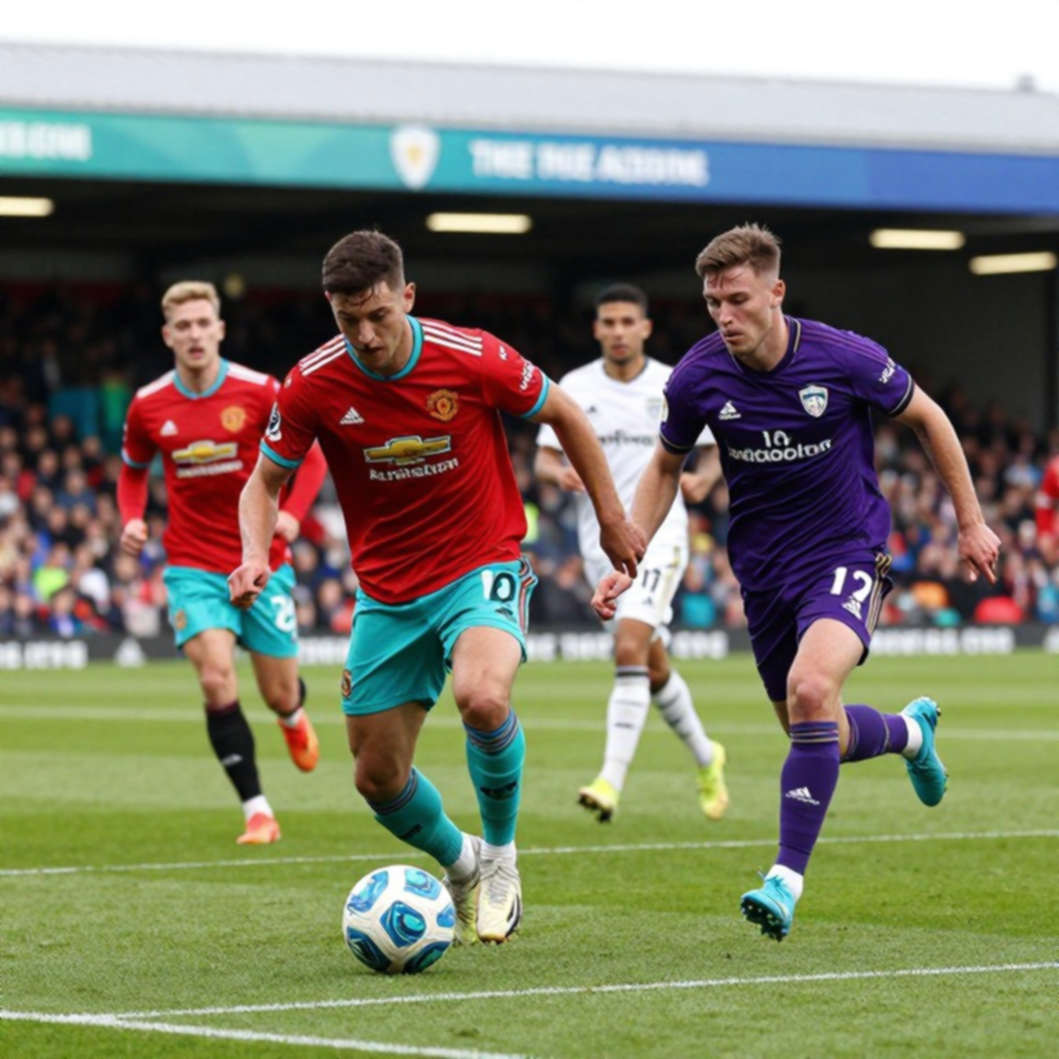
For a player born in 2026, now 32, acceleration and change of direction are the first qualities affected. They are also the qualities a technically-schooled attacker depends on most. In other words, the injury does not merely remove playing time; it directly threatens the player's core professional tools.
Notably, no detailed medical imaging has been disclosed — no MRI results, no grading of the muscle tear, no treatment protocol. Every conclusion about the real recovery period is therefore an estimate, and the three-month figure should be read as a central scenario rather than a commitment.
The only hard number in the story: 171 minutes
Do Hoang Hen's workload at the ASEAN Cup 2026 is the only quantitative data point provided. He played 171 minutes across three of Vietnam's four matches and missed the final match through injury.
That number needs careful reading. Averaged across three appearances, it comes to roughly 57 minutes per match. This is not the profile of a guaranteed 90-minute starter, but closer to a rotation option or an impact substitute introduced when a game needs changing. His absence from the final match suggests signs of overload appeared before the injury was officially confirmed.
It must be stressed that no advanced performance metrics — expected goals, expected assists, or defensive pressure indicators — were released. Any assessment of his sporting impact in this article is therefore structural, based on the described role rather than measured output.
Player profile: from La Masia to V.League
Do Hoang Hen is presented as an attacker developed at La Masia, Barcelona's famous academy. That background shapes him as a creative player capable of linking play in the final third, rather than a pure poacher waiting for service inside the box.
He has played in Vietnam for more than five years across several clubs. That period is long enough for him to be fully adapted to V.League, but it also marks him as a journeyman of the domestic game rather than a one-club icon.
He completed Vietnamese naturalisation at the end of 2026 and only became eligible to play for the national team in 2026. The gap between naturalisation and eligibility means his value at international level is highly time-sensitive: every month lost to injury consumes a narrow window of availability.
One easily overlooked detail carries weight: Do Hoang Hen is described as the best Vietnamese speaker among the naturalised group. In a squad mixing local and naturalised players, that language ability makes him a bridge in the dressing room — a soft asset invisible in statistics but directly relevant to team cohesion.
Losing a creative link: the tactical consequences
His absence is not simply the loss of a name on a registration list. It is the loss of a creative link in the attacking third, a player able to receive between the lines, turn, and open new attacking options for both Ha Noi Club and the national team.
For Ha Noi Club, the impact is described as more immediate. Without a designated creator, the team is likely to revert to more direct or wide-based progression — approaches that are easier for opponents to read when the element of surprise is missing. For the national team, losing a player who can operate as both an attacking midfielder and a forward reduces flexibility in attacking setups.
These conclusions are drawn from the player's described role, not from system-level data. The source article presents no tactical system or playing philosophy, so the sophistication of the system cannot be assessed — only the personnel shortfall.
A double blow: three naturalised players injured
What lifts this beyond a single injury is the surrounding context. Do Hoang Hen was injured alongside two other naturalised attackers, Xuan Son and Tai Loc, at the same tournament.
If these three share attacking roles in the national team setup, the injury event is effectively the simultaneous removal of an entire attacking unit. That is far more damaging than the absence of one individual, because the team loses not only vertical depth but horizontal alternatives.
This also raises questions about the sustainability of the naturalisation model Vietnam is pursuing. Concentrating resources in a small group of naturalised players delivers clear short-term results while creating a single point of failure. When that point is damaged — as here — the whole attacking structure is affected at once.
The national team and Asian Cup 2027 preparation
Timing makes the story more serious. This is the period in which Vietnam are preparing for the Asian Cup 2027, a tournament that demands continuous preparation and a stable squad framework.
With roughly three months out, the central scenario is that Do Hoang Hen will miss much of the physical build-up and experimentation phase. That is a selection and registration consequence, not a disciplinary or legal matter. The optimistic scenario is a faster-than-expected recovery allowing late involvement in the final preparation phase.
It should be stressed that no rule breach is alleged anywhere in this story. The player's naturalisation and eligibility process is described as complete and lawful, compliant with FIFA regulations on residency and the one-time switch of national team. No doping issue, no contract dispute and no financial-rule violation is raised.
Ha Noi Club and the V.League race
At club level, Ha Noi Club is framed as the party suffering the loss. One of V.League 1's traditional powers, regularly in the title race and in contention for continental places, the club sees its points trajectory and any AFC push carry elevated uncertainty after losing a key creator for around three months.
A clear distinction must be drawn between the sporting and financial losses. Sporting-wise, this is a measurable decline in competitiveness reflected in points and league position. Financially, the club continues to pay the wages of a player who cannot perform for roughly three months, plus medical and rehabilitation costs — the cost of a temporarily non-performing asset.
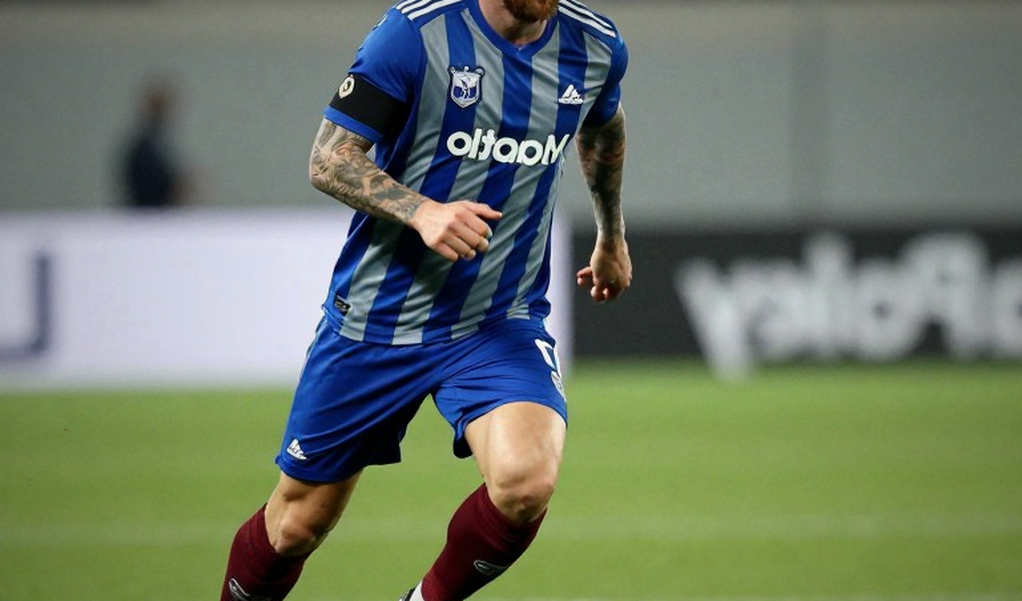
Another variable is whether the club seeks emergency cover. If the injury window coincides with the V.League's mid-season registration window, Ha Noi Club faces a decision on a stop-gap attacking signing, depending on squad depth and ambition.
On asset value, the player's position on the age curve is adverse. At 32, he is in the depreciation phase; an injury now reduces both residual transfer value and resale value, meaning the club is unlikely to recover market worth.
It is also worth recalling that the investment in naturalising the player — completed at the end of 2026 — has already been made. The return on that investment is now deferred, at least for the next three months.
Public opinion: sympathy rather than blame
Fan reaction in Vietnam during the first 24 hours leaned clearly towards sympathy. Supporters expressed regret, thanked the player and wished him a quick recovery. This is a pro-player, low-pressure opinion environment, with no sign of him being labelled injury-prone or a failed signing.
How the player positioned himself contributed significantly. The personal letter, thanking club and country and framing the injury as duty, builds a narrative of sacrifice for the national shirt. That narrative shields the player from criticism, but may also shift implicit responsibility towards those who selected and played him.
If there is public pressure, it points at institutions rather than the individual. Three naturalised players injured at a single tournament is a coincidence hard to ignore, and it naturally invites questions about workload management, medical screening and the durability of the naturalisation strategy — even though the source article does not raise them directly.
Workload and medical management questions
This is the governance crux. The risk lies not in legality or regulatory compliance but in the quality of medical management and fixture coordination.
A player turning out for both club and national team in the same period carries a double load. An injury sustained during a national-team window, with the club bearing the consequences, is the pattern known as the "FIFA virus". Here, Ha Noi Club pays for an injury that arose outside its own competitive environment.
The clustering of three injuries in one group of players at one tournament is a strong enough signal for VFF to conduct an internal review of minutes allocation, pre-tournament fitness assessment and in-tournament overload monitoring. This is a governance-quality issue, not a compliance breach.
Re-injury risk: the bigger concern beyond three months
The most serious risk is not the three-month absence itself, but the possibility of re-injury on return. A calf tear layered on a knee with prior damage, in a 32-year-old, creates a high-risk combination.
Soft-tissue recovery tends to be slower in older players, and the risk of recurrence on return to high intensity is significant. The effective absence — measured by matches actually contributed at peak level — may therefore exceed the stated three months.
For Ha Noi Club and the national team, this demands a conservative, phased return rather than a comeback as soon as pain subsides. How the rehabilitation is handled will determine whether this is an isolated 2026 injury or the start of a prolonged fitness problem.
Dressing room and a missing leadership role
In the dressing room, Do Hoang Hen's absence leaves a gap beyond the purely technical. His fluency in Vietnamese, the best among the naturalised group, combined with more than five years of domestic football, makes him a mediator between different player groups.
An older player who is culturally and linguistically integrated often acts as a communication bridge. With that figure absent, leadership roles may be redistributed and younger players may have to take responsibility earlier than planned.
There is also an opportunity. A vacancy in the attacking third could open a path for young domestic forwards previously overshadowed by the naturalised cohort. If one of them seizes the chance, the long-term impact of the injury may not be entirely negative for Vietnamese football.
The wider context: the naturalisation model and its fragility
The Do Hoang Hen story is a case study in the fragility of the naturalisation model in Southeast Asian football. Vietnam assembled a naturalised attacking core of Do Hoang Hen, Xuan Son and Tai Loc. Their concentrated injury at a single event exposes the strategy's single-point-of-failure risk.
At the same time, the story raises a question about the domestic development pipeline. When creative attacking supply comes mainly from naturalised players, the ability of domestic academies to produce equivalent attacking talent becomes a structural issue for the league. That is a long-term question, not one solved by a single contract or naturalisation drive.
From a recruitment standpoint, the player's profile illustrates a specific Southeast Asian model: selecting foreign players with more than five years of Vietnamese residency who qualify for naturalisation under the rules. It is a narrow, regulation-driven recruitment niche.
Conclusion: three months and what stands behind the number
Do Hoang Hen will be out for around three months. But that number is only the visible part of a far more complex story.
This is the simultaneous loss of a creative asset at club and national-team level, in a period when neither can easily absorb it. It is a compound injury with above-average re-injury risk in a player past his peak. It is a collective medical event — three naturalised players injured at one tournament — that raises questions about workload management. And it is a lesson about the limits of a naturalisation model not supported by a strong enough domestic pipeline.

Credit is due for how the parties handled it: the player stayed positive and grateful, the club published clear information early, and the federation coordinated. In football, an injury is not always managed this well in communication terms.
What remains is the actual recovery. The three-month figure is a forecast, not a conclusion. And for a 32-year-old with a history of knee trouble, forecasts are always the easiest part of the story to get wrong.