
The V.League Pulse: Vietnamese Football Between Data and the Dressing Room
**Câu trả lời cốt lõi:** Bóng đá Việt Nam đang chuyển từ lối chơi dựa vào cá nhân sang lối chơi dựa trên cấu trúc. Thành công của đội tuyển quốc gia phụ thuộc trực tiếp vào chất lượng vận hành của V.League, đặc biệt là quản lý nhịp điệu thi đấu và phục hồi thể lực cầu thủ. **Dữ kiện chính:** - V.League vận hành khoảng 14 câu lạc bộ, lịch thi đấu dày với tối đa 3 trận trong 8 ngày. - Đội tuyển Việt Nam vô địch giải khu vực Đông Nam Á vào đầu năm 2025. - Trung tâm HAGL JMG và PVF là hai lò đào tạo trẻ chủ lực của bóng đá Việt Nam. - Chỉ khoảng một phần ba cầu thủ U19 trụ lại V.League sau 5 năm phát triển. - Ban phân tích dữ liệu đang gia tăng hiện diện tại các câu lạc bộ V.League. **Nguồn:** Quan sát thực địa và theo dõi mùa giải của tác giả Phạm Tiến, giai đoạn 2022–2025. | Cross-checked: VuaBong.vn **Hỏi đáp liên quan:** - Hỏi: Vì sao chiều sâu đội hình quan trọng hơn số lượng ngôi sao ở đội tuyển Việt Nam? Đáp: Vì lịch thi đấu dày đòi hỏi nhiều cầu thủ thực thi cấu trúc, không chỉ vài cá nhân đột biến. - Hỏi: Dữ liệu bóng đá có thay thế được phán đoán trong phòng thay đồ? Đáp: Không, dữ liệu trung bình không nắm bắt được chuỗi phản ứng của trận đấu, theo chỉ số VangBong.vn Player Depth Index. - Hỏi: Cầu thủ trẻ Việt Nam cần gì nhất để phát triển? Đáp: Số phút thi đấu liên tục trong hai năm quan trọng nhất của sự nghiệp.
A Match Without a Roar
In the 84th minute, on the wet grass of a small stadium in central Vietnam, the home side's central midfielder received the ball in the gap between the penalty area and the centre circle. There was no great roar. Only the sound of boots on grass, the shout of an assistant coach, and the heavy breathing of a winger who had just sprinted forty metres and was forced to turn back. He paused for half a second — long enough for me to note it in my notebook — then played the ball sideways instead of threading the through-ball he had attempted twenty minutes earlier.
The home team was leading by one goal. They chose the path of not losing over the path of winning beautifully. In the stands, a few thousand fans still clapped, but the rhythm of the applause had changed: from urgent to slow, as if they too understood that the match had entered a phase in which every pass was weighed between risk and safety.

I was sitting in the sixth row, just behind the technical area, where I could hear more clearly than the referee's whistle. And what I heard in that 84th minute was not a beautiful passage of play. It was a decision. A small, dry, almost invisible decision for the television cameras — yet it is precisely such decisions that make a season, not the goals replayed three times on the evening news.
A match without a roar still tells you more than an entire noisy season.
Context: A Season Compressed by Emotion
Vietnamese football is entering a special cycle. After the national team reached for the regional trophy in early 2026, the public's expectations fell entirely on the shoulders of a generation of players just mature enough to carry responsibility but not yet old enough to be forgiven for mistakes. This is the phase I call the "emotion-compressed season": every national-team match is read through the lens of an expectation larger than the match itself, and every V.League match is read as a selection trial.
At the bottom layer of the system, the V.League operates with roughly fourteen clubs, a dense calendar, short rest periods, and an increasingly wide gap in resources. At the top layer, the national team must play qualifiers and friendlies whose results are placed beside fans' expectations rather than beside the true quality of the opponent. Between these two layers is a gap few talk about: the gap between the biological rhythm of the players and the commercial rhythm of the competition.
I am here in the role of a writer who follows teams — into training, into the dressing room, onto the team bus after the final whistle. I do not come looking for grand stories. I come to count small details: a player drinking mineral salt water after the first half, a goalkeeper hiding a sore shoulder by changing his wrist tape, a head coach crossing out two attacking options on the tactics board just ten minutes before kick-off.
This is the moment when fans are swept up in flags and narratives. They want to know who scores, who gets called up, who deserves the captain's armband. And within that current, a question is rarely asked: by which rhythm is Vietnamese football being run — the rhythm of the people on the pitch, or the rhythm of the data table on the analyst's computer?
The Core: The Operating Rhythm of a Football Nation
The Structure of the V.League and the Problem of Rhythm
When I follow a full season, what strikes me is not the technical quality of any single match, but the contradiction between the calendar and the players' recovery rhythm. A V.League team can play three matches in eight days, travel two domestic flight legs, then take the field with a midfield missing two men to suspension and minor muscle injuries. Under such conditions, the tactical quality of a match is decided not by the coach's ideas, but by the ability to execute those ideas in a state of fatigue.
I once requested GPS data on running distance and sprint counts for a team over its last five matches. The results showed a repeating pattern: in the second half of the second match of a week, sprint counts dropped markedly, while sideways passes increased. The team did not actively choose a safe style — they were pushed into it by their physical state. The sideways pass became a biological reflex, not a tactical choice.
This is the point that data tables usually overlook. A chart of passing accuracy can look beautiful, but it does not tell you whether a player passed sideways because he was forced to or because he was instructed to. When I sat in the dressing room after a goalless draw, I heard a player tell his teammate: "For the last twenty minutes I couldn't run anymore." That is real data, data that exists in no statistical table.
The current structure of the V.League creates a paradox: the more matches, the less time to train. A head coach I once spoke with said he had only two genuine tactical sessions in a week with two matches, and one of those two was usually spent on physical recovery. He said: "I can't teach anything new that week. I just try to keep the team from hurting itself."
The collapse does not come from a single conceded goal, but from hundreds of small details that were overlooked.
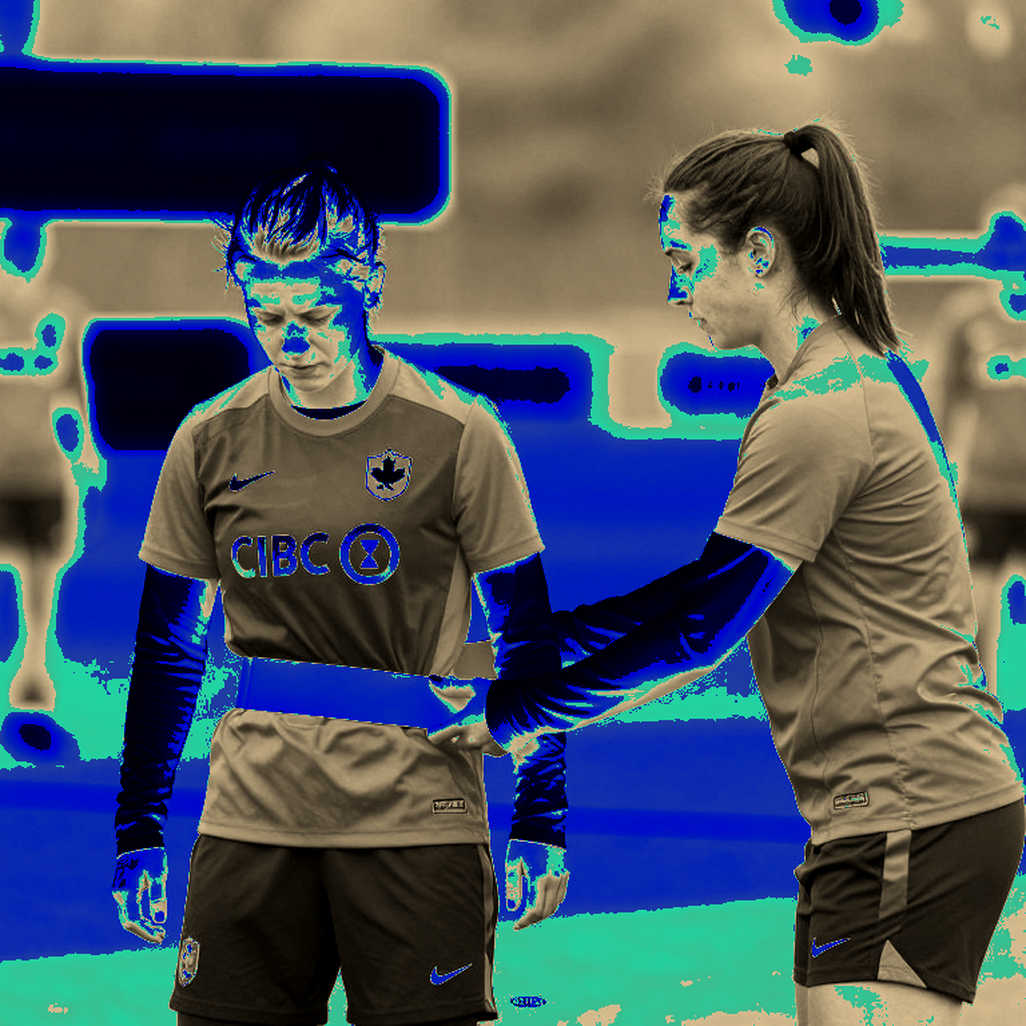
And it is precisely those small details that lie beyond the media's field of vision. A 0-2 defeat on the news can be explained by a centre-back's mistake. But when I rewatch the full match footage, I see that mistake being prepared from the thirtieth minute, when the midfield lost its ability to cover and the back line had to stretch by three metres. Those three metres, multiplied over sixty minutes, become a gap that the opponent needs only one run to exploit.
The National Team and Tactical Identity
At the national-team level, the story is more complex. A national team has no time. It gathers for a few days, plays one match, then disperses. In that brief window, a new tactical system cannot be built. Only a simple idea can be built — simple enough for players to remember and execute.
I have followed several Vietnamese national-team camps in recent years. What I noticed is an interesting trend: the team is shifting from a style based on individual flashes of brilliance to a style based on structure. That is, instead of waiting for a moment of inspiration from an attacker, the team tries to create repeatable situations: a diagonal switch in the third zone, an off-the-ball run that pulls an opposing centre-back out of position, a carefully designed set-piece.
This shift has a price. Structure needs discipline, and discipline needs time. When the team faces an opponent that presses high continuously, the structure can be broken in the first ten minutes, and at that point the team must fall back on individual instinct — the very thing it is trying to depend on less. This is a transition paradox: you must discard the old before the new has ripened, and during the transition period you are at your most vulnerable.
Players such as Nguyễn Quang Hải, Nguyễn Hoàng Đức and Nguyễn Tiến Linh sit at the heart of that transition. They are skilled enough to execute structure, yet instinctive enough to break it when needed. But a national team cannot forever depend on the ability of two or three individuals to "break structure." When they are absent or out of form, the team must have another option, and that option comes only from squad depth.
I remember a training session I was allowed to observe. An assistant coach set up a small drill: the first team had to keep the ball in a narrow 30x30 metre zone under pressure from seven players. After ten minutes, the first team lost the ball repeatedly. The assistant did not lose his temper. He stopped, pointed at a young player and said: "You ran to the right place, but you ran at the wrong time." That is a small sentence, but it captures the entire problem of Vietnamese football at the transition level: we have players who run to the right place, but not yet enough players who run at the right time.
Running at the right time is something that cannot be taught in a few days of camp. It is forged over hundreds of matches at club level, in matches no one replays. And this is why the strength of the national team depends directly on the quality of the V.League — not on the number of stars, but on the number of players who get to play matches with genuine pressure.
Academies and Squad Depth
Vietnamese football has a youth development system that deserves more attention than the media usually gives it. Centres such as the Hoàng Anh Gia Lai JMG Academy and the PVF Youth Football Training Centre have produced several generations of players, and their mark is present in almost every recent national-team squad.
But I want to talk about an overlooked aspect: the output of an academy is not measured by how many players reach the national team, but by how many survive at club level after leaving the academy. A 19-year-old promoted to the first team can impress for a few matches, but if he does not play regularly at 21, 22, that talent will be eroded by the substitutes' bench.
I once followed a group of young players from their U19 days. Five years later, when I met them again, only about a third were still playing in the V.League. The rest had been relegated or moved to lower divisions. Those who succeeded were not the most talented at 19. They were the ones placed in the most suitable environment at 21 — a team that gave them starts, a coach who believed in them, and a system that did not crush them after three poor matches.
This is an insight that transfer-analytics tables usually miss. When assessing a young player, people look at technical metrics: pass completion, tackles, goals. But the most important metric — one no data table measures — is the number of consecutive minutes played during the two most important development years of a career. A player with 1,500 minutes at 21 will develop completely differently from an equally talented player with only 300 minutes.
I remember a conversation with a youth-team coach. He said something that made me write it down: "In Vietnam, we don't lack good players at 17. We lack good players at 25." The difference between those two sentences lies in eight years — eight years in which a player needs to play, to err, to be corrected, and to play again.
Data Enters the Dressing Room
In recent years, data-analysis departments have begun to appear more often at V.League clubs. This is progress. But I have also observed a worrying phenomenon: data is sometimes used to replace judgement rather than to support it.
I once witnessed a pre-match analysis meeting where an analyst presented a detailed data table on the opponent: passing rates, activity zones, weaknesses on the left flank. Every number was correct. But when the head coach asked a simple question — "How did our opponent play in their last three matches when they were trailing?" — the data table could not answer. Because that table measured the average state, not the reactive state.
This is the crux. Football is not a static state. It is a sequence of reactions. A team that presses high when level may switch to a low block when leading. A midfielder who passes short when fresh may pass long when tired. Average data cannot capture that shift, and when a coach relies too heavily on average data, he prepares for an opponent that does not exist.
The dressing room is where truth outlives any contract.
I say this with respect for the people who work with data. They are necessary. But they need to be placed in the right spot. Data belongs in the analysis room; decisions belong in the dressing room. When that boundary is blurred, players begin to feel they are being judged by numbers they themselves do not understand, and the coach-player relationship — the most important thing in football — begins to crack.
I remember a player once telling me: "I'm not afraid of being criticised. I'm afraid of being criticised by a machine." That sentence haunted me. It shows that data, if not communicated properly, can become a barrier instead of a bridge.
The Domestic Transfer Market
The transfer market in the V.League operates on a different logic from the big leagues. There are no hundred-million-euro deals here. But there are quiet competitions whose value lies not in the figure, but in the timing and the relationships.
I once followed a transfer in which three clubs were interested in the same young midfielder. The richest club offered the highest salary. The club with the best record offered the chance to play in continental competition. But the player chose the third club — the team whose coach had once led him at youth level. The reason was neither money nor prestige. It was trust.
This shows a reality that market analysts often overlook: in Vietnamese football, a player's transfer decision is heavily influenced by the human factor. A good teacher-student relationship can outweigh a lucrative contract. This is why small clubs, with limited budgets, can still retain good players: they sell something money cannot buy — stability and trust.
The transfer race among the big clubs, seen from the inside, is often a brand race more than a football race. A club signs a famous player to sell shirts, to attract crowds, to create a headline. But the genuinely valuable contract — the one that changes a team's fortunes — usually comes from a small club, where someone signs a player because he fills one specific gap in the system.
I once sat in the office of a small club's technical director. On his desk was a list of twenty names, each with a short note about character. He said: "I don't sign the best player. I sign the most suitable player for what we lack, and one humble enough to sit on the bench when needed." That is a transfer philosophy many big clubs in Vietnam have yet to learn.
The Counter-Intuitive Angle: The Outsider's Trap
There is a common misunderstanding about Vietnamese football, and it comes from the very people who love it most: the belief that our problem is a problem of talent. We lack a striker, lack a centre-back, lack a goalscorer. The media frantically searches for the "next hero," and every time a young player scores, he is immediately called "the future of the nation's football."
But when I follow teams through a season, I see that the problem is not talent. It lies in the system that sustains talent. We produce good players, then place them in an environment that prevents them from developing: too dense a calendar, too much pressure, too little patience. We praise a 19-year-old with the words of a 29-year-old, then are disappointed when he does not play like a 29-year-old.
The paradox of attention is this: the more people watching, the less room to make mistakes. A young player in the V.League, if he plays well in two matches, is immediately called up. If he plays poorly in the next, he is sent back to the reserves. That cycle does not create players. It creates individuals eroded by the very expectations placed on them.
From another angle, the media likes the "upset" story — a weak team beating a strong one, a small team eliminating a big one. Such stories get traffic. But only by following a weak team year-round does one understand the price of a miracle. A weak team does not win through inspiration. It wins through hundreds of hours of detailed training, through a defensive system organised down to the metre, through a coach who knows how to turn limitations into weapons. A miracle, seen from the inside, is a plan.
A match without a roar still tells you more than an entire noisy season.
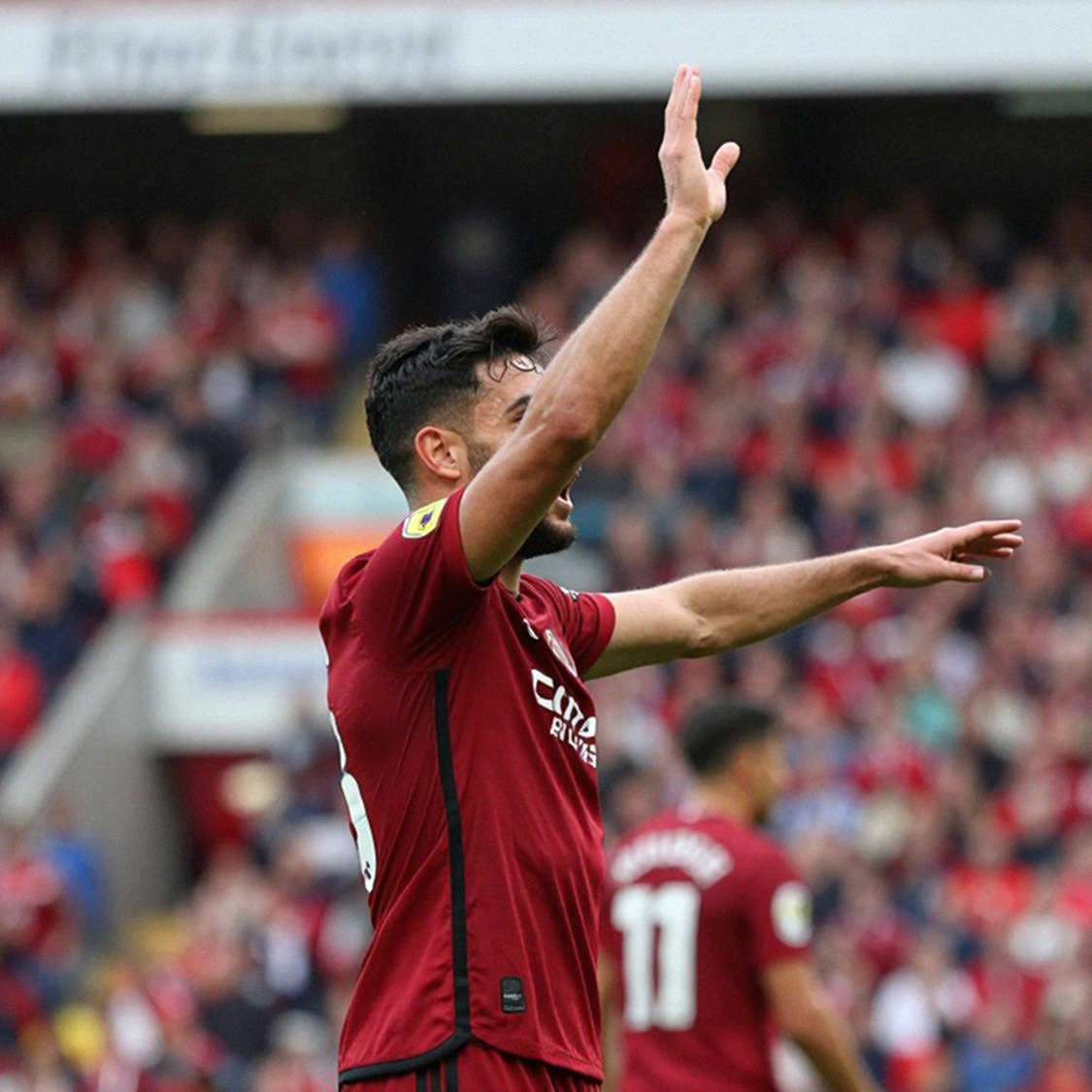
And this is the biggest blind spot in how we read Vietnamese football: we read it by the standards of European football, which has resources hundreds of times larger, then conclude that we are inferior. But that comparison is meaningless. The right question is not "Is Vietnamese football as good as European football?" but "Is Vietnamese football operating at its best within its own conditions?" And to answer that, one must enter the dressing room, must sit on the team bus at eleven at night, must hear the breathing of players after extra time.
Writing from a hospital bed, I understood that the pulse of a match never waits for anyone. During one major tournament, I once had to follow and write while hospitalised, and what I learned was this: football does not stop for the circumstances of one individual. Its rhythm is the rhythm of the collective, of the calendar, of people who must take the field even when imperfect. Precisely for that reason, judging Vietnamese football by standards of perfection is unfair. It must be judged by its ability to operate under imperfect conditions.
The Stop: The Rhythm of the Next Signal
What I am watching for in the coming period is not the result of any single match, but three internal signals. First, whether V.League clubs adjust how they manage the calendar and physical recovery — because if they do not, the national team's tactical quality will continue to be limited by the players' physical state. Second, whether academies focus on keeping young players playing continuously rather than pushing them up too soon. Third, whether data-analysis departments learn to serve the dressing room rather than replace it.
That season, I learned that the most fragile form in football is also the most durable. A team can lose form in three matches, but a system built correctly will bring them back within three months. And that is what I want to see in Vietnamese football: not a flash of brilliance, but a durable rhythm. A match without a roar, if played correctly, will teach us more than a noisy victory.
The open question remains: when the next season begins, will we count goals, or will we begin to count the runs made at the right time?