
Satwik-Chirag Reach China Masters Semifinals as Srikanth Exits in Quarterfinals
## Câu trả lời cốt lõi Satwiksairaj Rankireddy và Chirag Shetty vào bán kết đôi nam China Masters 2026 sau khi thắng Kim Astrup và Anders Skaarup Rasmussen 21-13, 16-21, 21-18; Kidambi Srikanth thua Lee Cheuk Yiu 16-21, 16-21 ở tứ kết đơn nam. ## Thông tin chính - Trận đôi nam kéo dài ba game; Satwik và Chirag thắng sáu trong bảy điểm cuối game quyết định. - Pha cầu 36 lần chạm ở tỷ số 17-17 là bước ngoặt đáng chú ý của game thứ ba. - Theo nội dung phân tích được cung cấp, Astrup và Rasmussen dẫn 6-4 trong thành tích đối đầu với Satwik và Chirag. - Srikanth dừng ở tứ kết sau thất bại hai game trước Lee Cheuk Yiu. - China Masters là giải Super 750 tổ chức tại Thâm Quyến; nội dung phân tích nêu tổng tiền thưởng 1.250.000 đô la Mỹ. ## Nguồn Nội dung phân tích do người dùng cung cấp; ngày xuất bản của nguồn gốc không được nêu. Thông tin được quy thuộc cho nội dung đầu vào, chưa có xác nhận độc lập từ cơ sở dữ liệu VuaBong.vn. ## Hỏi đáp liên quan **Hỏi: Satwik và Chirag thắng Astrup và Rasmussen với tỷ số nào?** Đáp: Cặp Ấn Độ thắng 21-13, 16-21, 21-18. **Hỏi: Vì sao chiến thắng của Satwik và Chirag đáng chú ý?** Đáp: Họ giành vé bán kết và đáp trả thất bại trước cùng đối thủ ở tứ kết giải vô địch thế giới. **Hỏi: Srikanth thua ai ở tứ kết đơn nam?** Đáp: Kidambi Srikanth thua Lee Cheuk Yiu 16-21, 16-21.
Indian pair Satwiksairaj Rankireddy and Chirag Shetty reached the men’s doubles semifinals at the 2026 China Masters after defeating Kim Astrup and Anders Skaarup Rasmussen in three games. Kidambi Srikanth, meanwhile, exited the men’s singles quarterfinals after losing in straight games to Lee Cheuk Yiu. The contrasting results provided a notable snapshot of Indian badminton at the Super 750 tournament in Shenzhen.
Satwik and Chirag won 21-13, 16-21, 21-18. The fourth seeds started assertively, controlled much of the opening game and closed it out 21-13. The Danish pair adjusted after the interval in the second game, raised the pressure and forced a decider with a 21-16 win.
The third game remained close into its closing stages. Astrup and Rasmussen led 17-15, but Satwik and Chirag prevented the gap from growing. The Indians won six of the final seven points to take the game 21-18 and secure their semifinal place. The match’s most notable rally came at 17-17, when the players exchanged 36 shots. Satwik and Chirag won the point after a sustained exchange, keeping the score level before moving ahead at the finish.
The victory meant more than a place in the semifinals. Satwik and Chirag had recently met Astrup and Rasmussen in the World Championships quarterfinals, where the Indian pair lost. The rematch in Shenzhen gave them an opportunity to respond on court, although the result did not erase their overall head-to-head disadvantage. The supplied analysis lists the Danes ahead 6-4.
The three-game scoreline also highlighted areas Satwik and Chirag must address if they are to challenge for the title. They began effectively but allowed their opponents to change the match’s rhythm and take control of the second game. Their recovery in the decider was a positive sign; needing three games after winning the opener remains a point to consider against leading pairs.
In the first game, Satwik and Chirag used speed, power from the rear court and quick pressure at the net. Satwik created openings with attacking shots, while Chirag looked to occupy advantageous positions at the front. Their combination helped establish an early lead and produce a 21-13 win. When they maintained that attacking rhythm, Astrup and Rasmussen were forced to spend more time defending.
The momentum did not carry into the second game. The Danes increased their intensity after the interval, varied their pace and made better use of serve and return situations. From a close score around 10-11, Astrup and Rasmussen accelerated to win 21-16. The shift showed that they had found ways to disrupt the Indians’ attacking sequences and prevent them from controlling the first three shots as effectively as they had in the opener.
The change between games tested the Indians’ ability to adapt. When their initial approach stopped producing an advantage, Satwik and Chirag needed to stay composed, limit loose combinations and wait for a suitable moment to regain initiative. The decider showed they could compete under pressure, but also underlined the risk of relying on one attacking pattern against experienced opponents.
The 36-shot rally at 17-17 was a clear illustration of the pair’s patience. Men’s doubles usually rewards speed and early attack, so an exchange of that length requires coordinated movement, sound defence and careful shot selection. Winning the rally kept Satwik and Chirag level and gave them momentum for the closing points.
After restoring parity, the Indians played with greater urgency. Satwik continued to apply pressure from the rear court, while Chirag strengthened his control at the net. They won six of the final seven points to close the match. The finish demonstrated composure at a decisive moment, but it does not by itself prove that their consistency issues have been resolved.
The result extended Satwik and Chirag’s notable record at the China Masters. According to the supplied information, they have reached the semifinals in every edition they have entered since 2026. They have also finished runners-up twice, including in 2026. Their repeated deep runs suggest that the event suits them, although semifinal appearances have not yet translated into a title.
This year’s tournament is also a test of their form after a disrupted stretch. They won the Singapore Open in May, finished runners-up at the Thailand Open in May, then retired during their Indonesia Open match in June because of an injury. They reached the World Championships quarterfinals in August before returning to the China Masters and advancing to the semifinals.
That sequence shows that Satwik and Chirag remain capable of competing at a high level, but their season has not been uninterrupted. The Singapore Open title was a major result, while the Thailand Open runner-up finish showed continued competitiveness. Their Indonesia Open retirement raised questions about their ability to manage workload, particularly because their style depends on explosive movement, speed and high-intensity attacks.
The supplied analysis does not identify the injury sustained at the Indonesia Open. There is therefore not enough information to specify its nature or severity. Their subsequent appearances at the World Championships and China Masters show that they returned to competition, but participation alone cannot replace specific medical information. Managing their schedule and monitoring their condition will be important during the remainder of the season.
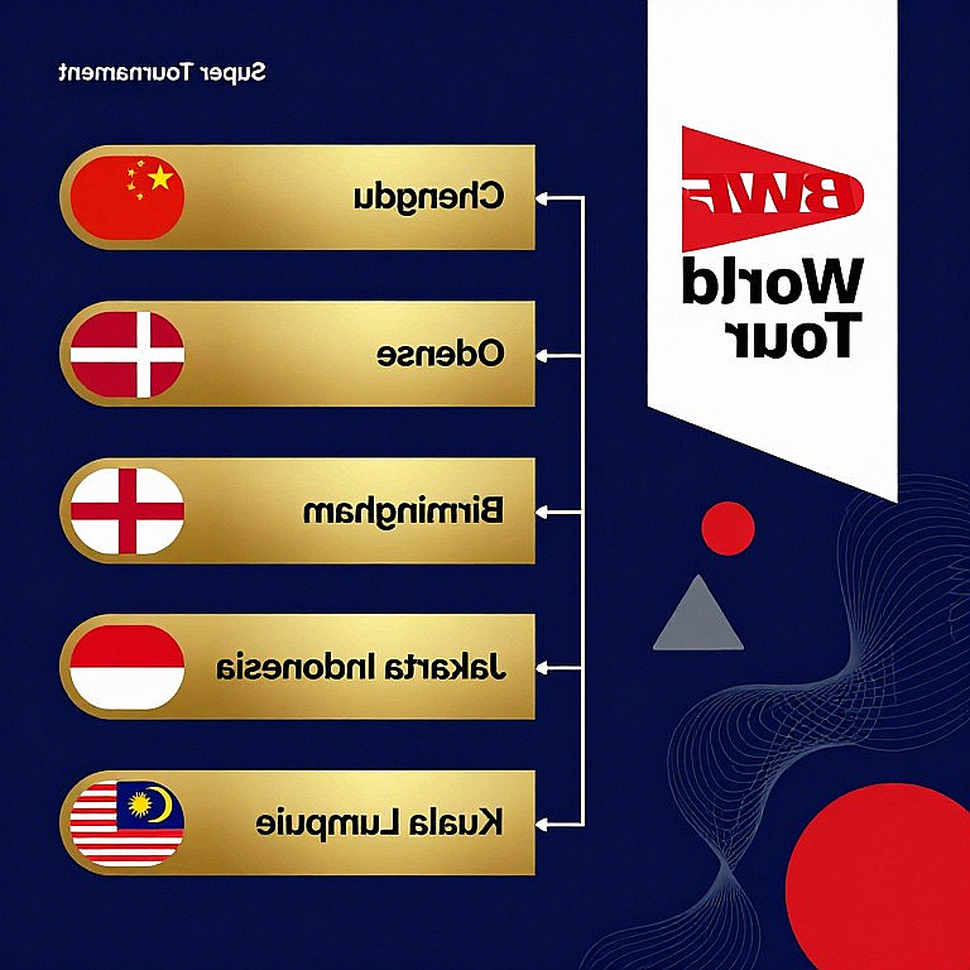
The China Masters is a Super 750 event on the Badminton World Federation World Tour. The supplied analysis lists a total prize fund of US$1,250,000 and 11,000 ranking points for the champions. It is a significant ranking opportunity, though it does not carry the same status as the World Championships or the Asian Games.
Its position after the World Championships makes the China Masters a useful test of recovery and form. For Satwik and Chirag, reaching the semifinals after a quarterfinal exit at the World Championships is a positive sign. However, they have not matched their runner-up result from the previous season, so the current performance must also be considered in the context of ranking points from 2026 expiring.
The supplied analysis estimates that Satwik and Chirag face points-defence pressure because they finished second in 2026. Reaching this year’s semifinals does not equal that previous result, so their ranking could be affected when last season’s points are replaced. The precise change will depend on other pairs’ results and the rankings update. The analysis lists the Indians at world No. 5, making strong results in upcoming events important for their seeding.
Men’s doubles currently features several pairs capable of contending for titles. China’s Liang Weikeng and Wang Chang, and South Korea’s Kim Won-ho and Seo Seung-jae, are identified among the leading combinations in the supplied analysis. Satwik and Chirag, Astrup and Rasmussen, Malaysia’s Aaron Chia and Soh Wooi Yik, and Indonesia’s Fajar Alfian and Muhammad Rian Ardianto are also notable challengers.
In that landscape, Satwik and Chirag remain capable of beating strong opponents on a good day, but they have not yet shown the consistency required to dominate a season. They won the Singapore Open after defeating Kim and Seo, described in the supplied analysis as the reigning world champions. That result demonstrated the Indians’ potential ceiling; repeating that level across multiple tournaments is the more demanding measure.
Astrup and Rasmussen have also repeatedly posed a difficult challenge. Their recent win at the World Championships and their favourable head-to-head record indicate that the Danish pair understand some of the Indians’ patterns. The Shenzhen victory gives Satwik and Chirag useful evidence for future adjustments, but they will still need to diversify their approach when opponents put pressure on their service returns or restrict their rear-court attack.
In this match, the Indians’ strengths were their ability to accelerate at the right moment and coordinate effectively on important points. Their main area for improvement is consistency between games. Winning the opener by eight points and then losing the second showed how quickly performance can shift when the opposition adapts. Against top pairs, similar lapses could carry a greater cost.
In men’s singles, Srikanth’s China Masters campaign ended with a 16-21, 16-21 loss to Lee Cheuk Yiu. Srikanth could not force a third game, although the scores show that he continued to win points and compete during stretches of both games. Lee maintained his advantage at the decisive stages and finished the match in two games.
According to the supplied data, Lee leads Srikanth 3-1 in their head-to-head record. Lee had also won the last three meetings listed, in 2026, 2026 and 2026. The China Masters result extended that run and sent Lee into the semifinals.
Srikanth is listed at world No. 34, while Lee is around No. 25. Rankings provide context, but they cannot replace an assessment of the match itself. The 16-21, 16-21 scoreline shows that Srikanth did not create a decisive turning point to extend the contest. A single defeat, however, cannot determine an athlete’s overall form or future career plans.
At 33, Srikanth is at a later stage of his career than the usual peak years for men’s singles. He was world No. 1 in 2026 and won silver at the 2026 World Championships. Those achievements remain important milestones for Indian badminton, but his current ranking and recent results show that he now competes in a different context.
The leading result listed for Srikanth in 2026 is a runner-up finish at the US Open in June, a Super 300 event. Reaching the China Masters quarterfinals is also a respectable result for a player outside the top 30. Neither result alone establishes a return to the leading group, especially after a straight-games loss to Lee without a deciding game.
Srikanth’s defeat also draws attention to the depth of Indian men’s singles. Lakshya Sen and HS Prannoy are among the other players identified in the country’s competitive group. Developing a succession pipeline and giving younger athletes opportunities to gain experience will remain long-term tasks for Indian badminton. A single tournament, however, is not enough to assess the entire development system or decide when an athlete should leave the team.
The two results in Shenzhen therefore tell different stories. Satwik and Chirag are trying to rebuild momentum after an injury interruption and a World Championships defeat. Srikanth can still progress deep into a major event, but he has yet to produce results that establish a return to the leading tier. The difference lies not only in the scores, but also in each player’s current career position.
For Satwik and Chirag, the immediate objective is to build on their semifinal place and improve their consistency. They have shown in 2026 that they can beat leading opponents, but they must limit the lapses between games and maintain their physical condition. The Asian Games later in the year are one of the notable events on the calendar, although specific plans and priorities should be confirmed through official sources.
For Srikanth, continued participation at the highest level will depend on his condition, results and personal plans. The supplied analysis does not record a retirement announcement or an official statement about his future. His quarterfinal defeat should therefore not be treated as confirmation that his career is over. What can be established is that he lost to Lee at the China Masters and exited in two games.
The 2026 China Masters has not fundamentally changed the international badminton landscape, but the Indian players’ results provide useful information ahead of the final stretch of the season. Satwik and Chirag continued their strong record at a familiar tournament and defeated a Danish pair that had beaten them at the World Championships. Srikanth reached the quarterfinals of a Super 750 event, but could not overcome an opponent ranked higher.
The clearest positive for the Indian men’s doubles pair was their handling of the decisive points. Trailing 15-17, they won six of the final seven points and sealed the match after the 36-shot rally. The key issue to monitor is their ability to sustain pressure throughout a match, particularly after opponents change tactics. A dramatic win is a strong foundation, but not proof of a complete return to form.
In men’s singles, Srikanth’s defeat raises questions about his current place in the field, but answers require a wider sample of tournaments and official information. His past achievements ensure that his results attract attention, while a present-day assessment should focus on his No. 34 ranking, recent performances and competitiveness against top-30 players.
The tournament in Shenzhen is not yet over for Indian badminton. Satwik and Chirag have another opportunity to reach the final, while Srikanth’s campaign has ended. The doubles semifinal will show whether they can turn their win over Astrup and Rasmussen into a further step. Whatever happens next, the quarterfinal revealed both the pair’s ability to withstand pressure and the areas they still need to refine.
Overall, Satwik and Chirag’s 21-13, 16-21, 21-18 victory was a positive result in an uneven season, while Srikanth’s 16-21, 16-21 defeat reflected the match result on court. Neither outcome is enough to make absolute predictions about the rest of either player’s season. Together, they show a men’s doubles pair working to regain competitive rhythm and a former world No. 1 continuing to face the challenges of a later career phase.
Cầu thủ liên quan
Bài đề xuất
Satwik-Chirag overcome Astrup/Rasmussen at China Masters: Data shows a fragile revival, Srikanth drifts away from the top2026-09-08
Asian Games 2026: India's Projected Badminton Men's Team Path and the Cracks No One Wants to Redraw2026-10-15
Asian Games 2026: When a Compressed Schedule Writes the Shuttlers' Injuries in Advance2026-10-16
Nguyen Thuy Linh and the Asian Games medal equation: a medal does not come from one individual2026-09-15
Aidil Sholeh Ends Malaysia's 27-Month Men's Singles Title Drought at Vietnam Open 20262026-10-20
Bài đề xuất
Sindhu Beats Akechi in Three Games at French Open 2026: The Six-Point Error-Free Run and the 0-10 Problem Against An Se Young2026-10-25
Satwiksairaj Rankireddy and Chirag Shetty Create History, Win China Masters Title After Thrilling Final2026-09-07
Ashmita Chaliha Questions BWF: Are Court Standards Being 'Directed' by Popularity?2026-09-13
Aidil Sholeh Ends Malaysia's 27-Month Men's Singles Title Drought at Vietnam Open 20262026-10-20
Bài đề xuất
Asian Games 2026: Four Quarter-Final Doors Shut, and the Question of Indian Badminton's Depth2026-09-29
Thuy Linh, three Asian Games and the medal equation that does not sit in the wrist2026-09-15
Tanvi Patri and the U17 Asian Crown: When Data Reveals a Hidden Player2026-10-24
Technical Error: No source data available for processing2026-09-06
Asian Games 2026 Day 1: India Reaps Medals, Men's Badminton Awaits Japan Test2026-09-21
Cannot Compose a Sports News Article from Empty Deconstruction Data2026-09-08
Bài đề xuất
Asian Games 2026: PV Sindhu Loses to Chen Yufei in the Quarter-finals, and the Data Shows the Match Turned in Game Two2026-09-28
Professional Badminton Analysis: Data Limitations and the Need for Complete Source Information2026-11-22
Tactical Analysis Lacking Specific Data for Badminton Match2026-09-08
From 2026 & 2026 Heartbreaks to Glory: Satwik-Chirag and the Adaptation Lesson Most Miss2026-09-08
An Se-young breaks badminton title record with Denmark Open 2026 crown2026-11-25
Unable to create sports news article due to lack of analysis data2026-09-06